5-HTP (5-hydroxytryptophan) is a popular supplement marketed for mood, sleep and appetite, and it is a genuine and interesting compound — but it is frequently misunderstood, and it is not a focus or cognition ingredient. This is an honest look at what 5-HTP actually does, where the evidence stands, the real risks and interactions worth knowing, and why Sharper Human deliberately does not include it. This article is informational and not medical advice; anyone considering 5-HTP, particularly alongside medication, should speak to a doctor or pharmacist first.
Key Takeaways
What 5-HTP Is
5-HTP is an amino acid compound that sits one step before serotonin in the body's synthesis pathway. The body makes it from the amino acid tryptophan, and supplemental 5-HTP (commercially extracted from the seeds of the Griffonia simplicifolia plant) is used as a way to raise serotonin availability more directly than tryptophan does. Because serotonin is involved in mood, sleep regulation and appetite, 5-HTP is marketed primarily for those purposes. It is important to be clear that this is a fundamentally different target from focus and cognition — serotonin is not the neurotransmitter behind alertness, drive and concentration in the way dopamine, noradrenaline and acetylcholine are.
What the Evidence Says
Research on 5-HTP is mixed and generally limited in quality. There is some interest in its use for mood and for sleep, given its serotonin connection, and serotonin's downstream conversion to melatonin gives a mechanistic rationale for the sleep angle. But the human evidence is far from conclusive, study sizes tend to be small, and it is not a substitute for properly evaluated treatment of any clinical condition. What 5-HTP is decidedly not is a cognitive enhancer — there is no good basis for taking it to improve focus, attention or memory, which is the relevant point for a focus supplement.
The Risks Worth Knowing
5-HTP is not a benign "more is better" supplement, and its cautions are the main reason it does not belong in a broad daily stack. The most serious is the interaction with serotonergic medications: combining 5-HTP with SSRIs, SNRIs, MAOIs or other drugs that raise serotonin can contribute to serotonin syndrome, a potentially dangerous condition. It can also cause gastrointestinal side effects such as nausea, and there are historical concerns and ongoing debate about contamination in some products. For all these reasons it is a supplement to approach deliberately and ideally with professional guidance — not one to fold into an everyday formula taken by a broad audience.
5-HTP Compared to the Alternatives
Understanding what 5-HTP competes with helps clarify when, if ever, it makes sense. As a route to raising serotonin, it is more direct than its precursor tryptophan, which the body converts in several steps — but tryptophan, obtained readily from protein-rich foods, comes without the same interaction concerns. For the calm and relaxation people sometimes seek from 5-HTP, gentler and better-characterised options exist: L-Theanine supports a relaxed, alert state, magnesium is involved in the nervous system's regulation and is commonly low in the diet, and the adaptogen Rhodiola supports resilience to stress-related fatigue. None of these carry 5-HTP's serotonin-syndrome interaction risk, which makes them far more suitable for everyday use and for inclusion in a daily formula.
And for genuine clinical issues — persistent low mood, anxiety or a diagnosed sleep disorder — the honest comparison is not 5-HTP versus another supplement at all, but supplements versus proper assessment and treatment. Self-medicating a mental-health concern with an over-the-counter serotonin precursor, particularly while taking other medication, is exactly the scenario where things can go wrong. The sensible framing is that 5-HTP occupies a narrow niche around mood and sleep, is outperformed for everyday calm by lower-risk options, and is no substitute for medical care where it is needed. That combination of a narrow use case and real interaction risk is precisely why it does not belong in a broad daily stack.
Why Sharper Human Doesn't Include It
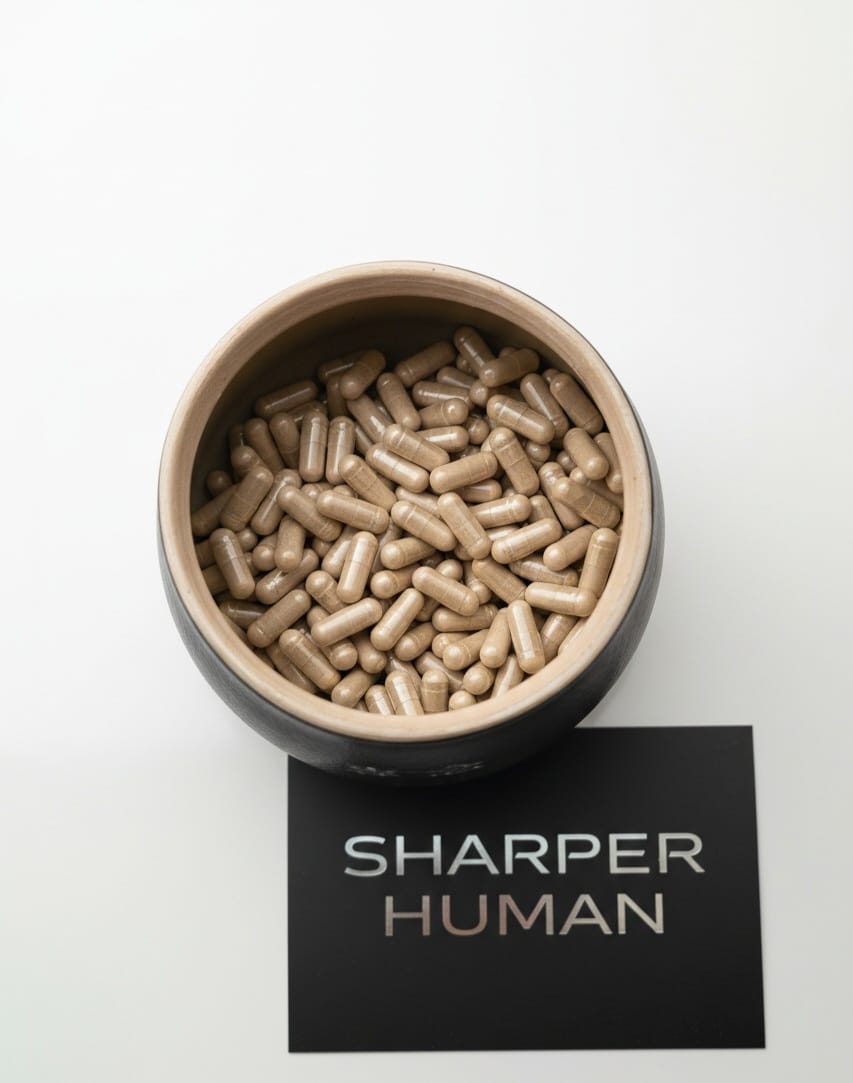
Focus for Founders.
An all-natural brain performance supplement. 20 research-backed ingredients. No caffeine. No stimulants.
Buy on Amazon UKSharper Human is a daytime cognitive-performance stack, and 5-HTP fails the fit test on two counts. First, target: it works on serotonin for mood and sleep, not on the dopamine, noradrenaline and acetylcholine systems behind focus, so it would add nothing to the product's actual purpose. Second, safety in a broad formula: its interaction risk with common antidepressants means it is unsuitable for a supplement designed to be taken daily by a wide range of people. For the drive and motivation side that people sometimes hope 5-HTP will address, Sharper Human instead uses L-Tyrosine (350mg), a dopamine precursor with a far better safety profile for daily use, alongside Rhodiola (150mg) for stress-related fatigue. This is a good example of the "fit for purpose, and safe for everyone in the audience" principle behind all 20 of its ingredients.
The honest bottom line: 5-HTP is a real compound with a legitimate, narrow use case around mood and sleep, best explored carefully and with medical input — but it is not a focus ingredient, and leaving it out of a daytime stack is the right call. Sharper Human is available on Amazon in the UK for around £79 per month, with US availability planned.
References & further reading
- Punja S, Shamseer L, Olson K, Vohra S. Rhodiola rosea for Mental and Physical Fatigue in Nursing Students: A Randomized Controlled Trial. PLoS One. 2014;9(9):e108416. View source ↗
- Owen GN, Parnell H, De Bruin EA, Rycroft JA. The combined effects of L-theanine and caffeine on cognitive performance and mood. Nutritional Neuroscience. 2008;11(4):193–198. View source ↗
- Peer-reviewed research on htp mood focus — PubMed, U.S. National Library of Medicine. View source ↗