Deep work — Cal Newport's term for the ability to focus without distraction on a cognitively demanding task — is increasingly recognised as the most valuable professional skill in the knowledge economy. The neurochemistry behind sustained deep focus is well understood, and the right nootropic stack can support the specific brain systems that make 4-8 hour concentration sessions possible and repeatable.
Key Takeaways
The Neurochemistry of Deep Work
Sustained concentration at the level deep work requires is not a single cognitive function — it's the coordinated output of four neurochemical systems operating in concert over extended periods. Understanding these systems explains why most "focus supplements" fail at supporting genuine deep work: they typically target only one pathway.
The cholinergic system (acetylcholine) governs directed attention — the ability to maintain focus on a single task while filtering out irrelevant stimuli. Research published in Neuroscience & Biobehavioral Reviews has established acetylcholine as the primary neurotransmitter mediating sustained attention. During a deep work session, acetylcholine demand increases progressively, and depletion is what causes the "attention fatigue" that eventually breaks concentration. Citicoline directly supports acetylcholine synthesis.
The dopaminergic system governs motivation and persistence — the willingness to keep engaging with difficult material rather than switching to something easier. When dopamine levels drop (which happens progressively during sustained cognitive effort), the brain increasingly favours low-effort activities: checking email, scrolling social media, switching tasks. L-Tyrosine provides the amino acid precursor that dopamine synthesis requires, helping maintain motivational drive.
The cortisol management system determines how well you tolerate the mental strain of prolonged concentration. Chronic stress elevates baseline cortisol, which directly impairs working memory and processing speed according to research published in Psychoneuroendocrinology. Adaptogenic compounds like Rhodiola Rosea modulate the hypothalamic-pituitary-adrenal (HPA) axis to keep cortisol within an optimal range — high enough for alertness, low enough to avoid cognitive impairment.
The brain energy system (mitochondrial ATP production) determines how long your brain can sustain peak performance before fatigue sets in. The brain consumes approximately 20% of the body's total energy despite comprising only 2% of body weight, according to the National Center for Biotechnology Information. During deep work, this energy demand increases further. ALCAR supports mitochondrial fatty acid transport for ATP production, while B-vitamins serve as essential cofactors for energy metabolism enzymes.
Best Nootropics for Deep Work
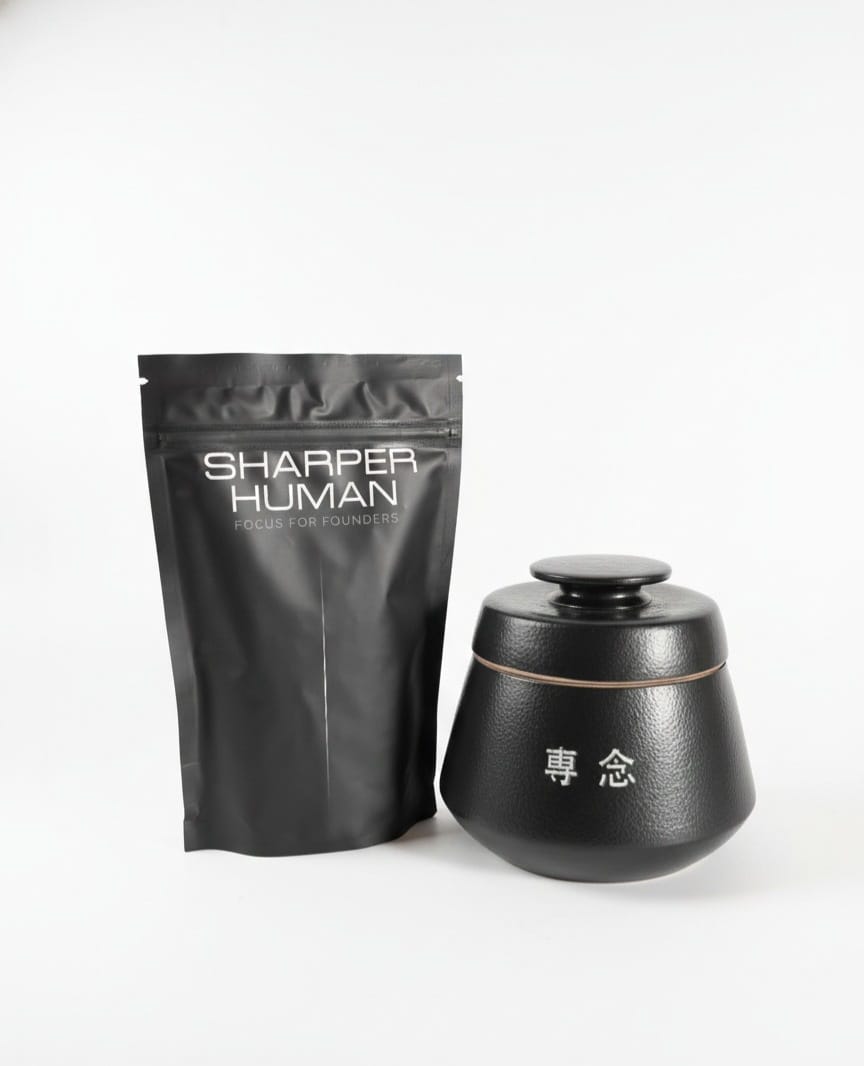
Focus for Founders.
An all-natural brain performance supplement. 20 research-backed ingredients. No caffeine. No stimulants.
Buy on Amazon UKSharper Human is particularly well-suited for deep work because its 20-ingredient formula addresses all four neurochemical systems simultaneously. Citicoline (300mg) ensures adequate acetylcholine for extended attention. L-Tyrosine (350mg) prevents the dopamine depletion that kills motivation mid-session. Rhodiola Rosea (150mg, 5:1 extract) manages cortisol-driven mental fatigue — clinical trials have demonstrated improved attention and reduced fatigue under stress conditions. ALCAR (500mg), Taurine (500mg), and the complete B-vitamin complex support the sustained energy metabolism that 4-8 hour sessions demand.
The zero-caffeine formulation is a specific advantage for deep work. Caffeine's stimulating effect creates a restless, slightly anxious energy that can paradoxically disrupt the calm, sustained focus that deep work requires. Many deep work practitioners report that caffeinated alertness helps them start tasks but not sustain immersive focus — precisely because caffeine addresses adenosine blockade rather than the cholinergic, dopaminergic, and energetic pathways that sustained concentration actually depends on.
Building a Deep Work Protocol with Nootropic Support
Nootropics are one component of a complete deep work practice — they support the neurochemistry, but environment and routine matter equally. The NHS guidance on mental wellbeing emphasises that cognitive performance depends on sleep quality, physical activity, and stress management alongside any supplementation.
Take Sharper Human with a morning meal containing healthy fat (eggs, avocado, olive oil) for optimal fat-soluble ingredient absorption. Begin your first deep work block approximately 60-90 minutes later, as ingredients reach peak bioavailability. Work in 90-120 minute blocks followed by genuine 15-20 minute rest periods. Keep your phone in another room. Use a single browser tab for the current task. The physiological support from the nootropic stack works best when the environment is designed to match it.
The Caffeine Paradox for Deep Work
Many knowledge workers instinctively reach for caffeine when they want to focus — but caffeine's mechanism can actually undermine the specific type of concentration deep work requires. Deep work needs calm, sustained, absorbed focus — the state psychologists call "flow." Caffeine produces alert, scanning, slightly restless focus — a vigilant state better suited to monitoring multiple information streams than to sustained single-task immersion. Research on caffeine's effects on attentional style suggests it improves alerting and executive control but may not enhance — and can sometimes impair — the sustained orienting attention that deep work depends on.
This is why caffeine-free nootropics represent a genuine advantage for deep work specifically (even if caffeine has clear benefits for other cognitive tasks). Citicoline's support for acetylcholine maintains the sustained attention channel. L-Tyrosine's dopamine support maintains the motivation to persist at a single challenging task. Rhodiola's cortisol management prevents the stress activation that pulls you out of absorbed concentration. None of these mechanisms create the jittery, scanning alertness that caffeine produces — and the result is a calmer, more sustainable focus state that's better aligned with deep work's requirements.
The practical implication: use caffeine for tasks requiring vigilant alertness (monitoring, responding, managing). Use caffeine-free nootropic support for tasks requiring sustained absorption (writing, coding, strategic thinking, creative problem-solving). Many professionals benefit from both in a single day — coffee for the morning's reactive work, nootropic support sustaining the afternoon's deep work session.
References & further reading
- Nakazaki E, Mah E, Sanoshy K, et al. Citicoline and Memory Function in Healthy Older Adults: A Randomized, Double-Blind, Placebo-Controlled Clinical Trial. The Journal of Nutrition. 2021. doi:10.1093/jn/nxab119. View source ↗
- Punja S, Shamseer L, Olson K, Vohra S. Rhodiola rosea for Mental and Physical Fatigue in Nursing Students: A Randomized Controlled Trial. PLoS One. 2014;9(9):e108416. View source ↗
- Peer-reviewed research on deep work — PubMed, U.S. National Library of Medicine. View source ↗