Lion's Mane is one of the most popular nootropic mushrooms, but Lion's Mane products vary enormously in quality — and the difference comes down to the form: which part of the organism is used, how it is processed, and how concentrated the extract is. A cheap Lion's Mane and a quality one can differ dramatically in their actual active content. This is an honest guide to Lion's Mane forms — fruiting body versus mycelium, extract ratios and dual extraction — the quality differences that matter, and the form Sharper Human uses. This article is informational and not medical advice.
Key Takeaways
Why Lion's Mane Form Matters
Lion's Mane (Hericium erinaceus) is prized for its key active compounds — hericenones (found in the fruiting body) and erinacines (found in the mycelium) — which are associated with its reputed support for nerve health (via nerve growth factor) and cognition, as the guides to Lion's Mane and nootropic mushrooms cover. But here is the crucial point: Lion's Mane products vary dramatically in how much of these actives they actually contain, depending on the form used — which part of the organism, how it is grown, and how it is processed and concentrated. A cheap Lion's Mane product can contain little active material (mostly filler), while a quality one delivers a concentrated dose of actives. So the form is the key determinant of a Lion's Mane product's quality and likely effectiveness — far more important than simply the milligram number on the label (since a high milligram figure of weak material means little). Understanding the form distinctions — fruiting body versus mycelium, and extract concentration — is therefore essential to telling a quality Lion's Mane from a weak one, which is exactly what this guide addresses.
Fruiting Body vs Mycelium
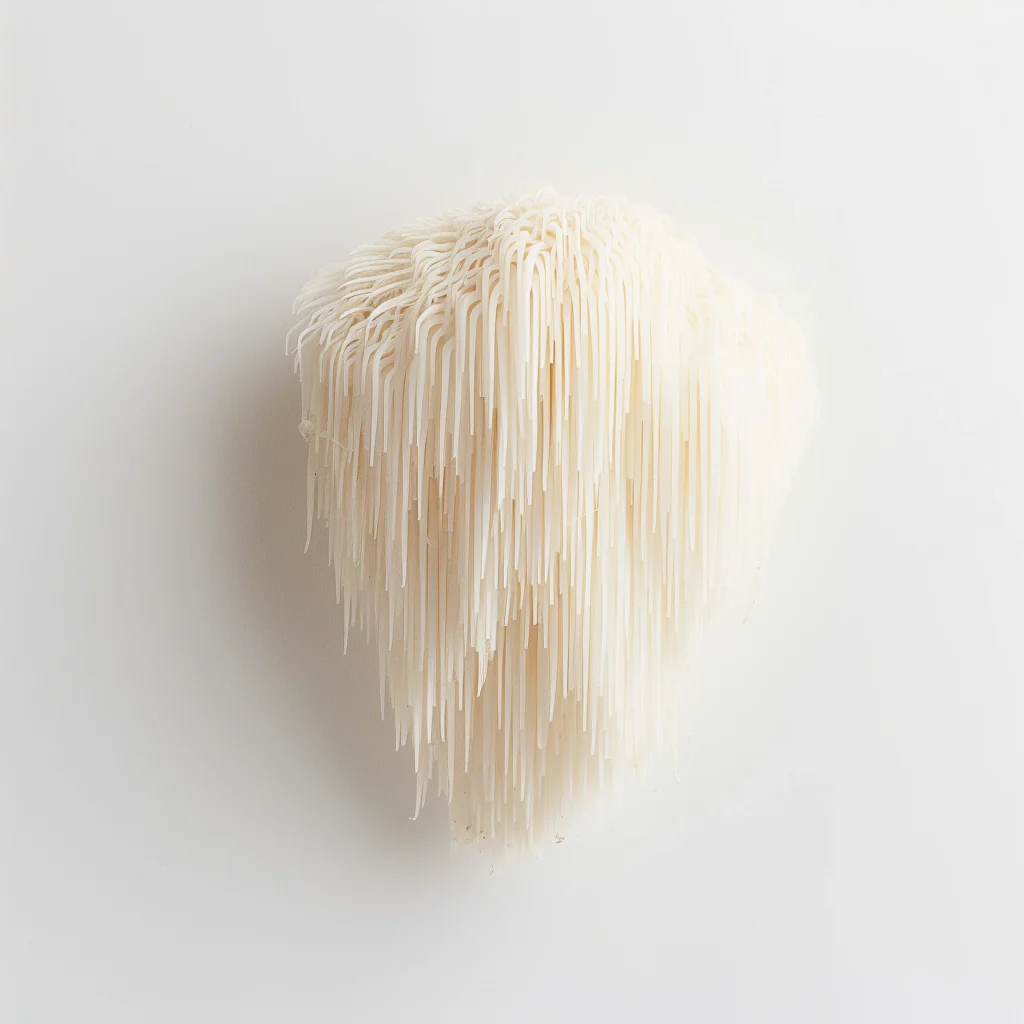
The most important Lion's Mane quality distinction is fruiting body versus mycelium. The fruiting body is the actual mushroom — the visible, shaggy white growth — and it is generally richer in the key active compounds (particularly hericenones) and closer to traditional use, making it the quality choice for most purposes. Mycelium, by contrast, is the root-like vegetative network of the fungus, and the issue is not mycelium itself (it contains erinacines and has its own merits) but how it is commonly produced and sold: mycelium is frequently grown on grain (like rice or oats) and then the whole thing — mycelium plus the grain substrate — is dried and powdered together, so the resulting product can contain a large proportion of starchy grain filler and relatively little actual active mushroom material. This "mycelium on grain" (sometimes labelled as containing the grain it was grown on) can mean lower active content and significant starch content, despite a high total weight. So the practical distinction is: fruiting body extracts are generally the quality choice (richer in actives, less filler), while cheap mycelium-on-grain products can be weak and filler-heavy. Checking whether a product specifies fruiting body (a good sign) versus undisclosed or grain-grown mycelium is a key quality check.
Extract Ratios Explained
Beyond the fruiting-body-versus-mycelium question, the extract ratio is the other key quality indicator, telling you how concentrated the product is. An extract ratio like 5:1 or 8:1 indicates that roughly that many parts of raw material were concentrated into one part of extract — so a 5:1 extract means about 5kg of raw mushroom concentrated into 1kg of extract, producing a more potent, concentrated product than plain raw powder (which is 1:1, unconcentrated). A higher ratio indicates greater concentration. So a concentrated extract (e.g. 5:1 or higher) delivers more active material per gram than raw, unconcentrated powder, making extract ratio an important marker of potency. Quality Lion's Mane products are usually concentrated extracts (with a stated ratio), whereas cheap products may be raw, unconcentrated powder (or grain-grown mycelium powder), delivering far less active material despite similar weights. So when assessing a Lion's Mane product, the extract ratio (is it a concentrated extract, and at what ratio?) combines with the source (fruiting body versus mycelium) to indicate quality — a concentrated fruiting-body extract being the quality end, and unconcentrated grain-grown mycelium powder the weak end, as the guide to choosing and taking nootropics reflects.
Dual Extraction and Other Quality Factors
A further quality consideration for Lion's Mane is dual extraction. Lion's Mane's actives are not all extracted the same way: some beneficial compounds (like certain beta-glucans) are water-soluble, while others are better extracted with alcohol — so a "dual-extracted" product (using both water and alcohol extraction) aims to capture the full range of actives, and is often considered a marker of a thorough, quality extract. Other quality factors include standardisation (some products specify a beta-glucan percentage, indicating verified active content — beta-glucans being a measurable marker, as opposed to vague "polysaccharide" figures that can include the starch from grain), third-party testing, and sourcing transparency. So a high-quality Lion's Mane product might be described as a concentrated, dual-extracted fruiting-body extract, standardised for beta-glucans — combining the quality markers — whereas a weak one might be undisclosed grain-grown mycelium powder with a vague polysaccharide figure. These factors together let you assess Lion's Mane quality properly, looking beyond the headline milligram number to the form, concentration, extraction method and verified active content that actually determine how much benefit a product can deliver.
How to Choose a Quality Lion's Mane
Pulling these factors together, choosing a quality Lion's Mane comes down to a few checks: favour fruiting body (or at least disclosed sourcing) over undisclosed grain-grown mycelium; favour a concentrated extract (with a stated ratio like 5:1 or higher) over raw, unconcentrated powder; value dual extraction and beta-glucan standardisation where available; and look past the headline milligram number (which is meaningless if the material is weak filler) to these quality indicators of actual active content. A product ticking these boxes — a concentrated fruiting-body extract — is likely to deliver genuine active content, while one that is vague about its form, unconcentrated, or grain-grown mycelium with a high polysaccharide figure may deliver little despite a high weight. This mirrors the broader principle of reading supplement labels critically, looking at quality and form rather than just quantity. For Lion's Mane specifically, these form-and-concentration checks are the key to distinguishing a worthwhile product from a weak one, and a sensible buyer uses them rather than relying on the milligram figure or marketing alone, as the guide to choosing and taking nootropics covers.
The Form Sharper Human Uses
Focus for Founders.
An all-natural brain performance supplement. 20 research-backed ingredients. No caffeine. No stimulants.
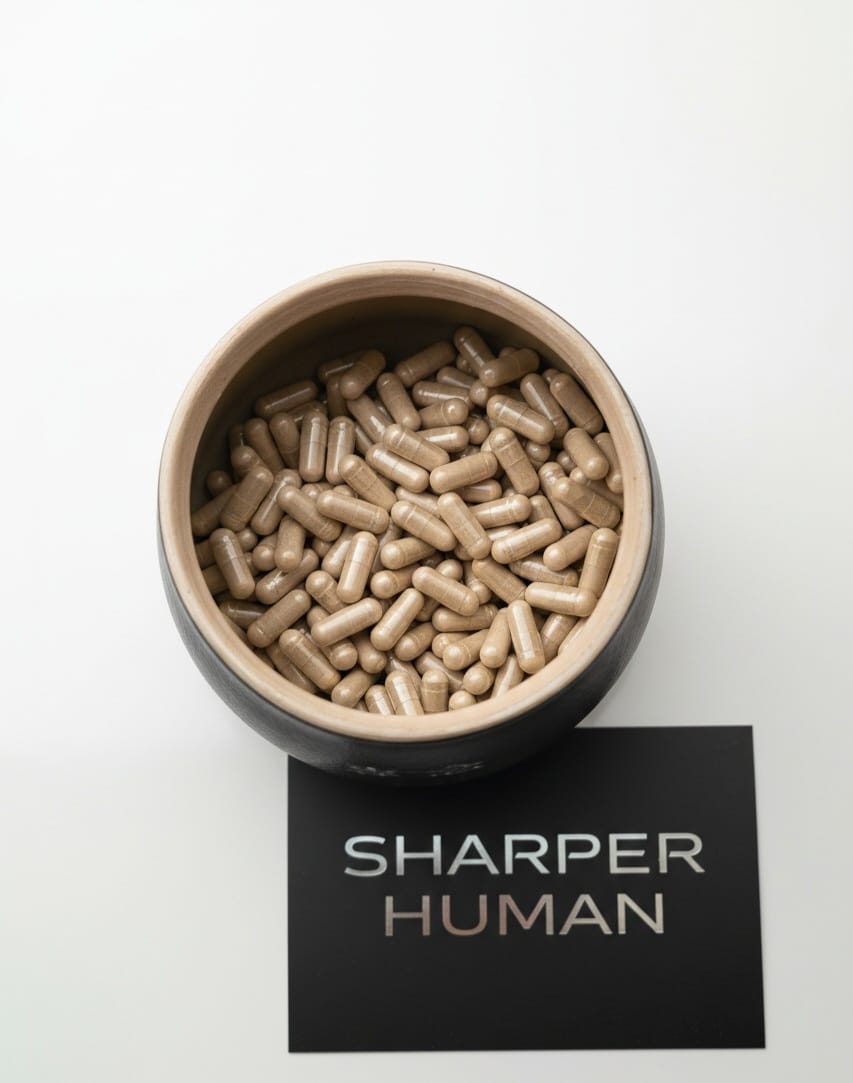
Buy on Amazon UKSharper Human uses a concentrated Lion's Mane extract — 1000mg as a 5:1 extract — which sits at the quality end of the form spectrum, deliberately chosen over cheap raw powder or grain-grown mycelium. The reasoning is that a concentrated 5:1 extract delivers genuine active content (about 5 parts raw material concentrated into 1 part extract), rather than the weak, filler-heavy material of unconcentrated grain-grown mycelium powder — so the Lion's Mane in the formula is a potent, concentrated form, not a high-weight-but-low-active filler. This reflects the quality-of-form principle this guide describes: a concentrated extract chosen for genuine active content, as the guides to Lion's Mane and nootropic mushrooms cover. The choice of a concentrated 5:1 Lion's Mane extract reflects the quality-first, fit-for-purpose logic behind all 20 ingredients, detailed in the ingredients and dosages guide. Sharper Human uses a quality, concentrated Lion's Mane extract — chosen for genuine active content, not weight-padding filler.
The honest bottom line: Lion's Mane quality depends on form — fruiting body (richer in actives) versus cheap grain-grown mycelium (filler-heavy), and concentrated extracts (e.g. 5:1) versus weak raw powder — so favour concentrated fruiting-body extracts. Sharper Human uses a concentrated 1000mg 5:1 Lion's Mane extract, and is available on Amazon in the UK, with US availability planned.
References & further reading
- Kongkeaw C, Dilokthornsakul P, Thanarangsarit P, et al. Meta-analysis of randomized controlled trials on cognitive effects of Bacopa monnieri extract. Journal of Ethnopharmacology. 2014;151(1):528–535. View source ↗
- Docherty S, Doughty FL, Smith EF. The Acute and Chronic Effects of Lion’s Mane Mushroom Supplementation on Cognitive Function, Stress and Mood in Young Adults. Nutrients. 2023;15. View source ↗
- Peer-reviewed research on lions mane forms — PubMed, U.S. National Library of Medicine. View source ↗