Rosemary has been associated with memory for centuries — "there's rosemary, that's for remembrance," wrote Shakespeare — and unusually, modern research has lent some genuine, if modest, support to this ancient reputation. Like its relative sage, rosemary is a traditional herb with a real, mechanistically-plausible basis for its memory associations. The reasons it sits outside a focus formula are about evidence strength and overlap rather than a lack of interest. This is an honest look at rosemary's memory evidence, including the curious aroma research, and why Sharper Human supports the same systems through better-evidenced ingredients. This article is informational and not medical advice.
Key Takeaways
Rosemary's Ancient Memory Reputation
Few herbs have as long-standing an association with memory as rosemary. Across history and folklore, rosemary has been linked to remembrance and memory — famously referenced by Shakespeare, used in various memory-related traditions, and long regarded as a herb that supports the mind. What is notable is that, like sage, rosemary's traditional reputation has not been simply dismissed by modern science; rather, research has explored it and found some genuine, if modest, supporting threads. This places rosemary among the traditional cognitive herbs with a real basis rather than pure folklore. Of course, rosemary is also a beloved culinary herb, and its everyday use in cooking is a pleasant way to include it — though, realistically, culinary amounts differ from the concentrations sometimes studied. The interest here is whether its memory reputation translates into meaningful, evidenced cognitive support.
The Curious Aroma Research
One of the most distinctive and curious aspects of rosemary research concerns its aroma. Several studies have explored the effects of rosemary's scent (its essential oil aroma) on cognition, with some finding associations between exposure to rosemary aroma and aspects of memory performance and alertness. The proposed explanation involves aromatic compounds in rosemary essential oil (such as 1,8-cineole) being absorbed and affecting the brain, including the cholinergic system. This aroma research is genuinely intriguing — the idea that simply smelling a herb could influence cognition is striking — and it adds an unusual dimension to rosemary's memory story. However, honesty requires noting that these studies are limited in number and size, effects are modest, and the area is far from definitively established. It is a fascinating, suggestive line of research rather than firm proof, and it is distinct from taking rosemary as a supplement.
The Compounds and Mechanisms
Beyond aroma, rosemary contains antioxidant compounds — notably carnosic acid and rosmarinic acid — that give it genuine biological activity, primarily antioxidant and anti-inflammatory. Like sage, rosemary's compounds are also thought to interact with the cholinergic system (potentially affecting acetylcholine, the memory neurotransmitter), which provides a plausible mechanistic basis for its memory associations beyond the aroma effects. So rosemary's memory reputation has two mechanistic threads: antioxidant protection, and cholinergic activity. These are genuine, plausible mechanisms shared with other memory-associated herbs. But as with sage, the key point is that while the mechanisms are real and interesting, the human evidence for rosemary supplementation meaningfully enhancing cognition is modest, and the compounds' presence does not by itself prove a strong cognitive effect at realistic doses — a recurring theme with traditional herbs.
Where the Evidence Stands
The honest assessment of rosemary for cognition mirrors that of sage: genuine but modest. There is a plausible mechanistic basis (antioxidant and cholinergic), some intriguing research (including the aroma studies), and a long traditional reputation — more than many herbs can claim. But the human evidence is limited in scale, the effects where found are modest rather than dramatic, and standardisation of rosemary preparations varies. So rosemary sits in the "promising, modestly-evidenced traditional herb" category — worth taking seriously and genuinely interesting, but not in the top tier of robustly-proven cognitive ingredients. This balanced view — neither dismissing the genuine research nor overselling modest findings — is what informs whether rosemary earns a place in a formula that already has stronger options for the same mechanisms, which is the crux of the formulation decision.
The Overlap Question
The key reason rosemary sits outside a focus formula is overlap, the same issue as with sage. Rosemary's two main mechanistic threads — antioxidant activity and cholinergic support — are precisely the systems a well-designed formula already supports through better-established ingredients. For the cholinergic (acetylcholine) side, Citicoline supplies choline with strong attention evidence and a clean profile, as the citicoline guide covers; for antioxidant support, well-chosen ingredients like Bilberry and Lutein are included. Given that the formula already targets these systems through stronger-evidenced ingredients, adding rosemary — with its more modest evidence — would offer diminishing returns for the capsule space. This is the same prioritisation logic applied to sage: choose the strongest-evidenced ingredients for a given mechanism rather than adding modestly-evidenced herbs targeting the same pathways. Rosemary's genuine but modest merits do not displace better options.
Why Sharper Human Uses Better-Evidenced Ingredients
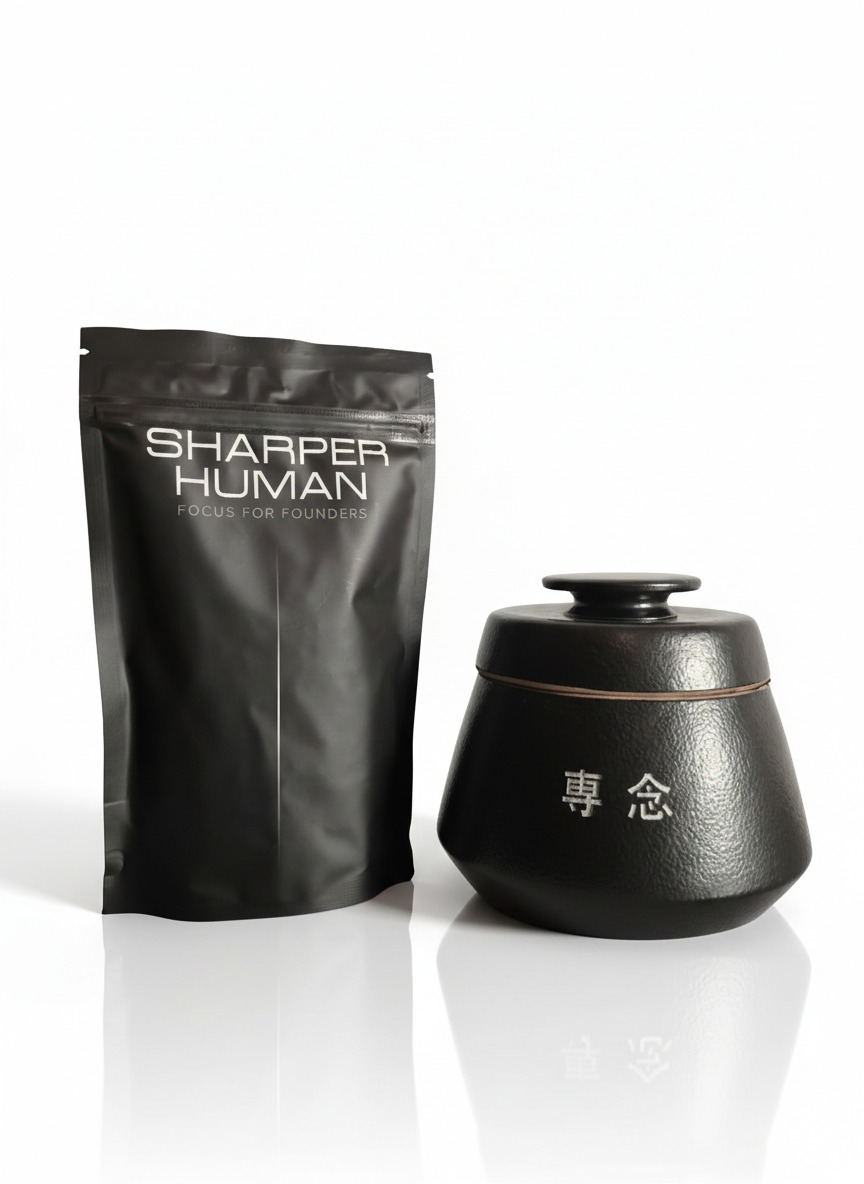
Focus for Founders.
An all-natural brain performance supplement. 20 research-backed ingredients. No caffeine. No stimulants.
Buy on Amazon UKSharper Human does not include rosemary, and the reasoning is evidence and overlap rather than dismissal. Rosemary's memory associations work through antioxidant and cholinergic mechanisms — systems the formula already supports through better-established ingredients: Citicoline (300mg) for acetylcholine and attention, and antioxidant ingredients like Bilberry and Lutein. Spending capsule space on the most robustly-evidenced ingredients for each mechanism, rather than adding a modestly-evidenced herb targeting the same pathways, is the fit-for-purpose logic behind all 20 ingredients, detailed in the ingredients and dosages guide. Rosemary remains a wonderful culinary herb worth enjoying liberally in cooking, and its memory research is genuinely interesting — it is simply not a stronger choice than the formula's existing ingredients for the systems it touches.
The honest bottom line: rosemary is a traditional memory herb with genuine but modest evidence and plausible antioxidant and cholinergic mechanisms (including curious aroma research) — but since Sharper Human already supports those systems through better-evidenced Citicoline and antioxidant ingredients, it sensibly prioritises those. Rosemary remains delightful in cooking. Sharper Human is available on Amazon in the UK, with US availability planned.
References & further reading
- Nakazaki E, Mah E, Sanoshy K, et al. Citicoline and Memory Function in Healthy Older Adults: A Randomized, Double-Blind, Placebo-Controlled Clinical Trial. The Journal of Nutrition. 2021. doi:10.1093/jn/nxab119. View source ↗
- Peer-reviewed research on rosemary memory focus — PubMed, U.S. National Library of Medicine. View source ↗