If you have shopped for ashwagandha, you will have seen trademarked extract names — KSM-66, Sensoril, Shoden — and wondered what they actually mean. These are different standardised extracts of the same herb, and they genuinely differ in their source material, their concentration of active compounds (withanolides), and their reputed emphasis. Understanding these differences helps you read an ashwagandha label properly. This is an honest comparison of the main ashwagandha extracts, how they differ, what the differences mean, and why Sharper Human uses Rhodiola as its adaptogen. This article is informational and not medical advice.
Key Takeaways
Why Ashwagandha Extracts Differ
Ashwagandha (Withania somnifera) is a single herb, but the supplements made from it are not all the same, because different manufacturers produce standardised extracts using different parts of the plant and different concentrations of the active compounds. The key actives are withanolides — the compounds associated with ashwagandha's adaptogenic effects — and extracts are often standardised to a specific withanolide percentage. So when you see a trademarked extract name on a label, it denotes a particular, consistently-produced extract with defined characteristics (source material, withanolide content, processing), as opposed to a generic, unstandardised ashwagandha powder of unknown potency. This is genuinely useful to understand, because it means the ashwagandha in two products can differ meaningfully in concentration and reputed emphasis, as the guides to ashwagandha and adaptogens touch on. The three most prominent standardised extracts — KSM-66, Sensoril and Shoden — illustrate these differences, and comparing them clarifies what the names on a label actually mean.
KSM-66: the Root-Only Standard
KSM-66 is one of the most popular and widely-used ashwagandha extracts, and its defining features are that it is a root-only extract (made from the ashwagandha root, the traditionally-used part, without the leaf) and that it is standardised to a moderate withanolide level (in the region of 5%). The root-only sourcing is significant because traditional ashwagandha use centres on the root, so KSM-66 is positioned as a "full-spectrum" root extract that stays close to traditional use. It is typically used at relatively higher doses (often around 600mg daily, sometimes split). KSM-66 has a substantial body of research behind it (much of the well-known ashwagandha research uses KSM-66 or similar root extracts), covering stress, and various other reputed effects. Its reputation is as a versatile, well-studied, root-based ashwagandha extract suitable for general adaptogenic use. So KSM-66 represents the popular, root-only, moderately-concentrated, well-researched standard — a sensible default for those wanting a traditional-style ashwagandha root extract, and the benchmark against which the other extracts are often compared.
Sensoril: Higher Withanolides, More Calming
Sensoril is another prominent ashwagandha extract, and it differs from KSM-66 in two key ways: it uses both root and leaf (not root only), and it is standardised to a higher withanolide level (often around 10%, roughly double KSM-66's). The use of leaf as well as root, and the higher withanolide concentration, give Sensoril a distinct character. Reputationally, Sensoril is often associated with a more calming, even sedating effect — it is sometimes favoured for stress and relaxation, and for evening use, on the basis of this more soothing reputation. It is typically used at lower doses than KSM-66 (often around 125-250mg), reflecting its higher concentration. So Sensoril's niche is a more concentrated, root-and-leaf extract with a more calming, relaxation-oriented reputation, used at lower doses. The choice between KSM-66 and Sensoril often comes down to this reputed difference: KSM-66 as the versatile root-only standard, Sensoril as the more concentrated, more calming root-and-leaf option — though both are ashwagandha, and individual responses vary, so the reputed distinction should be held lightly rather than as a firm rule.
Shoden: the High-Concentration Extract
Shoden is a more recent, very highly-concentrated ashwagandha extract, standardised to a notably high withanolide level (often cited around 35%, far higher than KSM-66 or Sensoril). Because of this high concentration, Shoden is used at low doses (often around 120mg), delivering a substantial withanolide amount in a small dose. Its positioning emphasises this high potency and the convenience of a low effective dose, with research supporting its use for stress and sleep at these low doses. So Shoden represents the high-concentration end of the ashwagandha extract spectrum — maximum withanolide standardisation in a small dose. For someone prioritising a highly-standardised, potent extract at a low dose, Shoden is the notable option. The existence of Shoden alongside KSM-66 and Sensoril illustrates the range of ashwagandha extracts available, from the popular moderate-concentration root standard (KSM-66), through the more concentrated calming root-and-leaf option (Sensoril), to the very high-concentration low-dose extract (Shoden) — each a legitimately different product despite all being ashwagandha, which is exactly why the extract name on a label matters.
What These Differences Mean for You
For someone choosing an ashwagandha supplement, these extract differences mean the label's extract name and standardisation genuinely matter, and the right choice depends on goals. The practical takeaways: check which extract (and withanolide percentage) a product uses, rather than assuming all ashwagandha is equivalent; consider the reputed emphasis (e.g. KSM-66 as a versatile root standard, Sensoril as more calming, Shoden as a potent low-dose extract) in light of your aims; and note that dose should match the extract's concentration (higher-concentration extracts are used at lower doses). However, two honest caveats apply: the reputed differences (especially around "calming" versus "versatile") are partly marketing and partly genuine, and individual responses to ashwagandha vary regardless of extract; and ashwagandha generally is an evening/calming-leaning adaptogen for many people, which matters for when and why you'd use it, as the comparison in the Rhodiola versus ashwagandha guide covers. So understanding extracts helps you choose sensibly, while keeping realistic expectations about the reputed distinctions.
Why Sharper Human Uses Rhodiola Instead
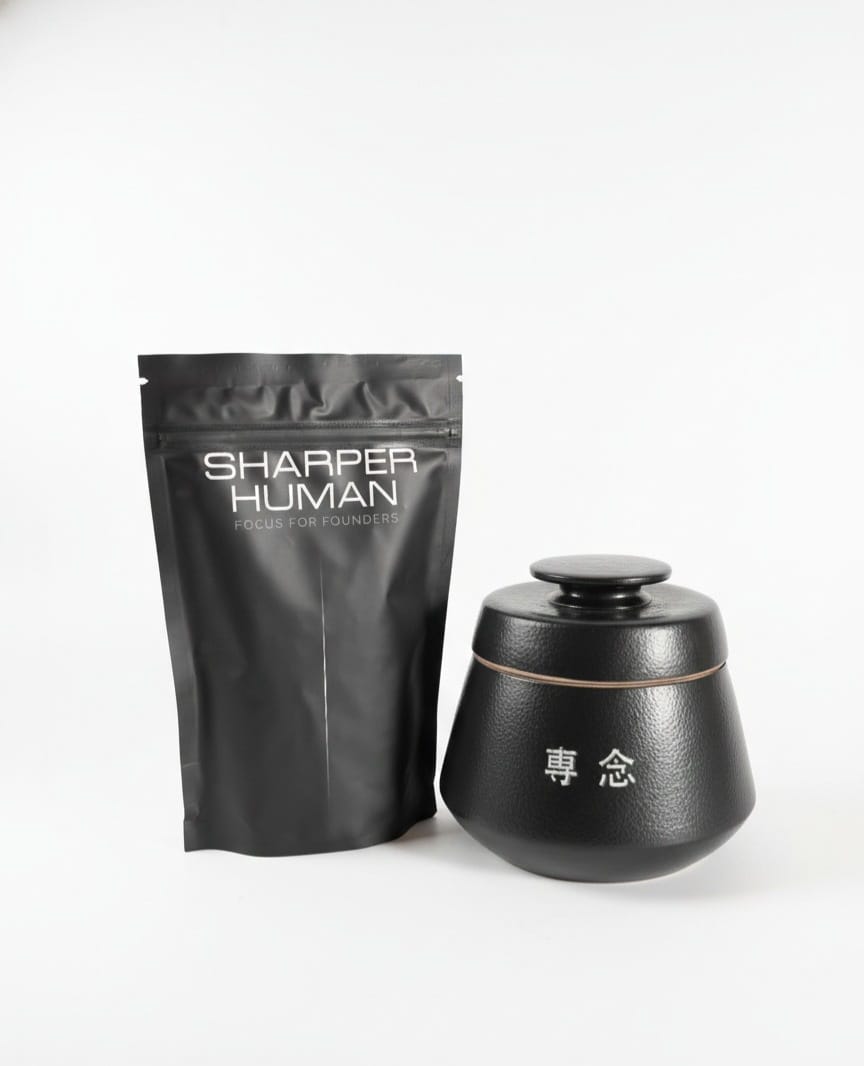
Focus for Founders.
An all-natural brain performance supplement. 20 research-backed ingredients. No caffeine. No stimulants.
Buy on Amazon UKSharper Human does not use ashwagandha — in any extract form — and instead uses Rhodiola Rosea (150mg, a 5:1 extract) as its adaptogen, which is a deliberate, fit-for-purpose choice. The reasoning is that ashwagandha, across its extracts, tends to lean calming or even sedating for many people (particularly the more concentrated extracts like Sensoril), which suits evening or stress-relaxation use more than a daytime focus formula. Rhodiola, by contrast, is an adaptogen with a more energising, anti-fatigue character — it supports stress resilience and mental stamina while tending to be activating rather than sedating, making it better suited to a daytime focus and drive formula, as the Rhodiola versus ashwagandha comparison explains. So rather than selecting among ashwagandha extracts, Sharper Human uses the adaptogen better matched to daytime cognitive support. This deliberate adaptogen choice reflects the fit-for-purpose logic behind all 20 ingredients, detailed in the ingredients and dosages guide. The ashwagandha extracts are all legitimate — but Rhodiola is the better-matched adaptogen for daytime focus.
The honest bottom line: KSM-66 (root-only, moderate withanolides, versatile), Sensoril (root-and-leaf, higher withanolides, more calming) and Shoden (very high withanolides, low dose) are genuinely different ashwagandha extracts, so the label matters — but Sharper Human uses Rhodiola, a more energising adaptogen better suited to a daytime focus formula. Sharper Human is available on Amazon in the UK, with US availability planned.
References & further reading
- Punja S, Shamseer L, Olson K, Vohra S. Rhodiola rosea for Mental and Physical Fatigue in Nursing Students: A Randomized Controlled Trial. PLoS One. 2014;9(9):e108416. View source ↗
- National Institutes of Health, Office of Dietary Supplements. Omega3Fatt\1 \2cids — Fact Sheet for Health Professionals. View source ↗
- Peer-reviewed research on ashwagandha extract types — PubMed, U.S. National Library of Medicine. View source ↗