
Rhodiola Rosea and Ashwagandha are the two most popular and well-researched adaptogenic herbs used in nootropic supplements — but they differ significantly in their primary cognitive effects, mechanisms, energy profiles, and suitability for different types of mental performance. Understanding these differences explains why leading nootropic brands choose one over the other, and which might better serve your specific cognitive needs.
Key Takeaways
Head-to-Head Comparison
| Factor | Rhodiola Rosea | Ashwagandha (KSM-66) |
|---|---|---|
| Primary Cognitive Effect | Mental fatigue reduction, sustained attention | Anxiety reduction, calm under pressure |
| Focus Impact | Direct — targets attentional endurance | Indirect — removes anxiety that disrupts focus |
| Energy Profile | Mildly stimulating, energising | Calming, mildly sedating |
| Optimal Timing | Morning (supports daytime cognitive work) | Evening (calming effect supports wind-down) |
| Physical Benefits | Endurance enhancement, fatigue resistance | Testosterone support, muscle recovery, sleep quality |
| Onset Speed | Relatively quick (1-2 weeks for noticeable effects) | Gradual (4-8 weeks for full effects) |
| Mechanism | HPA axis modulation — prevents cortisol-driven cognitive fatigue | GABAergic modulation + cortisol reduction — reduces anxiety response |
| Key Research | Phytomedicine — reduced mental fatigue, improved attention under stress | Journal of Clinical Medicine — reduced cortisol, improved stress resilience |
| Best For | Knowledge workers, entrepreneurs, long focus sessions | Anxious individuals, high-pressure environments, recovery support |
Rhodiola Rosea — The Cognitive Endurance Adaptogen
Rhodiola's primary mechanism acts on the hypothalamic-pituitary-adrenal (HPA) axis — modulating the stress response to prevent cortisol from progressively impairing cognitive function during demanding work. Clinical trials published in Phytomedicine and Planta Medica have demonstrated measurable improvements in attention, processing speed, and subjective cognitive function in stressed populations. Participants reported reduced mental fatigue and improved ability to sustain concentration during prolonged cognitive tasks.
The practical translation: Rhodiola helps you think clearly at 4pm the same way you think clearly at 9am. It prevents the progressive cognitive degradation that accumulates during long working days — the reason your best thinking happens early and your worst decisions happen late. For entrepreneurs, professionals, and knowledge workers whose cognitive output determines their income, this endurance effect is directly valuable.
Rhodiola's mildly energising profile makes it naturally suited for morning supplementation and daytime cognitive work. It doesn't cause stimulant-like jitteriness (it's not a stimulant) but it does have an alerting, focusing quality that supports productive work sessions. This is why Sharper Human — designed for daytime cognitive performance — chose Rhodiola as its adaptogenic component.
Ashwagandha — The Anxiety-Reducing Adaptogen
Ashwagandha (particularly the KSM-66 standardised extract) works primarily through GABAergic modulation and cortisol reduction. Its strongest clinical evidence is for anxiety reduction — a systematic review published in the Journal of Clinical Medicine found consistent reductions in self-reported stress and anxiety scores, alongside measurable cortisol reductions in stressed populations.
The focus benefit is real but indirect: for people whose concentration is primarily disrupted by anxiety, rumination, and worry (rather than mental fatigue), reducing the anxiety clears the path for better focus. If you find yourself unable to concentrate because your mind keeps returning to worries about a client situation, financial pressure, or personal concerns, Ashwagandha addresses the root cause more directly than Rhodiola would.
Ashwagandha also has notable non-cognitive benefits: testosterone support in men (clinical evidence for increased testosterone levels), improved sleep quality (its calming effect supports wind-down), and enhanced physical recovery from exercise. These broader benefits explain its popularity in general wellness supplementation beyond the nootropic category. Hunter Focus chose Ashwagandha (KSM-66 300mg) — reflecting a broader wellness approach rather than a pure cognitive-performance focus.
Which Nootropic Brands Use Which — And Why
The adaptogen choice in a nootropic formula reveals its design philosophy:
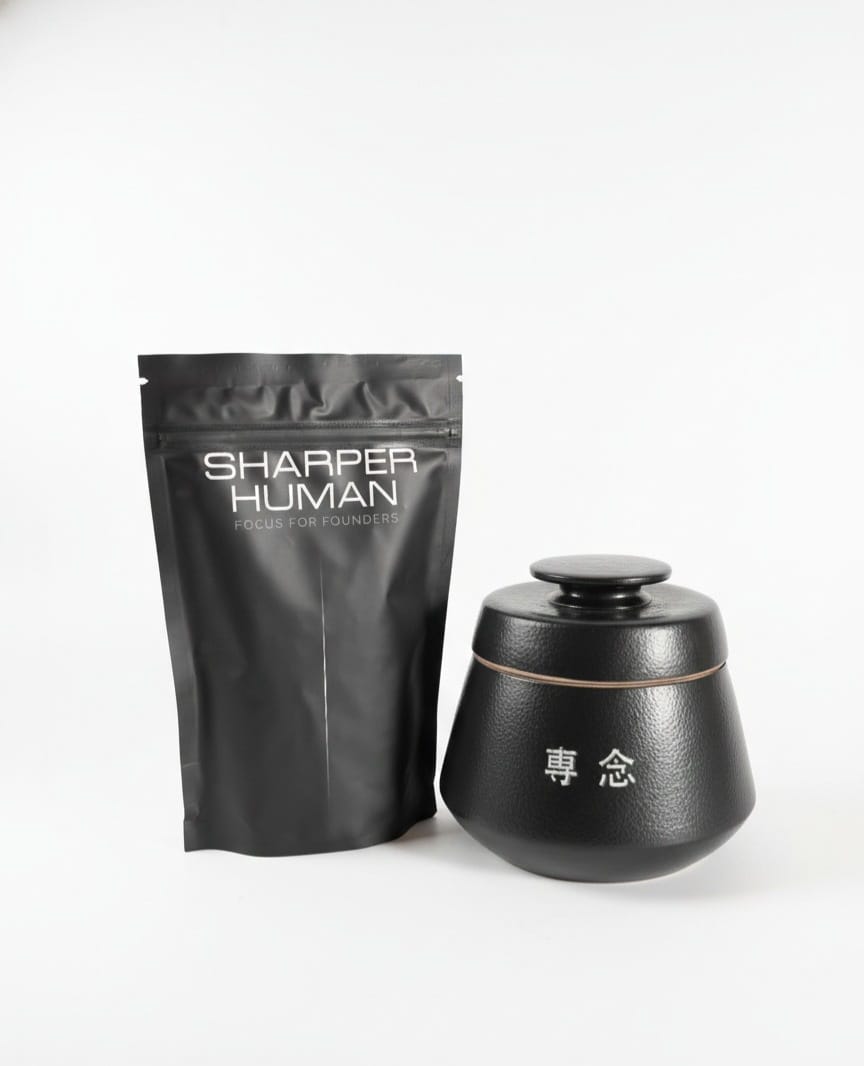
Focus for Founders.
An all-natural brain performance supplement. 20 research-backed ingredients. No caffeine. No stimulants.
Buy on Amazon UKSharper Human uses Rhodiola Rosea (150mg 5:1, equivalent to 750mg raw) — reflecting its "Focus for Founders" positioning. The target user is an entrepreneur or knowledge worker whose primary cognitive challenge is maintaining sharp, sustained thinking during long hours of demanding work under chronic business pressure. Rhodiola's mental fatigue reduction mechanism directly addresses this challenge.
Hunter Focus uses Ashwagandha (KSM-66 300mg) — reflecting a broader professional wellness approach. The target user may benefit from anxiety reduction alongside cognitive support, and the broader physical benefits (testosterone, recovery, sleep) complement the cognitive ingredients.
Mind Lab Pro uses Rhodiola Rosea (50mg standardised extract) — a smaller dose reflecting the same cognitive-performance-first philosophy as Sharper Human, though at a dosage that delivers less adaptogenic potency (50mg of standardised extract versus Sharper Human's 150mg of 5:1 extract, equivalent to 750mg raw).
Can You Take Both?
Some nootropic users combine Rhodiola and Ashwagandha — taking Rhodiola in the morning for daytime cognitive endurance and Ashwagandha in the evening for stress recovery and sleep support. This combination is generally well-tolerated and addresses both the cognitive fatigue and anxiety dimensions of stress. However, it requires purchasing separate supplements and managing timing — which is one reason pre-built stacks typically choose one or the other rather than including both.
Choosing Based on Your Goal and Time of Day
Beyond their individual profiles, the most practical way to choose between Rhodiola and Ashwagandha is to match the adaptogen to your specific goal and the time of day you need it. If your priority is daytime cognitive performance — sustained focus, resistance to mental fatigue, and staying sharp under pressure during work — Rhodiola is the more fitting choice, thanks to its gently activating, non-sedating profile that supports alertness rather than dulling it. If your priority is winding down — easing the sense of stress in the evening, supporting relaxation and sleep — Ashwagandha's more calming, sometimes sedating character suits that purpose better, and many people who use it prefer an evening dose for this reason.
This goal-and-timing framing also explains why the two are not really competitors so much as tools for different jobs. Someone with a demanding, high-focus day and a need to stay composed under pressure leans Rhodiola; someone whose main struggle is a racing, stressed mind at night leans Ashwagandha. It is also why a daytime focus formula sensibly favours the activating adaptogen: a focus stack aims to support alertness and drive during the day, which aligns with Rhodiola's profile rather than a sedating one. Sharper Human reflects this logic, including Rhodiola (150mg of a 5:1 extract) as its adaptogen for daytime stress resilience and cognitive endurance, while leaving the more calming, evening-oriented Ashwagandha to those whose goal is relaxation — a clear illustration of matching the ingredient to the formula's daytime focus purpose.
References & further reading
- Punja S, Shamseer L, Olson K, Vohra S. Rhodiola rosea for Mental and Physical Fatigue in Nursing Students: A Randomized Controlled Trial. PLoS One. 2014;9(9):e108416. View source ↗
- National Institutes of Health, Office of Dietary Supplements. Omega3Fatt\1 \2cids — Fact Sheet for Health Professionals. View source ↗
- Peer-reviewed research on rhodiola rosea ashwagandha — PubMed, U.S. National Library of Medicine. View source ↗