
Rhodiola Rosea is an adaptogenic herb with some of the strongest clinical evidence of any natural compound for reducing mental fatigue, improving cognitive function under stress, and supporting sustained attention during demanding work. For entrepreneurs, professionals, and knowledge workers operating under chronic pressure, it's one of the most directly relevant nootropic ingredients available — and one where extract quality dramatically affects outcomes.
Key Takeaways
Understanding Adaptogens and the HPA Axis
Adaptogens are a specific category of herbal compounds that modulate the body's stress response — helping the system adapt to stressors rather than becoming overwhelmed by them. The term has a precise scientific definition rooted in Russian pharmacological research from the mid-20th century, where Rhodiola Rosea was one of the original compounds studied.
The HPA axis (hypothalamic-pituitary-adrenal axis) is the body's central stress response system. When you encounter a stressor — whether it's a difficult client conversation, a financial setback, or simply the accumulated pressure of a long working day — the HPA axis triggers cortisol release. Acute cortisol elevation is useful: it sharpens alertness and mobilises energy. But chronic cortisol elevation — the kind that business owners, professionals under sustained pressure, and anyone dealing with prolonged stress experience — directly impairs cognitive function.
Research published in Psychoneuroendocrinology has documented that chronic cortisol elevation impairs hippocampal function (memory formation), reduces prefrontal cortex efficiency (executive function and decision-making), decreases processing speed, and degrades working memory capacity. Rhodiola Rosea modulates the HPA axis to prevent this chronic elevation — not by blocking cortisol (which would be dangerous) but by helping the stress response system self-regulate more efficiently.
Why Extract Ratio Matters for Rhodiola
The Rhodiola supplement market includes products ranging from raw root powder to concentrated extracts at various ratios. The difference in potency is enormous. Raw Rhodiola root powder contains relatively dilute concentrations of the active compounds — rosavins (the primary adaptogenic compounds) and salidroside (the secondary adaptogenic compound). A 5:1 extract concentrates these actives five-fold, meaning 150mg of 5:1 extract delivers the equivalent active compound load of 750mg of raw root.
Clinical trials demonstrating cognitive benefits have typically used standardised extracts containing 3% rosavins and 1% salidroside — the "golden ratio" identified in early research as optimal for adaptogenic effects. When evaluating UK Rhodiola products, checking for this standardisation is essential — products that list only raw milligram amounts without specifying rosavin content may contain insufficient levels of the compounds that actually drive the cognitive benefits.
Best Rhodiola Products in the UK
Sharper Human — 150mg Rhodiola 5:1 Within a 20-Ingredient Formula
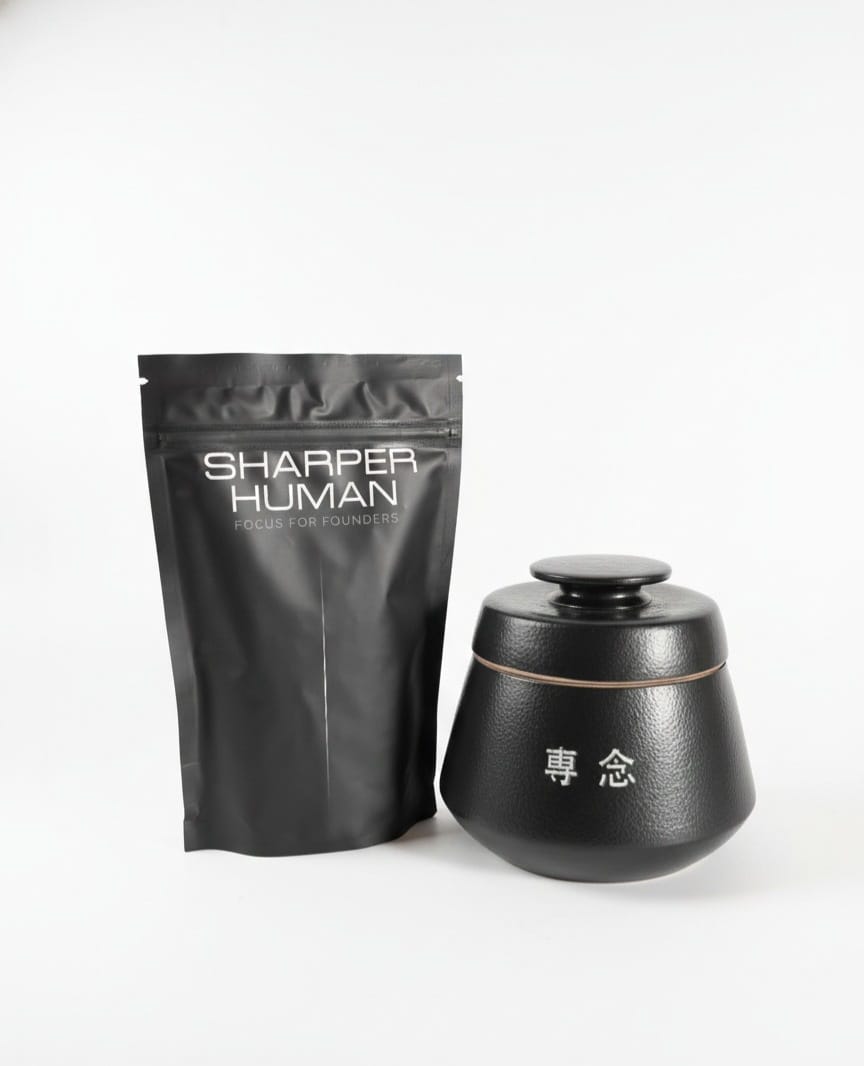
Focus for Founders.
An all-natural brain performance supplement. 20 research-backed ingredients. No caffeine. No stimulants.
Buy on Amazon UKWithin Sharper Human's formula, Rhodiola Rosea (150mg 5:1, equivalent to 750mg raw) provides the adaptogenic stress management layer that the other cognitive compounds need to work optimally. This is a critical design insight: stress is the single biggest disruptor of nootropic efficacy. Citicoline, L-Tyrosine, and Lion's Mane all work more effectively when the brain isn't being impaired by chronic cortisol elevation. Rhodiola's stress-management function isn't just one ingredient among twenty — it's the enabling condition that allows the other nineteen to deliver their full potential.
The interaction between Rhodiola and Phosphatidylserine (301mg) is particularly noteworthy — both modulate cortisol, but through different mechanisms. Rhodiola acts centrally on the HPA axis; PS acts peripherally by blunting the cortisol response at the adrenal level. The combination provides stress resilience from two complementary angles.
Standalone Rhodiola
Nature's Way Rhodiola Rosea, Vitabiotics Rhodiola, and Holland & Barrett's own-brand Rhodiola are all available in the UK at approximately £10-15 per month. These are reliable products for anyone who specifically wants Rhodiola in isolation. The tradeoff is familiar: standalone Rhodiola addresses stress management but leaves focus, memory, neuroprotection, and brain energy unsupported. For someone already taking multiple other supplements, adding standalone Rhodiola makes sense. For someone building a cognitive support regimen from scratch, a comprehensive stack including Rhodiola offers better coverage at better total value.
Rhodiola vs Ashwagandha: Which Adaptogen for Focus?
This comparison comes up frequently, and the answer depends on the primary cognitive challenge you're addressing. Rhodiola's primary benefit is mental fatigue reduction and sustained attention under cognitive stress — directly relevant for knowledge workers during long working days. Its effect profile is mildly stimulating and energising, making it ideal for morning use. Ashwagandha's primary benefit is anxiety reduction and calm — indirectly supporting focus for people whose concentration is primarily disrupted by anxiety and worry. Its effect profile is mildly calming and sedating, making it better suited to evening use.
Sharper Human chose Rhodiola over Ashwagandha based on this distinction — the "Focus for Founders" positioning prioritises the mental fatigue reduction that knowledge workers need most during demanding work sessions. Hunter Focus chose Ashwagandha (KSM-66 300mg), which may better suit users whose stress manifests primarily as anxiety rather than cognitive fatigue.
Evidence Base: What the Clinical Research Shows
Rhodiola Rosea's clinical evidence is particularly strong for three specific outcomes. First, reduced mental fatigue during sustained cognitive work — multiple studies published in Phytomedicine and Planta Medica demonstrate measurable improvements in attention, processing speed, and subjective cognitive function in stressed populations. Second, improved cognitive performance under conditions of fatigue and sleep deprivation — research from the Swedish Herbal Institute demonstrated that Rhodiola supplementation maintained cognitive performance during night-shift work better than placebo. Third, reduced burnout symptoms in chronically stressed professionals — a pilot study published in Neuropsychiatric Disease and Treatment found significant improvements in burnout symptoms after 12 weeks of Rhodiola supplementation.
For UK professionals specifically — where presenteeism (working while cognitively impaired) costs the economy billions annually according to the UK Government health at work survey — Rhodiola's ability to maintain cognitive function under exactly the chronic stress conditions that drive presenteeism makes it one of the most practically relevant adaptogenic compounds available.
References & further reading
- Nakazaki E, Mah E, Sanoshy K, et al. Citicoline and Memory Function in Healthy Older Adults: A Randomized, Double-Blind, Placebo-Controlled Clinical Trial. The Journal of Nutrition. 2021. doi:10.1093/jn/nxab119. View source ↗
- Punja S, Shamseer L, Olson K, Vohra S. Rhodiola rosea for Mental and Physical Fatigue in Nursing Students: A Randomized Controlled Trial. PLoS One. 2014;9(9):e108416. View source ↗
- Docherty S, Doughty FL, Smith EF. The Acute and Chronic Effects of Lion’s Mane Mushroom Supplementation on Cognitive Function, Stress and Mood in Young Adults. Nutrients. 2023;15. View source ↗
- Peer-reviewed research on rhodiola rosea — PubMed, U.S. National Library of Medicine. View source ↗