
Astaxanthin is a deep-red carotenoid antioxidant, the pigment that gives salmon and flamingos their colour, and it has become a popular supplement on the strength of being an unusually powerful free-radical scavenger. It is a genuinely interesting compound — but the gap between "potent antioxidant in a test tube" and "noticeable everyday cognitive benefit" is worth examining honestly. This is a clear-eyed look at astaxanthin for brain and eye health, how it compares to lutein, and why Sharper Human uses lutein and bilberry for eye support rather than astaxanthin.
Key Takeaways
What Astaxanthin Is
Astaxanthin belongs to the carotenoid family — the same broad group as beta-carotene and lutein — and is produced by certain microalgae (most commercially from Haematococcus pluvialis), accumulating up the food chain to colour salmon, trout and shellfish. Its claim to fame is antioxidant potency: in laboratory terms it is an exceptionally effective scavenger of certain free radicals, and unlike some antioxidants it can act across both the fatty and watery parts of cells and cross the blood-brain barrier. This potency, combined with good safety, is what has driven its popularity as a supplement for skin, eyes, exercise recovery and general antioxidant support.
Where the Evidence Stands
Astaxanthin's most credible human research clusters around eye health (it accumulates in eye tissue and is studied for visual fatigue and eye strain), skin (protection against UV-related oxidative damage), and exercise recovery and endurance. These are reasonable, if still developing, areas. The brain-specific evidence in healthy people, however, is much earlier — largely mechanistic and preclinical, resting on its antioxidant action and ability to reach the brain rather than on robust cognitive trials. As with several antioxidants, the in-vitro potency is impressive, but impressive test-tube antioxidant numbers do not automatically translate into measurable everyday cognitive gains, and honesty means keeping that distinction clear.
Astaxanthin vs Lutein for the Eyes
Since eye support is one of astaxanthin's strongest areas, it is worth comparing it with the carotenoid Sharper Human actually uses: lutein. Lutein, together with zeaxanthin, is selectively concentrated in the macula of the eye, where it forms the macular pigment that filters high-energy blue light and protects the retina — and it has substantial, well-established research for long-term eye health and for the visual strain associated with screen use. Astaxanthin is studied more for accommodation and eye fatigue. Both are legitimate, but lutein's role as a core structural macular pigment, backed by large long-term studies, makes it the better-evidenced choice for foundational eye support in a daily formula. This is the kind of evidence-led comparison that informs sensible formulation.
Safety and Considerations
Astaxanthin has a good safety profile at typical supplemental doses, with few reported side effects; a harmless reddish tint to the skin can occur at high intakes. It is fat-soluble, so it is better absorbed with a meal containing fat. There are no major interaction concerns for most people, though as always anyone pregnant, breastfeeding or on medication should check with a professional. Overall it is a low-risk supplement — the question is less about safety and more about whether it earns a place for a given goal.
How Astaxanthin Is Taken
For anyone whose goals align with astaxanthin's strengths — eye fatigue, skin protection or exercise recovery — a few practical points help. Because it is fat-soluble, astaxanthin is considerably better absorbed when taken with a meal containing some fat, so pairing it with food is sensible rather than taking it on an empty stomach. Typical supplemental doses fall in the single-digit-milligram range, which is modest, and quality matters: most reputable products use astaxanthin derived from the microalgae Haematococcus pluvialis rather than synthetic sources, and this natural form is generally preferred. As with other antioxidants, freshness and proper storage help, since the compound can degrade with exposure to light and heat.
It is also worth setting realistic expectations. Astaxanthin is not an acute "feel it today" supplement; like most antioxidants its proposed benefits accrue gradually with consistent use, and they are best understood as supportive rather than dramatic. Used for the right goal, with food, from a quality source and over a sustained period, it is a low-risk addition — but it is not a substitute for the foundations of eye and skin health, such as not smoking, protecting the eyes from screens and sun, and a diet rich in colourful plants that supply a range of carotenoids.
Why Sharper Human Uses Lutein and Bilberry Instead
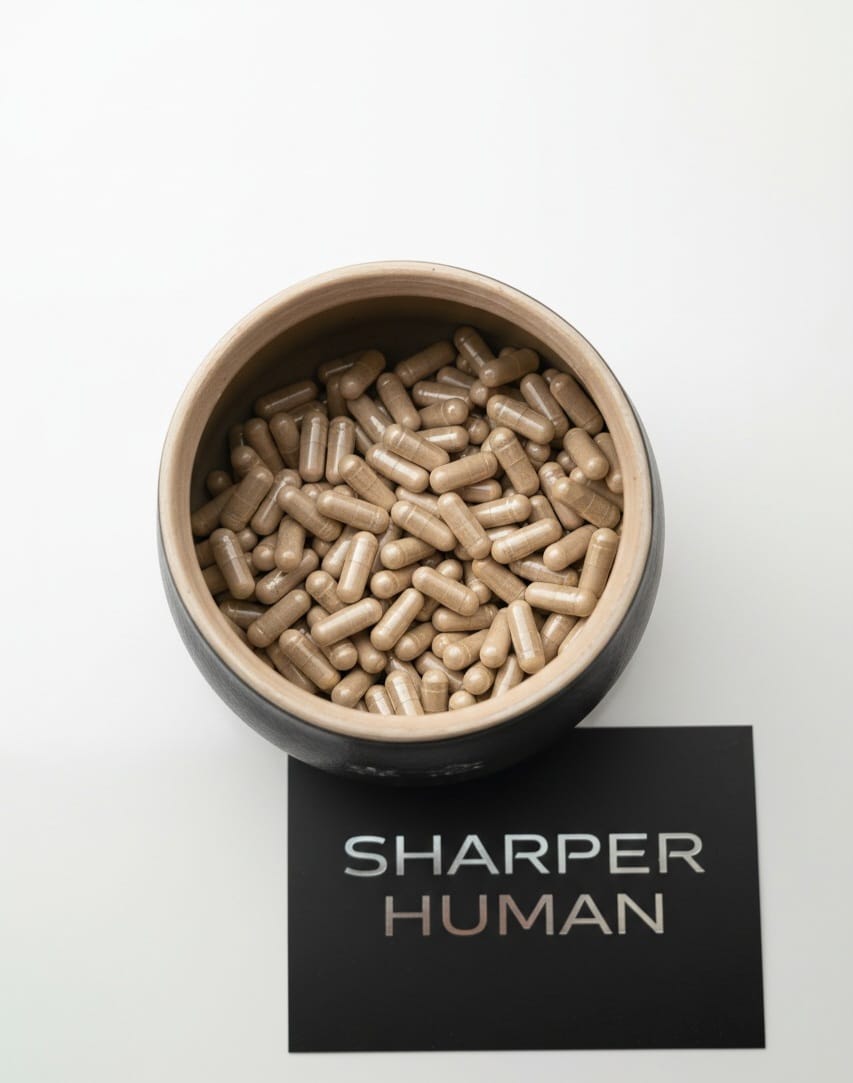
Focus for Founders.
An all-natural brain performance supplement. 20 research-backed ingredients. No caffeine. No stimulants.
Buy on Amazon UKSharper Human does not include astaxanthin; for the eye-and-antioxidant role within its formula it uses Lutein (21mg) alongside Bilberry (120mg of a 15:1 extract). The reasoning is evidence and fit. Lutein is the carotenoid the eye actively concentrates into its protective macular pigment, with large, long-term human studies behind it — making it the stronger foundation for the screen-heavy, focus-oriented audience the product serves — and bilberry adds anthocyanin antioxidants traditionally associated with eye and vascular health. Astaxanthin's strengths in skin and exercise recovery sit outside a cognitive formula's remit, and its brain evidence is early. Choosing the carotenoid with the most directly relevant, best-established research for the product's purpose is the same logic behind all 20 of its ingredients.
The honest bottom line: astaxanthin is a potent, safe antioxidant with genuine promise for eye, skin and recovery support, and anyone focused on those goals may find a quality product worthwhile — but for foundational eye support in a daily cognitive stack, lutein and bilberry are the better-evidenced choices. Sharper Human is available on Amazon in the UK for around £79 per month, with US availability planned.
References & further reading
- Peer-reviewed research on astaxanthin brain eyes — PubMed, U.S. National Library of Medicine. View source ↗
- Suliman NA, Mat Taib CN, Mohd Moklas MA, et al. Establishing Natural Nootropics: Recent Molecular Enhancement Influenced by Natural Nootropic. Evidence-Based Complementary and Alternative Medicine. 2016. View source ↗