
No supplement replaces a good diet, and the foundation of brain health is built at the table. The best foods for brain health supply the fats, antioxidants and micronutrients the brain runs on — omega-3 DHA, choline, polyphenols, B-vitamins and more. Understanding which foods deliver them is the most useful starting point for anyone serious about long-term cognition. Where diet falls short, a well-formulated supplement like Sharper Human can help fill specific gaps, but it works best alongside the foods below, not instead of them.
Key Takeaways
The Foods With the Strongest Backing
Oily fish — salmon, sardines, mackerel — is the standout, supplying the omega-3 fatty acid DHA, a structural building block of neuronal membranes associated with cognition across the lifespan. Those who eat little fish often fall short on DHA.
Eggs are the best common dietary source of choline, the raw material for acetylcholine, the neurotransmitter behind focus and memory.
Berries, especially blueberries, are rich in anthocyanins — polyphenol antioxidants studied in the context of memory and brain ageing.
Dark leafy greens — spinach, kale — supply folate and other nutrients linked to cognitive health, alongside a broad antioxidant load.
Nuts and seeds provide vitamin E, healthy fats and, in walnuts, some plant omega-3.
Extra-virgin olive oil is a cornerstone of the Mediterranean diet, rich in polyphenols and monounsaturated fats associated with brain health.
It Is the Pattern, Not the Single Food
The most important point about eating for the brain is that no single food is magic — it is the overall dietary pattern that matters. The Mediterranean diet, rich in fish, vegetables, fruit, nuts, legumes and olive oil and low in ultra-processed food, is the most consistently studied example, associated with better long-term cognitive outcomes. Whole foods also deliver their nutrients in context — fibre, co-factors and a matrix of compounds that work together — which is part of why diet is the foundation and supplements are the supplement. Stable blood sugar matters too: the steep spikes and crashes of a heavily refined diet are no friend to sustained focus.
Building a Brain-Healthy Plate
Turning the list of brain foods into a routine is more useful than memorising it. A practical weekly pattern looks like oily fish two or three times a week for DHA; eggs regularly for choline; a daily handful of berries and a generous serving of dark leafy greens for polyphenols and folate; nuts and seeds as snacks for vitamin E and healthy fats; and extra-virgin olive oil as the default cooking and dressing fat. Built around plenty of vegetables, legumes, whole grains and minimal ultra-processed food, that is essentially the Mediterranean pattern the research keeps returning to — not because any one meal transforms cognition, but because the cumulative pattern, sustained over years, is what tracks with better long-term brain health.
The habits around the plate matter as much as its contents. Hydration is the easiest win and the most neglected: even mild dehydration measurably slows cognitive processing, so water through the day is part of eating for the brain. Stable blood sugar is another — the spikes and crashes of a refined, sugary diet undermine sustained focus, whereas protein, fibre and slow carbohydrates keep energy even. Alcohol is worth honest attention too, since it disrupts the sleep that consolidates memory. And there is growing interest in the gut-brain axis: a diverse, fibre-rich diet that supports gut health may also support mood and cognition, another argument for the same whole-food pattern.
None of this is exotic, and that is the point. The foundations of brain health are genuinely dietary and behavioural, and they are largely free. A supplement's honest job is to fill the specific gaps that remain once the plate and the habits are in order — which is exactly how the section below frames it.
Where a Supplement Fits
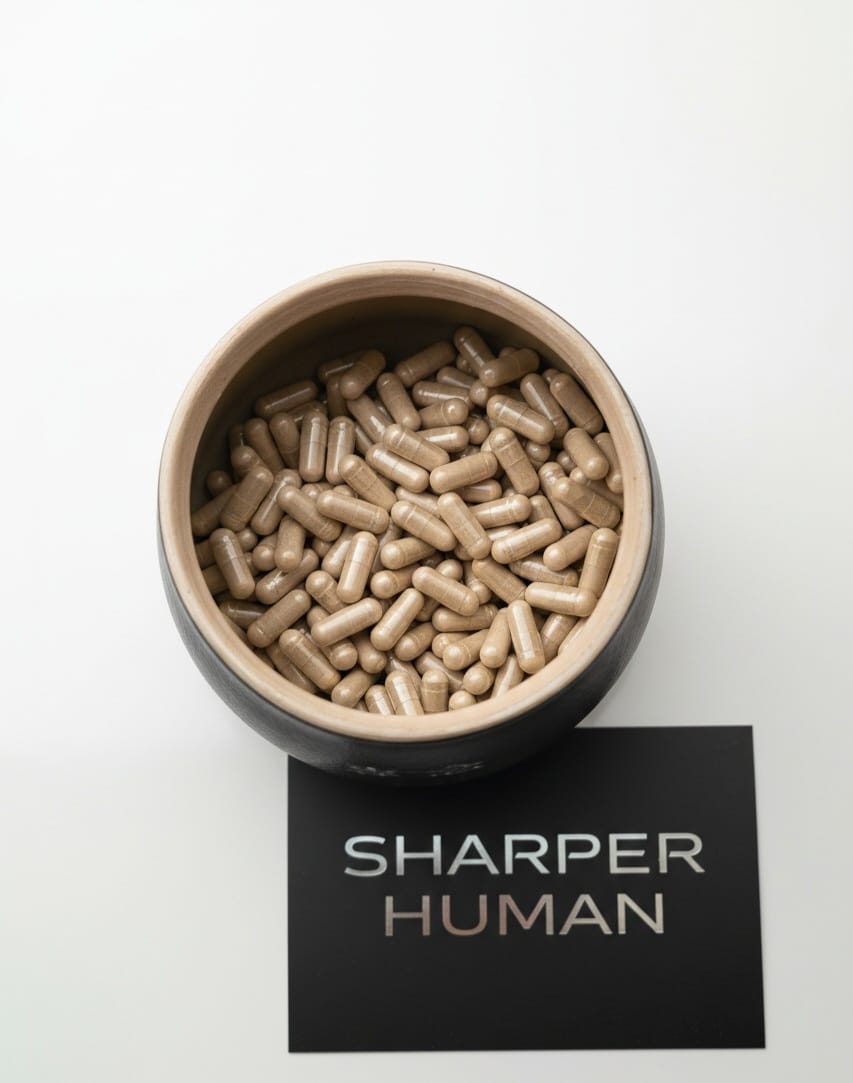
Focus for Founders.
An all-natural brain performance supplement. 20 research-backed ingredients. No caffeine. No stimulants.
Buy on Amazon UKEven a good diet has gaps, and that is the honest role for a supplement: to top up specific nutrients that are hard to get enough of, not to replace the plate. Someone who eats little oily fish, for example, may be low in DHA; someone eating few eggs may be light on choline. Sharper Human is designed around cognition and provides several of the same compounds these foods deliver — 50mg of DHA from a vegan algae source (useful for those who avoid fish), 300mg of Citicoline as a choline source, and a full B-complex including folate at 203mcg — alongside its broader focus and memory ingredients. It is best understood as complementary to a brain-healthy diet rather than a substitute, and because it is caffeine-free it fits easily into a daily routine. A one-month supply is around £79.
The sensible order of priorities is clear: build the diet first, protect sleep and exercise, and use a supplement to fill the gaps that remain. It is worth remembering, too, that no supplement offsets a poor diet: the fats, polyphenols and micronutrients above do their work in the context of whole foods, and a capsule is a top-up rather than a replacement for the plate. For those wanting cognitive support alongside good food, Sharper Human is available on Amazon in the UK, with US availability planned.
References & further reading
- Nakazaki E, Mah E, Sanoshy K, et al. Citicoline and Memory Function in Healthy Older Adults: A Randomized, Double-Blind, Placebo-Controlled Clinical Trial. The Journal of Nutrition. 2021. doi:10.1093/jn/nxab119. View source ↗
- Peer-reviewed research on foods brain health — PubMed, U.S. National Library of Medicine. View source ↗