Cacao — the raw form of chocolate — is more than a treat; it contains a genuinely interesting mix of compounds, including flavanol antioxidants and theobromine, a gentle relative of caffeine. It is often mentioned in the focus and mood conversation, and for good reason. But it also blurs the line between food, mood-booster and mild stimulant, which is exactly the kind of distinction worth being honest about. This is a clear look at what cacao and theobromine do, the cognitive evidence, and why Sharper Human stays caffeine- and stimulant-free rather than including them.
Key Takeaways
What's Actually in Cacao
Cacao is a surprisingly complex food. Its most researched components are flavanols — a class of polyphenol antioxidants also found in tea and berries — which are associated with supporting blood vessel function and blood flow, including to the brain. It also contains theobromine, a mild stimulant alkaloid, along with a small amount of caffeine; together these give cacao a gentle lift. And it contains trace compounds sometimes linked to mood, such as small amounts of substances that may contribute to the pleasant feeling associated with good chocolate. It is this combination — antioxidants, a mild stimulant, and mood associations — that makes cacao interesting, but it also means cacao is doing several different things at once.
Theobromine vs Caffeine
Theobromine is worth understanding on its own, because it is the main stimulant in cacao and is often pitched as a "gentler caffeine". That framing has some truth: theobromine is milder and longer-acting than caffeine, with less of the sharp jittery peak and less impact on sleep for many people. But it is still a stimulant — it acts on the body in a related way, can affect heart rate and, in sensitive individuals, still influence sleep and anxiety. The honest point is that "gentler" does not mean "not a stimulant", and for a product specifically designed to be stimulant-free, a milder stimulant is still a stimulant and still excluded on principle.
The Cognitive and Mood Evidence
The most credible research on cacao centres on its flavanols. Cocoa flavanols have been studied for supporting blood flow and vascular function, and some trials have linked higher flavanol intake to modest cognitive benefits, possibly via improved cerebral blood flow. There is also genuine interest in cacao and mood, partly through the stimulant lift and partly through its pleasant sensory and psychological associations. The caveats are familiar: effects are generally modest, much depends on the flavanol dose (most chocolate is low in flavanols and high in sugar), and the research is still developing. Cacao is best seen as a pleasant food with some promising flavanol-related properties rather than a powerful nootropic.
Getting Cacao's Benefits From Food
For anyone keen on cacao's upsides, the sensible route is dietary rather than a stimulant supplement. High-cacao dark chocolate or unsweetened cocoa provides the flavanols without much added sugar, and it fits naturally into a brain-healthy diet alongside other polyphenol-rich foods like berries and tea. Enjoyed this way, cacao contributes antioxidants and a small, pleasant lift as part of a balanced diet — which is a very different proposition from adding a stimulant to a daily supplement. This keeps the gentle stimulant effect in the context of food, where it belongs, rather than building it into a product meant for everyone.
Cacao Myths Worth Clearing Up
Cacao attracts a fair amount of romantic mythology, and a little clarity helps separate the genuine from the overstated. The most common myth is that chocolate is straightforwardly a "health food" — but most chocolate is low in the beneficial flavanols and high in sugar and fat, and flavanol content drops with heavy processing, so a sugary milk-chocolate bar is a treat, not a flavanol supplement. The flavanol benefits seen in research generally involve high-cacao, minimally-processed products or concentrated cocoa, in meaningful amounts. A second myth concerns the mood compounds: cacao does contain trace substances associated with mood, but the amounts are small, and much of chocolate's feel-good effect owes more to its sensory pleasure and its mild stimulant lift than to any single magic molecule.
A third point worth clearing up is the stimulant question itself. Cacao's theobromine and small caffeine content provide a gentle lift that some mistake for "stimulant-free energy" — but it is a mild stimulant effect, not the absence of one. For most people that gentle lift is pleasant and well tolerated as part of enjoying dark chocolate, but it is still a stimulant, which is the relevant distinction for a product that deliberately contains none.
Why Sharper Human Stays Stimulant-Free
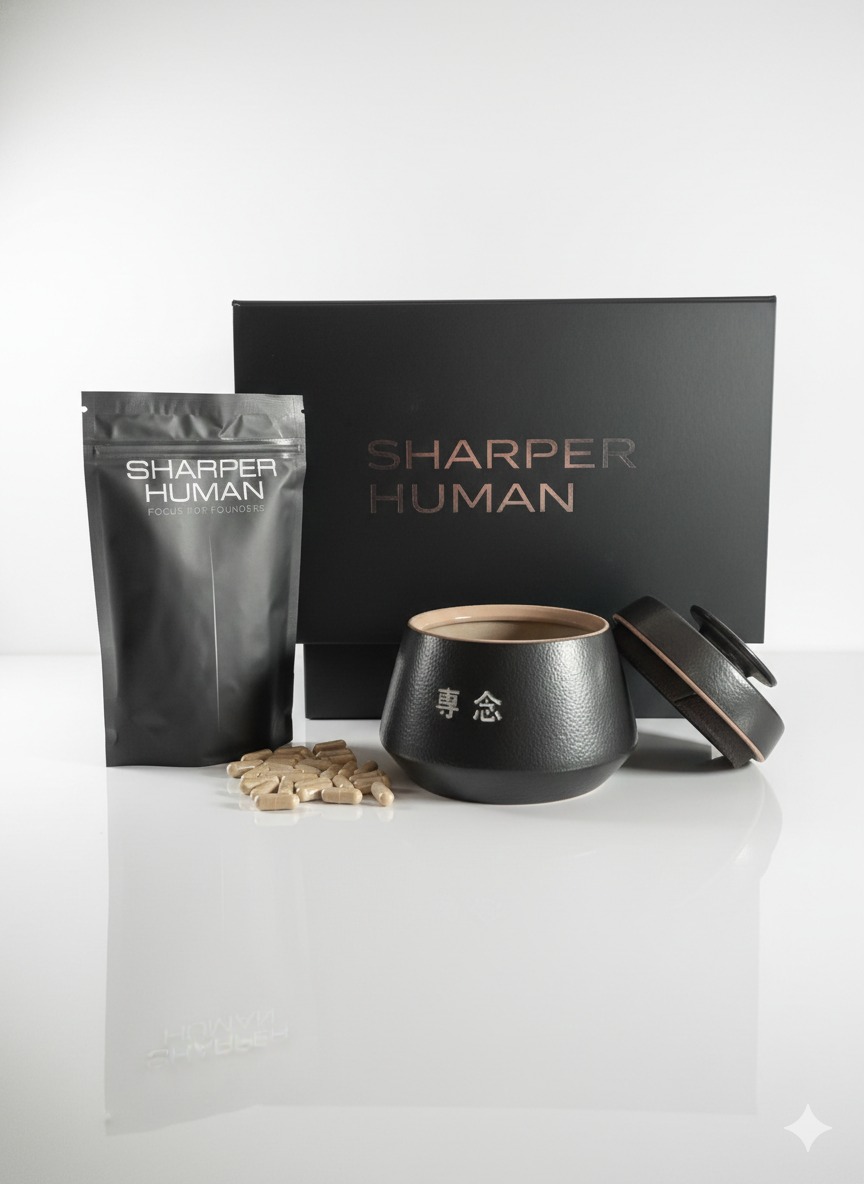
Focus for Founders.
An all-natural brain performance supplement. 20 research-backed ingredients. No caffeine. No stimulants.
Buy on Amazon UKSharper Human does not include cacao or theobromine, and the reason is foundational to the product: it is deliberately caffeine- and stimulant-free. That design choice is the whole point of the formula — it supports focus, drive and mental energy through non-stimulant pathways so it can be taken daily, and even in the afternoon, without a crash or disrupted sleep. Including theobromine, however mild, would compromise that stimulant-free promise. For the focus and mood benefits people sometimes seek from cacao, Sharper Human uses non-stimulant ingredients instead — L-Tyrosine (350mg) to support the dopamine system behind drive and mood, Rhodiola (150mg) for stress-related fatigue, and a full B-complex for mental energy. For cacao's antioxidant flavanols, the formula draws on Bilberry and its broader antioxidant ingredients, while cacao itself is best enjoyed as food. This is the consistent logic behind all 20 ingredients.
The honest bottom line: cacao is a genuinely interesting food with promising flavanols and a gentle, pleasant lift, best enjoyed as high-cacao dark chocolate within a balanced diet — but theobromine is still a stimulant, and a deliberately stimulant-free focus stack is right to leave it out. Sharper Human is available on Amazon in the UK for around £79 per month, with US availability planned.
References & further reading
- Punja S, Shamseer L, Olson K, Vohra S. Rhodiola rosea for Mental and Physical Fatigue in Nursing Students: A Randomized Controlled Trial. PLoS One. 2014;9(9):e108416. View source ↗
- Peer-reviewed research on cacao theobromine focus — PubMed, U.S. National Library of Medicine. View source ↗