Strength training is physical, but anyone who lifts seriously knows it has a substantial mental side — focus, the mind-muscle connection, motivation to train hard, and concentration under the bar. This raises a fair question: can nootropics, which support cognition, help with the mental dimension of strength training? The honest answer is that they may support the mental side, while not being direct physical performance enhancers like some training supplements. This is an honest look at nootropics and strength training — what they can and can't do, and why a caffeine-free formula suits training. This article is informational and not medical advice.
Key Takeaways
The Mental Side of Strength Training
Strength training is fundamentally physical, but it has a substantial mental component that experienced lifters recognise as genuinely important to performance. This mental side includes focus and concentration (directing full attention to a heavy lift, which demands and benefits from mental focus), the mind-muscle connection (the deliberate mental focus on the working muscle, which is associated with better engagement and training quality), motivation and drive (the will to train hard, push through difficult sets, and stay consistent), and managing the mental aspects of effort (concentration and composure under the bar). So while muscles do the physical work, the mind plays a real role in directing that work effectively — focusing attention, driving effort, and engaging the right muscles. This mental dimension is why the question of whether nootropics (which support cognition) can help with strength training is a fair one: if cognition, focus and motivation matter to training quality, then support for those mental functions could be relevant to the mental side of lifting, as the guide to nootropics and exercise touches on. Understanding that strength training has this genuine mental component is the basis for considering where cognitive support fits.
How Nootropics May Support It
Given the mental side of training, nootropics may support strength training by supporting the cognitive and motivational functions involved. Ingredients that support focus and attention could help with the concentration and mind-muscle connection that quality training demands — being mentally locked in on a lift, fully focused on the working muscle, rather than distracted. Ingredients that support drive and motivation (such as those supporting the dopamine system) could help with the will to train hard and consistently, as the guide to energy and motivation covers. And support for mental energy and stress resilience could help with maintaining focus and composure through a demanding session. So the way nootropics may help with strength training is through supporting the mental functions — focus, mind-muscle connection, motivation, mental energy — that contribute to training quality, rather than through any direct physical effect. For someone who finds their training limited at times by mental factors (distraction, low motivation, difficulty focusing), cognitive support addressing those factors could plausibly help the mental side of their training. This is a sensible, honest framing of nootropics' potential relevance to lifting: supporting the mind that directs the training, not the muscles directly.
What Nootropics Don't Do
Equally important, for honesty, is being clear about what nootropics don't do for strength training. Nootropics are not direct physical performance enhancers — they don't directly increase muscle strength, power, size or physical capacity the way certain well-evidenced training supplements do. The clearest contrast is creatine: creatine is a well-evidenced supplement for directly supporting strength, power and muscle (working through physical, energy-system mechanisms), and it is in a completely different category from nootropics. Nootropics support the cognitive and motivational side of training, while creatine (and proper training, nutrition and recovery) drive the physical adaptations — so nootropics are complementary to, not substitutes for, the physical fundamentals and physical-performance supplements. Expecting a nootropic to directly boost your strength or build muscle would be mistaken; that is not what cognitive support does. So the honest picture is that nootropics may help the mental side of training (focus, motivation, mind-muscle connection) but are not physical performance enhancers — for direct strength and muscle, training, nutrition, recovery and evidenced physical supplements like creatine are the levers. This clear distinction keeps expectations realistic: nootropics for the mental dimension, physical fundamentals for the physical adaptations.
Why Caffeine-Free Suits Training
A particular advantage of a caffeine-free nootropic for strength training relates to how it fits with common training supplement habits and with recovery. Many lifters use pre-workout supplements or other products that contain caffeine (often substantial amounts) for energy and stimulation before training — so adding a caffeine-containing nootropic on top would stack caffeine on caffeine, risking excessive stimulation, jitters, elevated heart rate and an unpleasant over-stimulated feeling. A caffeine-free nootropic avoids this: it can support focus and drive for training without adding to the caffeine load from a pre-workout, allowing mental support without excess stimulation. Additionally, for those who train later in the day or evening, a caffeine-free formula supports training focus without the caffeine that could disrupt subsequent sleep — and sleep is crucial for recovery and muscle growth, so not compromising it matters for results. So a caffeine-free nootropic is well-suited to strength training: it complements (rather than compounds) the caffeine in many pre-workouts, and it supports training without harming the sleep that underpins recovery, as the broader guide to focus for athletes covers. This makes the caffeine-free quality a genuine practical advantage for lifters specifically.
A Sensible Approach for Lifters
For a lifter considering a nootropic, a sensible approach follows from all this. Recognise that a nootropic may support the mental side of training (focus, mind-muscle connection, motivation, mental energy) — a genuine and useful contribution if mental factors sometimes limit your training — while keeping realistic expectations that it won't directly increase strength or muscle (for which training, nutrition, recovery and evidenced physical supplements like creatine are the tools). Favour a caffeine-free nootropic to complement rather than compound any caffeinated pre-workout and to protect sleep/recovery. And remember the fundamentals do the heavy lifting (literally and figuratively): consistent training, adequate protein and nutrition, and good sleep and recovery are what build strength and muscle, with a nootropic as a supporting layer for the mental side. So the sensible approach is to use a nootropic for the genuine mental dimension of training, as a complement to — never a replacement for — the physical fundamentals, ideally a caffeine-free one that fits well with training and recovery. This realistic, fundamentals-first framing, with cognitive support as a useful mental-side complement, is the honest way to think about nootropics and strength training.
How Sharper Human Fits Training
Focus for Founders.
An all-natural brain performance supplement. 20 research-backed ingredients. No caffeine. No stimulants.
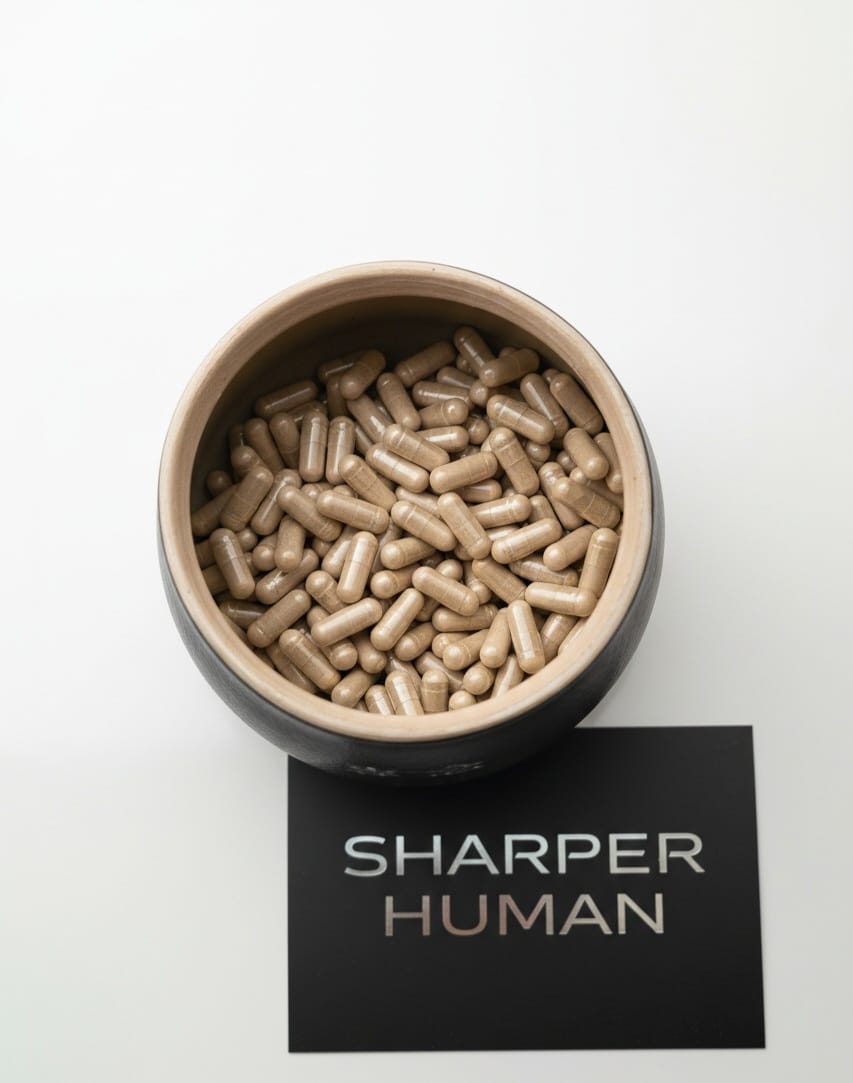
Buy on Amazon UKSharper Human fits the mental side of strength training well, as a caffeine-free formula supporting the cognitive and motivational dimension of lifting. It supports focus and attention (relevant to concentration and the mind-muscle connection), supports the dopamine-and-drive system via L-Tyrosine (relevant to training motivation, as the energy and motivation guide covers), and supports mental energy and stress resilience — all relevant to the mental side of training. Crucially, it is completely caffeine-free, so it complements rather than compounds the caffeine in many pre-workouts (no stacking stimulants, no jitters) and won't disrupt the sleep that recovery and muscle growth depend on, even if you train later. The honest framing, consistent with the formula's whole approach, is that it supports the mental dimension of training (focus, drive, mind-muscle connection) — not direct strength or muscle, for which training, nutrition, recovery and physical supplements like creatine are the levers, as the athletes guide and exercise guide cover. This caffeine-free, mental-side support reflects the fit-for-purpose design detailed in the ingredients and dosages guide.
The honest bottom line: nootropics may support the mental side of strength training — focus, the mind-muscle connection, motivation — but they aren't direct physical enhancers like creatine, so they complement the physical fundamentals rather than replacing them. A caffeine-free formula like Sharper Human suits training (complementing pre-workout caffeine, protecting sleep), and is available on Amazon in the UK, with US availability planned.
References & further reading
- Peer-reviewed research on help strength training — PubMed, U.S. National Library of Medicine. View source ↗
- Suliman NA, Mat Taib CN, Mohd Moklas MA, et al. Establishing Natural Nootropics: Recent Molecular Enhancement Influenced by Natural Nootropic. Evidence-Based Complementary and Alternative Medicine. 2016. View source ↗