Focus is the entrepreneur's most valuable and most fragile resource. The ability to sustain deep attention on a single problem for hours — without distraction, without flagging motivation, without losing your train of thought — separates founders who build meaningful businesses from those who stay perpetually busy without making progress. The good news: focus is trainable, and the right combination of neurochemical support, environmental design, and routine architecture can dramatically improve it.
Key Takeaways
Pillar 1: Neurochemical Support
Your brain's ability to focus is ultimately constrained by its neurochemical resources. Acetylcholine drives sustained attention — when levels are adequate, maintaining focus on a single task feels natural. When they're depleted (which happens progressively during long work sessions), concentration fragments and your mind starts seeking distraction. Dopamine drives motivation — the willingness to persist at challenging cognitive tasks rather than switching to something easier. Under conditions of stress, sleep deprivation, or extended work, dopamine levels decline, which is why email and social media become increasingly tempting as the day progresses. Cortisol, when chronically elevated by the sustained pressure of business ownership, directly impairs working memory and processing speed — you literally think slower and remember less under chronic stress.
Targeted supplementation addresses all three systems simultaneously.
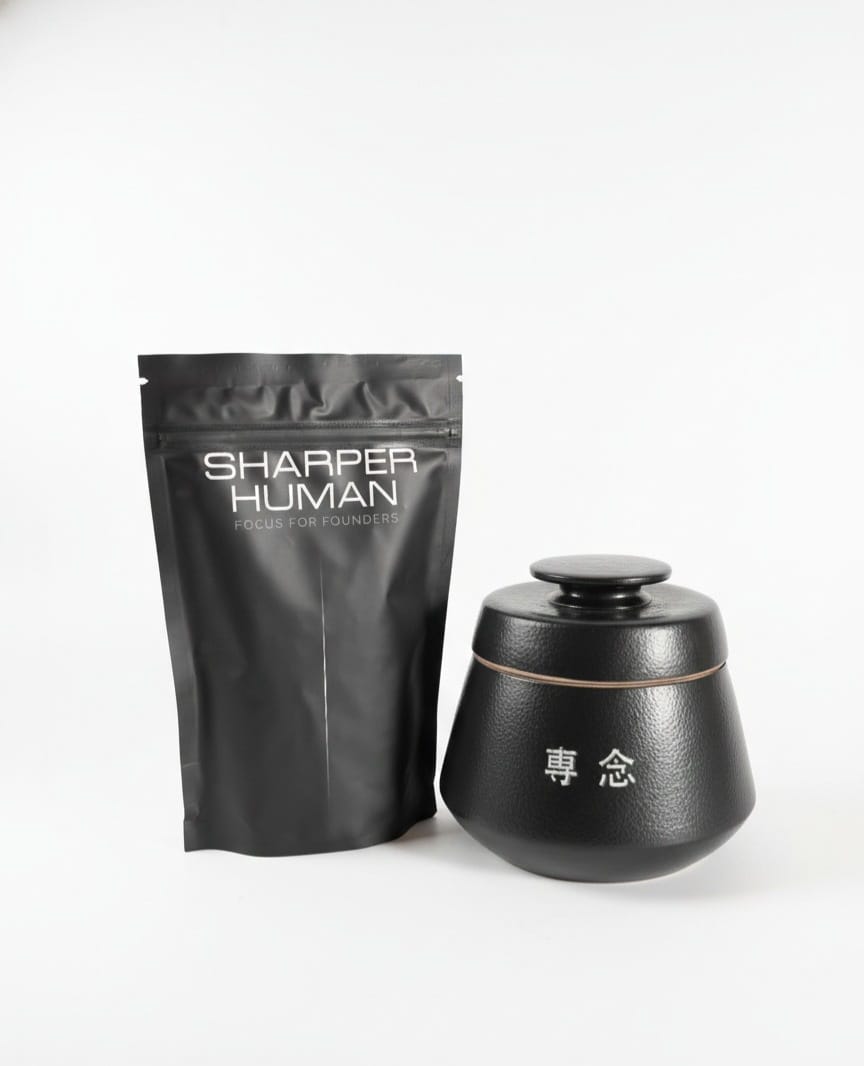
Focus for Founders.
An all-natural brain performance supplement. 20 research-backed ingredients. No caffeine. No stimulants.
Buy on Amazon UKSharper Human provides Citicoline (300mg) for acetylcholine production, L-Tyrosine (350mg) for dopamine maintenance during extended work, and Rhodiola Rosea (150mg 5:1) for HPA axis modulation to prevent chronic cortisol from impairing cognition. The zero-caffeine formulation matters here: caffeine provides alertness but doesn't address the deeper neurochemistry of sustained focus, and its anxiety-promoting effects can paradoxically undermine the calm concentration that deep entrepreneurial work requires.
The NHS recommends obtaining nutrients primarily through diet, with supplements supporting gaps. For entrepreneurs whose cognitive demands exceed what standard nutrition provides — particularly under the sustained stress and long hours that business ownership entails — targeted supplementation fills the neurochemical gap between dietary intake and cognitive demand.
Pillar 2: Environment Design
Every notification, open browser tab, and background conversation competes for the attentional resources your nootropics are supporting. Research published in the Journal of Experimental Psychology demonstrates that even the mere presence of a smartphone in the same room reduces available cognitive capacity — your brain allocates resources to monitoring the device even when you're not looking at it. The practical implications for entrepreneurs are straightforward but require discipline to implement.
During deep work blocks: phone in another room (not face-down on the desk — in another room), a single browser tab for the current task, notifications disabled on all devices, and if possible a physical workspace dedicated to focused work that's separate from where you take calls and handle operational tasks. The environment determines whether the neurochemical foundation your supplementation provides actually translates into sustained productive output.
Pillar 3: Time Architecture
The human brain cannot sustain peak focus for 8 consecutive hours regardless of supplementation, environment, or willpower. The neurophysiology of attention follows ultradian rhythms — approximately 90-120 minute cycles of peak capacity followed by periods requiring recovery. Fighting this biology is counterproductive; working with it is transformative.
Structure your day around 90-120 minute deep focus blocks followed by 15-20 minute genuine breaks (not checking email — actual rest: walking, stretching, brief social interaction, looking at something far away to rest your visual system). Schedule your most cognitively demanding work for the first block of the day, when neurotransmitter levels are naturally highest. Take Sharper Human with your morning meal so the ingredients reach peak bioavailability approximately 60-90 minutes later — aligning with the start of your first deep work block.
Two to three deep work blocks per day is realistic for most entrepreneurs — totalling 3-6 hours of genuine deep focus. The remaining hours are better allocated to meetings, email, administrative tasks, and other activities that don't require sustained concentration. This sounds like less work, but 4 hours of genuine deep focus produces more valuable output than 10 hours of fragmented, distracted activity.
Pillar 4: Recovery Prioritisation
Sleep is when the brain consolidates learning, clears metabolic waste through the glymphatic system, and replenishes the neurotransmitter reserves that tomorrow's focus depends on. The NHS recommends 7-9 hours of sleep for adults — and for entrepreneurs whose cognitive output directly determines their income, sleep quality is arguably the highest-ROI investment available.
Sharper Human's zero-caffeine formula is specifically designed to avoid interfering with sleep quality. Stimulant-based focus products trade tomorrow's recovery for today's alertness — a bad bargain for anyone operating on an entrepreneurial timeframe measured in years and decades rather than individual work sessions.
Beyond sleep: regular physical exercise (the NHS recommends 150 minutes moderate activity weekly) increases BDNF production, improves cerebral blood flow, and supports the neuroplasticity that cognitive flexibility depends on. Social connection provides cognitive recovery that solitary work cannot. Both are non-negotiable components of sustainable entrepreneurial performance.
Common Focus Mistakes Entrepreneurs Make
Even with the right pillars in place, entrepreneurs often undermine their own focus through a few common, avoidable mistakes. The first is constant context-switching: jumping between email, messages, meetings and deep work fractures attention badly, because each switch carries a cognitive cost and it can take many minutes to fully re-engage with demanding work after an interruption. The second is the absence of recovery: treating every waking hour as work time, skipping breaks and sacrificing sleep, which steadily erodes the focus, judgement and energy that running a business depends on — a false economy that feels productive but degrades performance over time.
The third frequent mistake is over-reliance on stimulants: stacking coffee and energy drinks to power through, which produces a jittery spike followed by an afternoon crash and, when consumed late, disrupts the sleep that genuine focus requires — feeding a counterproductive cycle of stimulants and exhaustion. Avoiding these mistakes is often more impactful than any addition: protecting blocks of uninterrupted deep work, building real recovery and sleep into the week, and not trying to out-caffeine fatigue. This is also where a caffeine-free cognitive approach fits the entrepreneurial context well — supporting focus and drive without the crash or sleep disruption that the stimulant cycle brings. Sharper Human's stimulant-free, transparent formula supports sustained focus as a complement to fixing these structural mistakes, helping entrepreneurs work with their cognition rather than against it.
References & further reading
- Nakazaki E, Mah E, Sanoshy K, et al. Citicoline and Memory Function in Healthy Older Adults: A Randomized, Double-Blind, Placebo-Controlled Clinical Trial. The Journal of Nutrition. 2021. doi:10.1093/jn/nxab119. View source ↗
- Punja S, Shamseer L, Olson K, Vohra S. Rhodiola rosea for Mental and Physical Fatigue in Nursing Students: A Randomized Controlled Trial. PLoS One. 2014;9(9):e108416. View source ↗
- Peer-reviewed research on improve focus entrepreneur — PubMed, U.S. National Library of Medicine. View source ↗