Staying mentally sharp into later life is less about any single trick and more about a handful of habits, practised consistently, that protect and support the brain over decades. The good news is that the evidence-based levers are well understood and mostly free — exercise, sleep, diet, mental challenge and social connection do the heavy lifting. A well-formulated supplement can support specific systems on top of those foundations, but it is the foundations that matter most. This guide covers the habits that keep a brain sharp, and where something like Sharper Human fits.
Key Takeaways
1. Move Your Body — the Single Biggest Lever
If there is one habit to prioritise, it is regular aerobic exercise. It is among the most robustly supported interventions for long-term brain health, associated with raised levels of brain-derived neurotrophic factor (BDNF), better blood flow to the brain, and healthier hippocampal volume — the region central to memory. The widely cited target of around 150 minutes of moderate activity a week is a sensible floor, and adding resistance training supports both body and brain. Movement is not optional background advice here; it is the foundation everything else builds on.
2. Protect Your Sleep
Sleep is when the brain clears metabolic waste, consolidates memory and carries out maintenance. Chronic poor sleep is linked to worse cognitive outcomes over time, which makes a consistent sleep schedule, a dark cool room and limited late caffeine genuine brain-protective habits — not luxuries. This is also a quiet argument for caffeine-free cognitive support: anything taken to aid focus should not come at the cost of the sleep that protects the brain.
3. Eat for the Brain
Dietary patterns rich in oily fish, vegetables, fruit, nuts and olive oil — the Mediterranean pattern — are consistently associated with better long-term cognition. The key nutrients include the omega-3 DHA (a structural fat of neurons), choline (for acetylcholine), B-vitamins, and a broad load of antioxidants from colourful plants. Whole foods deliver these in context, which is why diet is the foundation and supplements are the top-up.
4. Keep Challenging Your Mind
The "use it or lose it" principle has real substance. Genuinely novel mental challenge — learning a language or instrument, taking up a complex new skill, anything that stretches the brain rather than running familiar routines — supports cognitive reserve, the brain's resilience against age-related change. Passive activities do little; difficulty is the point.
5. Stay Socially Connected
Social connection is an underrated brain-protective factor. Loneliness and isolation are associated with worse cognitive outcomes, while rich social engagement supports mood and mental stimulation at once. Conversation is itself a demanding cognitive workout. Prioritising relationships is genuinely good for the brain.
Manage the Risk Factors You Can Control
Alongside the positive habits, a great deal of long-term brain protection comes from managing the vascular and metabolic risk factors that quietly damage the brain over decades — and most of these are within a person's control. What is good for the heart is good for the brain: the same blood vessels supply both, so keeping blood pressure, blood sugar and cholesterol in healthy ranges protects the brain's circulation and is consistently linked to better cognitive ageing. Not smoking is among the clearest wins, since smoking damages blood vessels and is associated with faster cognitive decline. Keeping alcohol within moderate limits matters too, as heavy drinking is both directly harmful to neurons and disruptive to the sleep that maintains them.
A couple of less obvious factors are worth adding. Addressing hearing loss has emerging links to cognitive health, possibly because straining to hear loads the brain and reduces engagement, so using hearing aids where needed may be protective. Managing chronic stress and treating depression matter as well, given their associations with cognitive function. None of this is about fear; it is about recognising that brain health is built quietly over years through ordinary medical and lifestyle care — regular check-ups, treating conditions that arise, and the same habits that protect the rest of the body. A well-formulated supplement can support specific nutritional systems on top of all this, but managing these controllable risks is foundational, and far more powerful than anything in a capsule.
Where a Supplement Fits
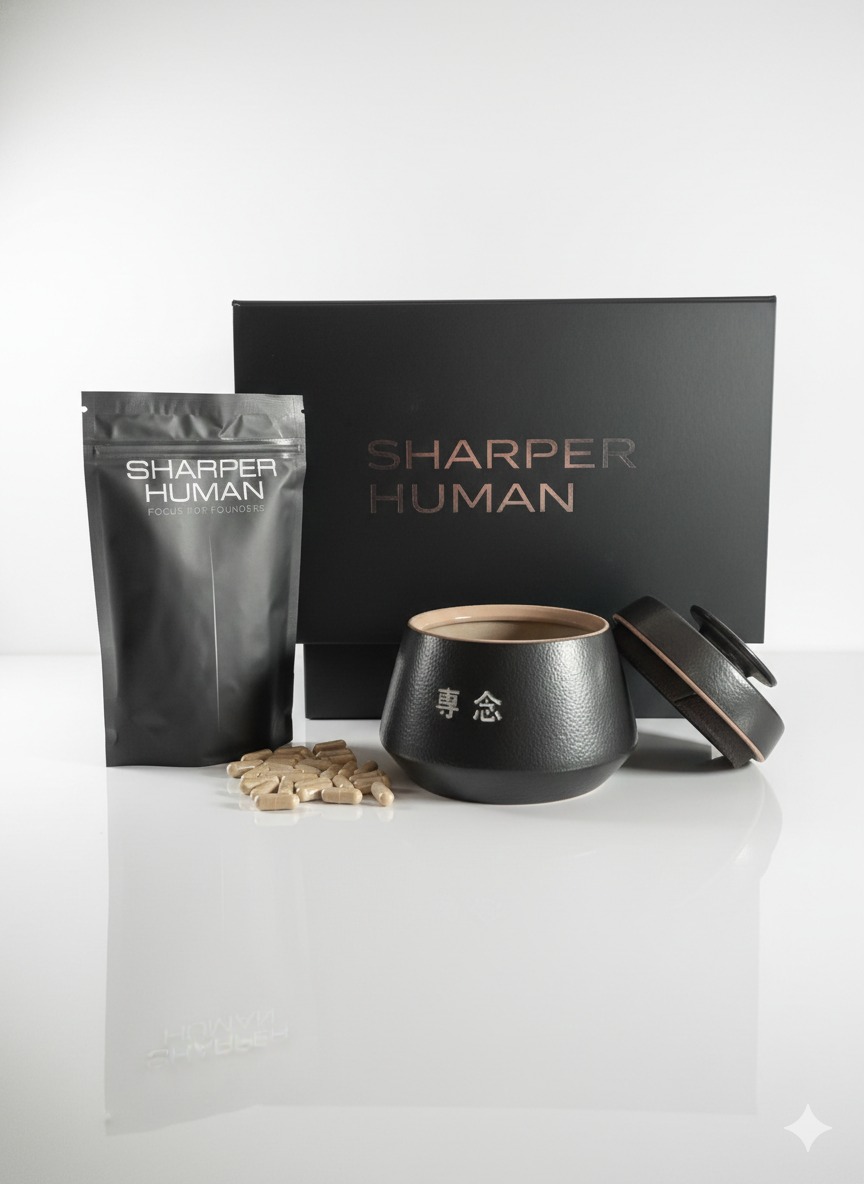
Focus for Founders.
An all-natural brain performance supplement. 20 research-backed ingredients. No caffeine. No stimulants.
Buy on Amazon UKOnce the foundations are in place, a well-formulated supplement can support specific systems involved in brain health. Sharper Human is built around cognition and provides several of the relevant compounds at disclosed doses — 50mg of DHA from algae (useful for those who eat little oily fish), 300mg of Citicoline as a choline source, 1000mg of Lion's Mane for neuronal support, and a full B-complex including folate at 203mcg. It is caffeine-free, so it supports daytime focus without working against the sleep that protects the brain, and at around £79 per month it consolidates ingredients that would otherwise be bought separately. The honest framing is the one that runs through this whole guide: it is a supporting layer, not a substitute for movement, sleep, diet, challenge and connection.
None of this requires anything exotic. Move daily, protect your sleep, eat well, keep learning, stay connected — and, if it helps, support the systems with a transparent stack. Sharper Human is available on Amazon in the UK, with US availability planned.
References & further reading
- Nakazaki E, Mah E, Sanoshy K, et al. Citicoline and Memory Function in Healthy Older Adults: A Randomized, Double-Blind, Placebo-Controlled Clinical Trial. The Journal of Nutrition. 2021. doi:10.1093/jn/nxab119. View source ↗
- Docherty S, Doughty FL, Smith EF. The Acute and Chronic Effects of Lion’s Mane Mushroom Supplementation on Cognitive Function, Stress and Mood in Young Adults. Nutrients. 2023;15. View source ↗
- Peer-reviewed research on keep brain sharp — PubMed, U.S. National Library of Medicine. View source ↗