Huperzine A is a popular ingredient in memory and "study" supplements, and it has a genuine, fairly potent mechanism behind it — but that potency is exactly why it should be approached with care, and why it does not belong in a stack meant for continuous daily use. This is an honest look at what Huperzine A does, the evidence, the important reasons it needs cycling rather than constant intake, and why Sharper Human supports the same acetylcholine system through gentler means. This article is informational and not medical advice.
Key Takeaways
What Huperzine A Is
Huperzine A is a compound originally derived from a Chinese club moss (Huperzia serrata), now usually produced in standardised form. Its mechanism is specific and relatively powerful: it is an acetylcholinesterase inhibitor, meaning it blocks the enzyme that normally breaks down acetylcholine. Since acetylcholine is the neurotransmitter most central to memory, learning and attention, inhibiting its breakdown raises its availability in the brain. This is the same broad mechanism used by certain pharmaceutical drugs for cognitive conditions, which tells you something important — Huperzine A is not a gentle nutrient but a potent, drug-like enzyme inhibitor, and it should be thought of accordingly.
The Evidence
Huperzine A has been studied, including in the context of memory and cognitive conditions, with some research suggesting it can support memory and cognitive performance. Its acetylcholinesterase-inhibiting mechanism is well established, which gives it a clearer pharmacological rationale than many supplements. However, much of the stronger research relates to clinical populations rather than healthy people seeking enhancement, and the long-term effects of using it for general cognitive enhancement are not well characterised. As with any potent compound, an effect is not the same as suitability for casual, indefinite use — and that distinction is central to how Huperzine A should be approached.
Why Potency Demands Caution and Cycling
The very thing that makes Huperzine A interesting — its potency and long duration of action — is also why it needs careful handling. Because it strongly and durably inhibits an important enzyme, knowledgeable users typically cycle it (using it intermittently, such as a few days on and off, rather than continuously) to avoid tolerance and to limit the risks of constantly suppressing acetylcholine breakdown. Potential side effects, more likely at higher doses, can include nausea, cramping, and cholinergic effects. Continuous, indefinite daily use of a strong acetylcholinesterase inhibitor is not generally advised, and it can interact with medications affecting the cholinergic system. This cycling requirement is fundamentally at odds with how a daily, consistent-use supplement is meant to work.
The Gentle Alternative: Supplying the Building Block
There are two broad ways to support the acetylcholine system. One is to block its breakdown, as Huperzine A does — potent but requiring cycling and care. The other is to supply the raw materials the brain uses to make acetylcholine in the first place, which is a gentler, more sustainable approach suited to daily use. Choline donors like Citicoline take the second route: rather than forcing acetylcholine levels by inhibiting an enzyme, they provide the building blocks so the brain can maintain healthy production. For a daily formula, the building-block approach is far better matched to consistent, long-term, broad use than a potent inhibitor that must be cycled.
Potent Isn't Always Better for a Daily Stack
Huperzine A illustrates a principle that runs through thoughtful formulation: for a product taken every day by a broad audience, potency is not automatically a virtue. A strong, drug-like compound that produces a noticeable acute effect can be exactly the wrong choice for continuous use, because the very strength that makes it interesting also creates the need for cycling, the risk of tolerance, and the potential for side effects and interactions. Gentle, well-tolerated ingredients that support the brain's own systems — supplying building blocks, nourishing rather than forcing — are far better suited to the daily, long-term, consistent use that a focus stack is built around. This is not a claim that potent compounds have no place; it is a recognition that they belong to careful, intermittent, often supervised use rather than a daily supplement. Matching the intensity of an ingredient to the way it will actually be used is a core part of designing something safe and sustainable, and it is why Sharper Human consistently chooses the gentle, daily-appropriate option.
Why Sharper Human Doesn't Include It
Focus for Founders.
An all-natural brain performance supplement. 20 research-backed ingredients. No caffeine. No stimulants.
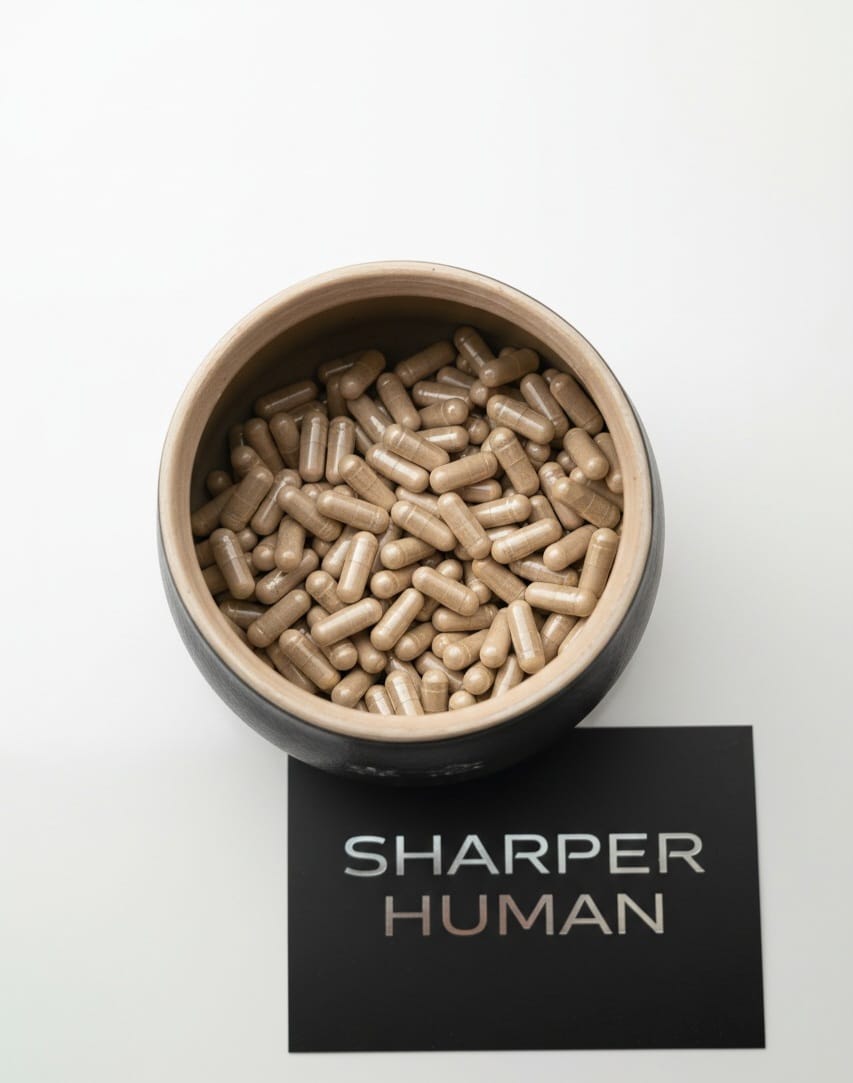
Buy on Amazon UKSharper Human does not include Huperzine A, and the reasoning follows directly from its potency. The product is designed for consistent daily use by a broad audience, and a strong, long-acting acetylcholinesterase inhibitor that most knowledgeable users cycle is simply the wrong tool for that job — its profile suits intermittent, careful use, not a daily stack. Instead, Sharper Human supports the same acetylcholine system the gentle, sustainable way: with Citicoline (300mg), which supplies a building block for acetylcholine and membrane phospholipids, supported by the broader formula including Lion's Mane (1000mg) and a full B-complex. This is the same fit-for-purpose, safe-for-daily-use logic behind all 20 ingredients — support the system through nourishment rather than through a potent enzyme block.
The honest bottom line: Huperzine A is a genuinely potent, mechanistically interesting compound for memory, but its potency means it suits careful, cycled use rather than continuous daily intake, and anyone considering it — particularly alongside medication — should speak to a doctor first. For a daily focus stack, the gentler choline-donor approach is the sounder choice, which is why Sharper Human uses Citicoline instead. Sharper Human is available on Amazon in the UK for around £79 per month, with US availability planned.
References & further reading
- Nakazaki E, Mah E, Sanoshy K, et al. Citicoline and Memory Function in Healthy Older Adults: A Randomized, Double-Blind, Placebo-Controlled Clinical Trial. The Journal of Nutrition. 2021. doi:10.1093/jn/nxab119. View source ↗
- Docherty S, Doughty FL, Smith EF. The Acute and Chronic Effects of Lion’s Mane Mushroom Supplementation on Cognitive Function, Stress and Mood in Young Adults. Nutrients. 2023;15. View source ↗
- Peer-reviewed research on huperzine memory — PubMed, U.S. National Library of Medicine. View source ↗