Inositol is a naturally-occurring compound, sometimes called a "pseudo-vitamin", that has genuine evidence in certain mood and mental-health contexts — particularly anxiety — as well as other areas like metabolic health. But its evidence is oriented toward mood and clinical conditions rather than focus, and it is typically used at high, specific doses for those purposes. This is an honest look at what inositol does, where the evidence stands, why it is a mood-and-clinical rather than focus ingredient, and why Sharper Human is a focus formula. This article is informational and not medical advice.
Key Takeaways
What Inositol Is
Inositol is a naturally-occurring compound — a type of sugar alcohol — sometimes called a "pseudo-vitamin" (it was once considered a B-vitamin, B8, though the body can make it, so it is not strictly essential). It plays roles in cell signalling, particularly in the pathways that relay messages from certain neurotransmitter and hormone receptors inside cells, which is the basis of its interest for mood and mental health. The most common form used is myo-inositol (sometimes combined with another form, D-chiro-inositol, particularly for metabolic uses). Inositol is found in foods (fruits, beans, grains, nuts) and the body produces it, and it is available as a supplement, typically used at relatively high doses for its researched purposes. Inositol is a genuine compound with real roles in cellular signalling — and, unusually for the ingredients in this series, it has reasonably genuine evidence in specific areas, though those areas are mood and clinical conditions rather than focus, which shapes where it fits.
The Mood and Anxiety Evidence
Inositol's most notable evidence is in mood and anxiety, where it has a genuine, if modest, research base. Through its role in the cell-signalling pathways downstream of certain neurotransmitter receptors (including serotonergic ones), inositol has been studied for anxiety and certain related conditions, with some studies suggesting benefit, typically at high doses (often several grams or more daily). This places inositol among the supplements with genuine evidence in a specific mental-health area — more than many ingredients can claim. However, two important caveats apply. First, this evidence is for mood and anxiety (and certain clinical conditions) — not for focus or cognitive enhancement in healthy people. Second, and crucially, anxiety and mood conditions are medical matters that deserve professional assessment and care — inositol is not a substitute for proper treatment, and significant anxiety should be addressed with professional support, as the guide to stress and burnout reflects. So inositol's genuine evidence firmly locates it in the mood-and-clinical space.
The Other Uses
Beyond mood, inositol has evidence in other, non-cognitive areas — most notably metabolic health. Inositol (particularly combinations of myo- and D-chiro-inositol) has been studied for conditions like polycystic ovary syndrome (PCOS) and aspects of metabolic health and insulin sensitivity, with some genuine supporting evidence, which is a significant area of inositol use. This further illustrates that inositol's genuine evidence lies in specific mood, mental-health and metabolic areas — all distinct from focus and cognition. So inositol is a compound with real, evidenced uses, but those uses are in clinical and metabolic contexts rather than cognitive enhancement. For someone encountering inositol, recognising that its evidence is in these specific areas (anxiety, certain mental-health conditions, metabolic health) — not general focus — is key to understanding where it genuinely fits, which is not in a focus formula. Its merits are real but lie outside the cognitive-performance domain.
Mood and Clinical Use, Not Focus
The key reason inositol sits outside a focus formula is that, like several mood-affecting compounds, it addresses a different goal — mood, anxiety and clinical conditions — rather than daytime focus and cognition. Its evidence and use are in these specific areas, typically at high doses tailored to those purposes, not in supporting focus in healthy people. Conflating mood/anxiety support with focus support leads to inappropriate use. Moreover, the conditions inositol is genuinely studied for (anxiety, certain mental-health and metabolic conditions) are medical matters best addressed with professional guidance, often at specific high doses, rather than through a general focus supplement. So inositol belongs to the mood-and-clinical category — alongside compounds like 5-HTP in being mood-oriented rather than focus-oriented — and its specific, often high-dose, clinically-oriented use makes it unsuitable as a general focus ingredient. For focus, quite different ingredients are relevant.
Where Inositol Fits
For someone interested in inositol's genuine evidenced uses — anxiety or certain mental-health conditions, or metabolic health such as PCOS — it is a reasonable compound to consider, ideally with professional guidance given that these are clinical areas and that effective use often involves specific high doses and forms. It sits among the mood, mental-health and metabolic supplements rather than the focus-oriented nootropics. Dietary inositol, from foods like fruits, beans and grains, is how everyone normally obtains it. As always, for mood and anxiety specifically, the powerful approach is professional support alongside the fundamentals (exercise, sleep, stress management), with a supplement like inositol as a possible adjunct under guidance rather than a self-prescribed solution. For focus, inositol is not the relevant tool, and well-evidenced focus ingredients are the appropriate choice — which is the basis for its exclusion from a focus stack.
Why Sharper Human Is a Focus Formula
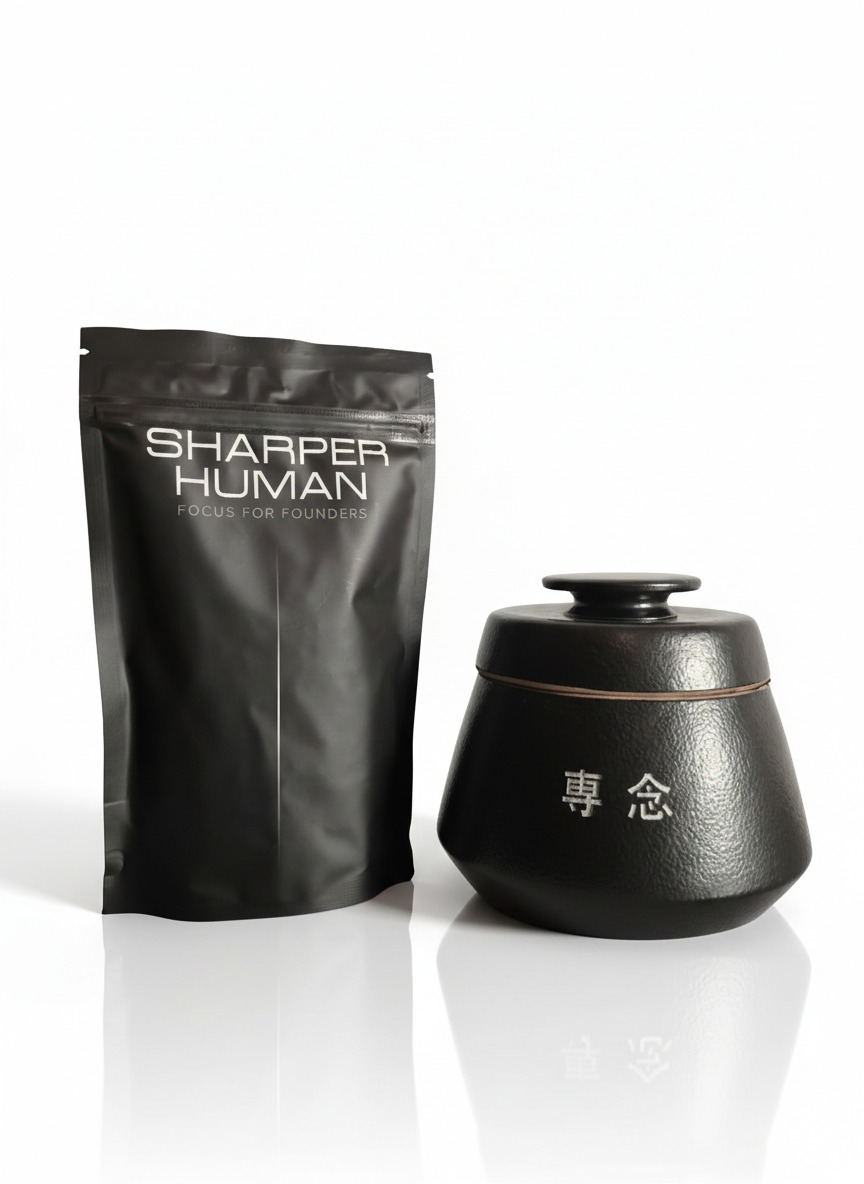
Focus for Founders.
An all-natural brain performance supplement. 20 research-backed ingredients. No caffeine. No stimulants.
Buy on Amazon UKSharper Human does not include inositol, and the reasoning is purpose. Inositol's genuine evidence is in mood, anxiety and metabolic conditions (typically at high, specific doses) — clinical and mood-oriented areas distinct from focus — whereas Sharper Human is a daytime focus formula designed to support focus and cognition in healthy people. Including a mood-and-clinical ingredient used at high doses for conditions like anxiety would be a mismatch of purpose. The formula instead focuses on well-evidenced focus and cognition ingredients — Citicoline, Bacopa, L-Tyrosine, Lion's Mane, Rhodiola and more — supporting focus and drive, while mood and clinical conditions are appropriately addressed separately and with professional guidance. This fit-for-purpose logic is behind all 20 ingredients, detailed in the ingredients and dosages guide. Inositol is a genuinely useful compound for its specific evidenced areas — just not a focus ingredient.
The honest bottom line: inositol has genuine evidence in mood, anxiety and metabolic conditions (typically at high, specific doses), but these are clinical, mood-oriented areas distinct from focus — so a daytime focus formula like Sharper Human leaves it out, with mood concerns best addressed professionally. Sharper Human is available on Amazon in the UK, with US availability planned.
References & further reading
- Nakazaki E, Mah E, Sanoshy K, et al. Citicoline and Memory Function in Healthy Older Adults: A Randomized, Double-Blind, Placebo-Controlled Clinical Trial. The Journal of Nutrition. 2021. doi:10.1093/jn/nxab119. View source ↗
- Kongkeaw C, Dilokthornsakul P, Thanarangsarit P, et al. Meta-analysis of randomized controlled trials on cognitive effects of Bacopa monnieri extract. Journal of Ethnopharmacology. 2014;151(1):528–535. View source ↗
- Punja S, Shamseer L, Olson K, Vohra S. Rhodiola rosea for Mental and Physical Fatigue in Nursing Students: A Randomized Controlled Trial. PLoS One. 2014;9(9):e108416. View source ↗
- Peer-reviewed research on inositol mood mental — PubMed, U.S. National Library of Medicine. View source ↗