Kava is a plant from the Pacific Islands with a long cultural history as a relaxing, calming drink, and it has genuine evidence for easing anxiety — but it is also subject to a serious safety concern around liver toxicity that led to bans and restrictions in several countries. It is a clear example of a natural substance with real effects and real risks. This is an honest look at what kava does, its genuine calming evidence, the important liver-safety concern, and why Sharper Human, a focus formula, avoids it. This article is informational and not medical advice; kava's liver concern makes caution and professional guidance especially important.
Key Takeaways
What Kava Is
Kava (Piper methysticum) is a plant native to the Pacific Islands, where its root has been prepared as a ceremonial and social drink for centuries, valued for its relaxing, calming and mildly euphoric effects without the impairment of alcohol. Its active compounds, kavalactones, act on the brain's calming systems (including GABA-related pathways), producing relaxation and a reduction in anxiety. In the West, kava is used as a supplement and beverage for relaxation, stress and anxiety, and kava bars have appeared in some places. Kava is a genuine, culturally significant calming substance with real effects — but it is also a substance with a serious safety question attached, making it a clear example of why "natural" and "traditional" do not automatically mean "safe for unrestricted use". Both its genuine calming evidence and its safety concern are important to understand.
The Genuine Calming Evidence
Kava has genuine evidence for its calming, anti-anxiety effects, placing it among the better-evidenced calming herbs. Research, including some clinical studies, has found kava can help reduce anxiety and promote relaxation, via its kavalactones acting on the brain's calming systems. Unlike some traditional remedies with thin evidence, kava's anxiolytic effects are reasonably supported, which is why it has attracted genuine interest as a natural option for anxiety and stress. However, two crucial points temper this. First, kava's evidence is for anxiety and relaxation — a calming, often clinical, area — not for focus or cognitive enhancement; indeed, as a relaxant, it is the opposite of a focus aid. Second, and critically, its genuine efficacy comes alongside the serious safety concern below. So kava's calming evidence is real, but it firmly locates kava in the anxiety-and-relaxation space, and it must be weighed against its liver-safety issue.
The Serious Liver Concern
The defining safety issue with kava is liver toxicity. Kava has been associated with cases of liver damage — some serious — which led several countries to ban or restrict kava products in the past (some restrictions have since been revisited). The exact reasons are debated and may relate to factors like the part of the plant used, preparation methods, contamination, extraction solvents, or individual susceptibility, and the risk appears to be low with quality, properly-prepared products used sensibly. Nonetheless, this is a genuine, serious safety concern that distinguishes kava from most calming herbs. The risk is heightened by combining kava with alcohol or other substances that affect the liver, by certain medications, by pre-existing liver conditions, and by prolonged or heavy use. This liver concern means kava requires real caution, is not suitable for everyone, and should not be used by anyone with liver issues or taking medications affecting the liver without medical guidance, as the guide to nootropic safety emphasises.
Why "Natural" Doesn't Mean Risk-Free
Kava, like St John's Wort, is a powerful illustration that natural substances can carry serious risks. Here is a natural, traditional plant with genuine calming efficacy strong enough to be clinically studied — and a safety profile serious enough to have prompted bans in several countries. The "it's a natural traditional drink" framing can lull people into underestimating the liver concern, which is exactly what makes informed caution important. As covered in discussions of supplement safety, the natural origin of a substance says nothing about its safety, which depends on the specific compound, dose, preparation, interactions and individual. Kava's combination of genuine efficacy and a serious safety concern places it firmly among the substances requiring real caution and respect, not casual use — a reminder to take all potent "natural" substances seriously, particularly regarding liver health, alcohol and medication interactions.
Relaxation Is a Different Goal From Focus
Beyond the safety issue, kava is simply not a focus ingredient — it is a relaxant, and as such is the opposite of what a focus formula aims for. Its effect is to calm and relax (potentially toward drowsiness in larger amounts), which would work against daytime alertness and focus. So kava belongs to the relaxation-and-anxiety space, for evening or stress-relief use, not to a daytime focus regimen — much like other sedating or strongly calming substances. For the gentle daytime calm that genuinely aids focus (as opposed to sedation or anxiolysis), far milder and safer options exist, like L-Theanine's relaxed alertness, as the L-Theanine guide covers. And for genuine anxiety, the appropriate route is professional support rather than self-medication with a herb carrying a liver concern. Kava's relaxant nature and safety profile place it well outside a focus formula's remit.
Why Sharper Human Avoids It
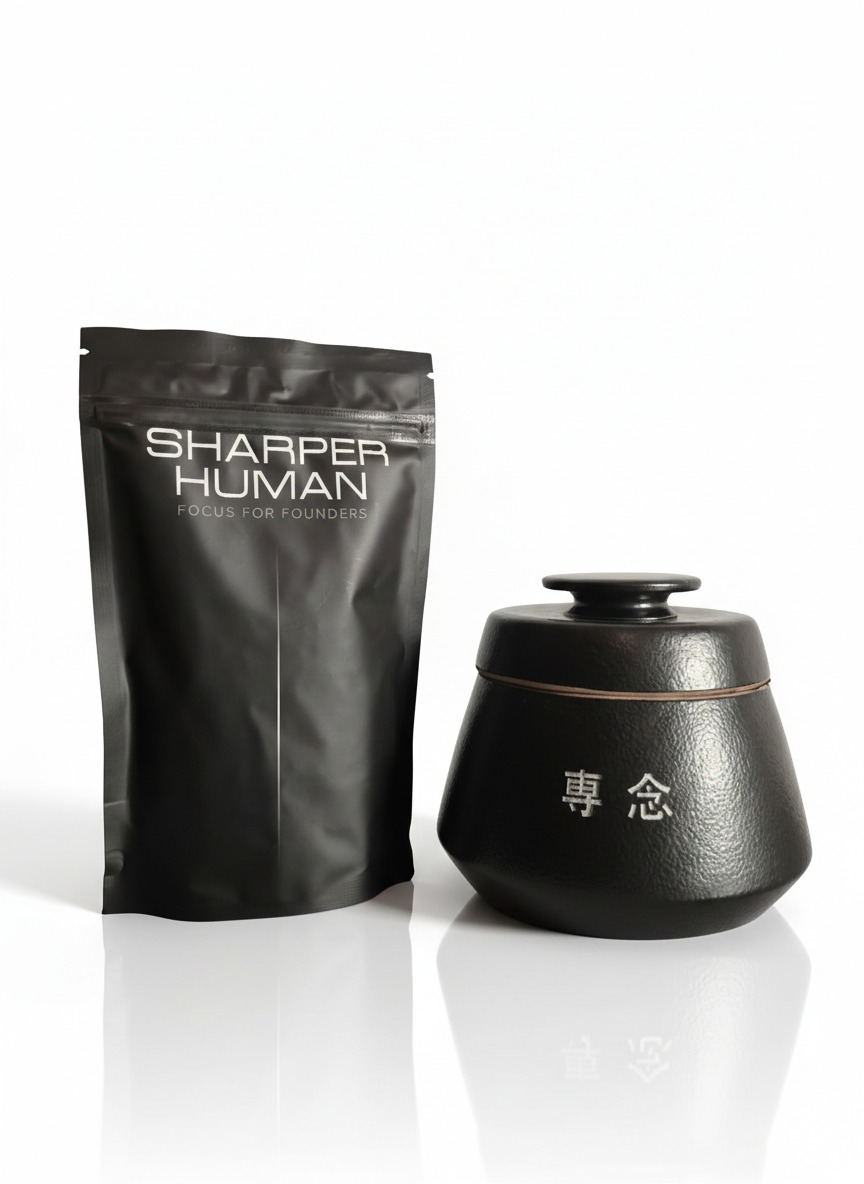
Focus for Founders.
An all-natural brain performance supplement. 20 research-backed ingredients. No caffeine. No stimulants.
Buy on Amazon UKSharper Human does not include kava, and the reasoning is decisive on two counts. First, purpose: kava is a calming, anxiety-oriented relaxant, not a focus ingredient — the opposite of what a daytime focus formula aims to support. Second, and critically, safety: kava's serious liver-toxicity concern makes it entirely unsuitable for a broadly-used daily supplement that might be taken by people who also drink alcohol, take various medications, or have liver considerations — including it would create unacceptable safety risks. The formula instead supports gentle daytime calm through far milder, safer ingredients — Taurine for calm signalling and Rhodiola for stress resilience — that do not carry kava's risks. This safety-first, fit-for-purpose logic is behind all 20 ingredients, detailed in the ingredients and dosages guide. Kava has genuine calming uses — but its liver concern and relaxant nature place it well outside a daily focus supplement.
The honest bottom line: kava is a Pacific Island plant with genuine evidence for easing anxiety, but it carries a serious liver-toxicity concern (which led to restrictions in several countries) and is a relaxant rather than a focus ingredient — so Sharper Human avoids it, supporting gentle daytime calm through safer Taurine and Rhodiola instead. Anyone considering kava should be cautious, especially regarding the liver, alcohol and medications. Sharper Human is available on Amazon in the UK, with US availability planned.
References & further reading
- Punja S, Shamseer L, Olson K, Vohra S. Rhodiola rosea for Mental and Physical Fatigue in Nursing Students: A Randomized Controlled Trial. PLoS One. 2014;9(9):e108416. View source ↗
- Owen GN, Parnell H, De Bruin EA, Rycroft JA. The combined effects of L-theanine and caffeine on cognitive performance and mood. Nutritional Neuroscience. 2008;11(4):193–198. View source ↗
- Peer-reviewed research on kava anxiety relaxation — PubMed, U.S. National Library of Medicine. View source ↗