L-carnosine is a compound with genuinely interesting anti-ageing and antioxidant properties, popular in longevity-minded supplement circles — but it is frequently confused with the similarly-named acetyl-L-carnitine (a quite different ingredient), and its evidence is oriented more toward general anti-ageing and the body than toward focus and cognition specifically. This is an honest look at what L-carnosine actually is, how it differs from acetyl-L-carnitine, where its brain evidence stands, and why Sharper Human focuses on targeted cognitive ingredients instead. This article is informational and not medical advice.
Key Takeaways
What L-Carnosine Is
L-carnosine is a dipeptide — a small molecule made of two amino acids, beta-alanine and histidine — found naturally in the body, particularly concentrated in muscle and brain tissue. Its most distinctive property is anti-glycation: carnosine helps protect against glycation, a process in which sugars react with proteins to form damaging compounds (advanced glycation end-products, or AGEs) implicated in ageing and various age-related changes. Carnosine also has antioxidant and metal-chelating properties. This anti-glycation and antioxidant profile is the basis of its popularity in longevity and anti-ageing supplement circles. It is found in meat (and is low or absent in vegetarian diets) and available as a supplement. Carnosine is a genuine, interesting compound — but its identity and its evidence are both frequently misunderstood, starting with the very common confusion over its name.
The Acetyl-L-Carnitine Confusion
A crucial point of clarification: L-carnosine is constantly confused with acetyl-L-carnitine (and L-carnitine), because the names are so similar — but they are entirely different compounds with different structures, mechanisms and evidence. L-carnosine is a dipeptide (beta-alanine plus histidine) known mainly for anti-glycation. Acetyl-L-carnitine is a form of carnitine involved in transporting fatty acids for cellular energy production, with more direct cognitive evidence and a recognised role in brain energy metabolism. The similar names cause genuine confusion among consumers, who may buy one thinking it is the other, or assume claims about one apply to the other. This distinction matters for our purposes because acetyl-L-carnitine — not carnosine — is the carnitine-family ingredient with the stronger cognitive case, and it is the one included in well-designed focus formulas. Clearing up this confusion is essential to assessing carnosine on its own merits.
Where the Brain Evidence Stands
On its own merits, L-carnosine's evidence is oriented more toward general anti-ageing, muscle and cellular protection than toward focus and cognition specifically. Its anti-glycation and antioxidant properties give it a plausible general anti-ageing rationale, and it is studied in various cellular-protection and age-related contexts. For the brain, there is some research interest — carnosine is present in brain tissue and its protective properties could be relevant to brain ageing — but robust evidence that carnosine supplementation meaningfully enhances cognition in healthy people is limited. It sits in the "interesting protective compound with general anti-ageing evidence but limited direct cognitive proof" category. So while carnosine is genuinely interesting for longevity-minded purposes, its case as a focus or cognitive-enhancement ingredient specifically is weak — its strengths lie more in the anti-glycation and general-protection domain than in demonstrated cognitive benefit.
The Anti-Glycation Angle in Context
Carnosine's standout property — anti-glycation — is genuinely interesting in the context of healthy ageing, since glycation and AGEs are implicated in various aspects of ageing, potentially including the brain and blood vessels. However, it is worth noting that glycation is also strongly influenced by diet and blood-sugar control: high blood sugar drives glycation, so managing blood sugar through diet and lifestyle is a powerful, foundational way to limit glycation — arguably more impactful than a supplement. So while carnosine's anti-glycation property is real and interesting, the broader picture of limiting glycation is largely a matter of metabolic health and diet, with carnosine as one possible supplementary angle. For brain health specifically, supporting vascular and metabolic health (covered in the neuroprotection guide) addresses the underlying drivers, with carnosine as a minor, longevity-oriented addition rather than a targeted cognitive ingredient.
Where L-Carnosine Fits
For someone with a longevity or anti-ageing focus interested in carnosine's anti-glycation and antioxidant properties, it is a reasonable supplement to consider within that frame, with realistic expectations given the limited direct cognitive evidence. It is also worth noting that carnosine comes from meat, so those on vegetarian or vegan diets have lower carnosine intake and may have more interest in it. It sits among the longevity and general-protection supplements rather than the targeted nootropics. For most people, supporting healthy ageing through the powerful fundamentals — diet (including blood-sugar management), exercise, sleep — does far more than any single anti-ageing compound, as the best foods for brain health guide covers. For focus and cognition specifically, better-evidenced ingredients are the appropriate choice, and the carnitine-family ingredient that belongs in a focus formula is acetyl-L-carnitine, not carnosine.
Why Sharper Human Focuses Elsewhere
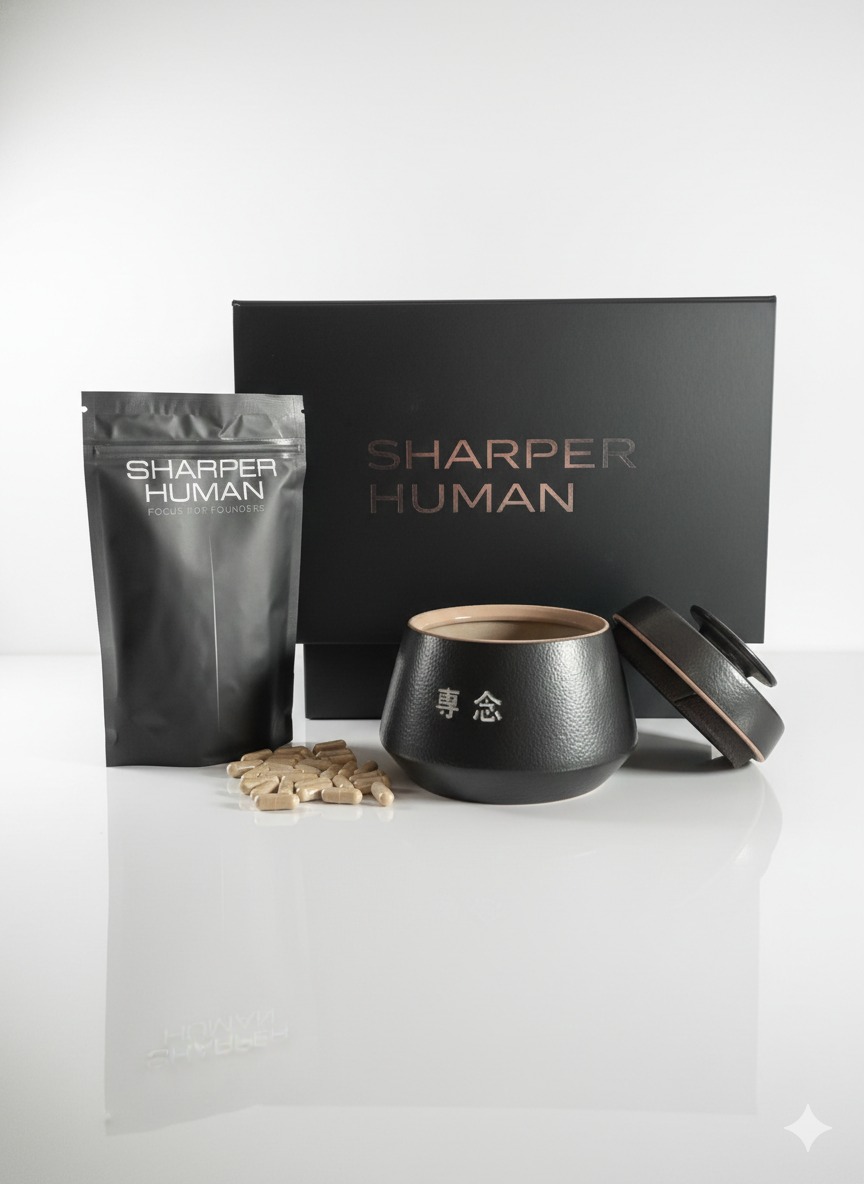
Focus for Founders.
An all-natural brain performance supplement. 20 research-backed ingredients. No caffeine. No stimulants.
Buy on Amazon UKSharper Human does not include L-carnosine, and the reasoning is fit and evidence. Carnosine's evidence is general anti-ageing and body-oriented rather than focus-specific, with limited direct cognitive research — so it is a poor fit for a focus formula relative to ingredients with direct cognitive evidence. Notably, the formula does include the often-confused acetyl-L-carnitine (500mg) — the carnitine-family ingredient with genuine cognitive relevance, supporting cellular brain energy — alongside its other well-evidenced actives like Citicoline, Bacopa and Lion's Mane. Choosing acetyl-L-carnitine for its direct cognitive evidence, rather than the similarly-named but cognitively-weaker carnosine, is exactly the fit-for-purpose logic behind all 20 ingredients, detailed in the ingredients and dosages guide. Carnosine is a genuinely interesting anti-ageing compound — just not a targeted focus ingredient, and not to be confused with acetyl-L-carnitine.
The honest bottom line: L-carnosine is a dipeptide with genuine anti-glycation and antioxidant properties oriented toward general anti-ageing — frequently confused with the quite different acetyl-L-carnitine — but with limited direct cognitive evidence, so a focus formula like Sharper Human prioritises ingredients with direct cognitive evidence (including acetyl-L-carnitine) instead. Sharper Human is available on Amazon in the UK, with US availability planned.
References & further reading
- Nakazaki E, Mah E, Sanoshy K, et al. Citicoline and Memory Function in Healthy Older Adults: A Randomized, Double-Blind, Placebo-Controlled Clinical Trial. The Journal of Nutrition. 2021. doi:10.1093/jn/nxab119. View source ↗
- Kongkeaw C, Dilokthornsakul P, Thanarangsarit P, et al. Meta-analysis of randomized controlled trials on cognitive effects of Bacopa monnieri extract. Journal of Ethnopharmacology. 2014;151(1):528–535. View source ↗
- Docherty S, Doughty FL, Smith EF. The Acute and Chronic Effects of Lion’s Mane Mushroom Supplementation on Cognitive Function, Stress and Mood in Young Adults. Nutrients. 2023;15. View source ↗
- Peer-reviewed research on carnosine brain ageing — PubMed, U.S. National Library of Medicine. View source ↗