L-Tyrosine and caffeine both improve focus — but through mechanisms so fundamentally different that comparing them directly is almost misleading. Caffeine removes the feeling of tiredness. L-Tyrosine supports the actual neurochemistry of motivated, sustained attention. Understanding this distinction explains why the most effective cognitive strategies use both rather than treating them as interchangeable alternatives.
Key Takeaways
How Caffeine Actually Works
Caffeine's mechanism is widely misunderstood. It doesn't "give you energy" or "improve focus" in the way most people assume. Caffeine is an adenosine receptor antagonist — it blocks the receptors that adenosine molecules bind to. Adenosine accumulates in the brain during waking hours, progressively signalling "I'm tired" as levels build. Caffeine prevents this signal from registering, creating a subjective experience of alertness. But adenosine is still accumulating — caffeine just prevents you from feeling it. When caffeine wears off, the accumulated adenosine floods the now-unblocked receptors, producing the familiar "crash."
Over time, the brain adapts to chronic caffeine intake by producing more adenosine receptors. This is tolerance — requiring progressively higher caffeine doses to achieve the same alertness effect. Research published in Psychopharmacology has documented that regular caffeine consumers experience minimal net cognitive benefit from their habitual dose — they're essentially taking caffeine to return to the baseline that non-consumers enjoy naturally. The alertness they experience after their morning coffee is largely the reversal of withdrawal-induced impairment rather than genuine enhancement above baseline.
The NHS notes that caffeine can disrupt sleep quality even when consumed 6 hours before bedtime — creating a cycle where caffeine-disrupted sleep increases the next day's adenosine accumulation, increasing caffeine dependence.
How L-Tyrosine Actually Works
L-Tyrosine operates through an entirely different biological pathway. It's a precursor amino acid — your body converts L-Tyrosine into L-DOPA, which is then converted into dopamine, which can be further converted into norepinephrine and epinephrine. These catecholamine neurotransmitters drive motivation (dopamine), focused attention and alertness (norepinephrine), and physiological readiness (epinephrine).
L-Tyrosine's particular value is under conditions of stress, sleep deprivation, or extended cognitive work — situations that rapidly deplete catecholamine reserves. Research from Leiden University demonstrated that L-Tyrosine supplementation maintained cognitive performance during demanding tasks that typically produce measurable decline. The compound essentially ensures the brain has adequate raw material for catecholamine synthesis when demand is high — preventing the motivational and attentional decline that accompanies neurotransmitter depletion.
Unlike caffeine, L-Tyrosine doesn't build tolerance. It provides a substrate (amino acid raw material) rather than blocking a receptor — there's no compensatory mechanism for the brain to upregulate. This makes it suitable for sustained daily use over months and years without diminishing returns.
Why the Optimal Strategy Uses Both
| Factor | Caffeine | L-Tyrosine |
|---|---|---|
| Mechanism | Blocks adenosine (removes drowsiness) | Provides dopamine precursor (supports motivation) |
| Onset | 15-45 minutes | Builds over 1-7 days |
| Duration | 3-6 hours per dose | Sustained with daily use |
| Tolerance | Yes — escalating doses required | No tolerance development |
| Sleep Impact | Disrupts sleep quality (even 6hrs before bed) | No sleep interference |
| Crash | Yes — adenosine rebound | No crash |
| Best For | Immediate alertness when tired | Sustained cognitive performance under demand |
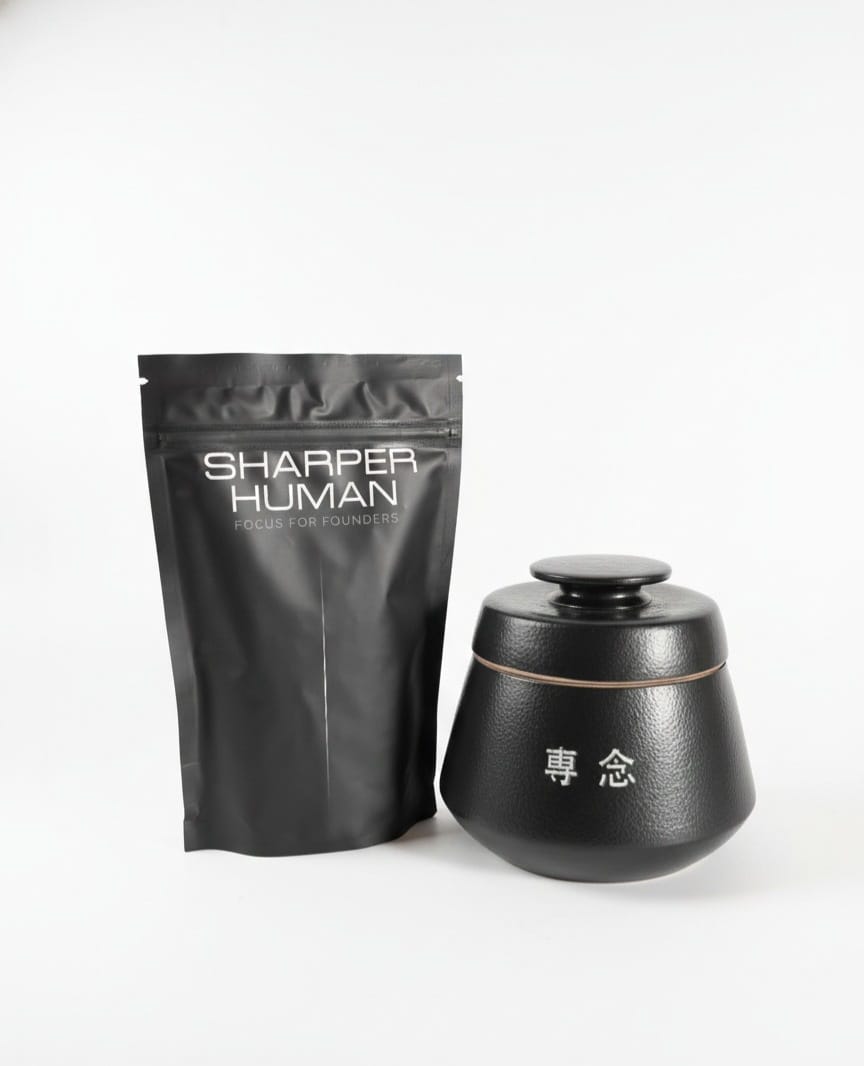
Focus for Founders.
An all-natural brain performance supplement. 20 research-backed ingredients. No caffeine. No stimulants.
Buy on Amazon UKSharper Human contains 350mg L-Tyrosine with zero caffeine — deliberately designed so you can independently manage your caffeine intake while getting deeper dopaminergic support from L-Tyrosine. Have your morning coffee for immediate alertness. Take Sharper Human for sustained neurotransmitter support throughout the day. Reduce caffeine on weekends or add an extra coffee on demanding days — no interaction concern, because L-Tyrosine and caffeine work through completely separate pathways.
This independent management is a practical advantage that stimulant-containing nootropics can't offer. If your nootropic already contains caffeine (as BrainZyme Focus Pro does via Matcha and Guarana), you can't adjust your total caffeine intake without also adjusting your nootropic dosage — coupling two variables that work better when managed independently.
The Depletion Problem: Why Caffeine Alone Eventually Fails
Perhaps the most important practical insight from this comparison: caffeine masks neurotransmitter depletion rather than addressing it. During a long working day, your brain progressively consumes dopamine, acetylcholine, and norepinephrine. Caffeine blocks the adenosine signal that would normally tell you "it's time to rest and replenish" — so you keep working while neurotransmitter reserves continue declining. The result: you feel alert (caffeine is working) but your actual cognitive performance degrades (neurotransmitters are depleted). You're awake but not sharp. Alert but not effective.
This explains the common experience of "caffeinated confusion" — drinking your third coffee of the afternoon and feeling wired but unable to think clearly or make decisions effectively. The caffeine is successfully blocking adenosine, but the dopamine and acetylcholine your brain needs for clear thinking are depleted, and caffeine does nothing to replenish them.
L-Tyrosine addresses this directly by providing the precursor material for dopamine replenishment. When combined with Citicoline (supporting acetylcholine) and B-vitamins (providing metabolic cofactors for neurotransmitter synthesis), the underlying cognitive machinery is maintained rather than just masked. Your afternoon cognitive performance reflects actual neurochemical capacity rather than caffeine-sustained alertness over a depleted substrate.
The practical protocol that captures this insight: morning coffee plus a caffeine-free nootropic containing L-Tyrosine, Citicoline, and B-vitamins. Caffeine handles the acute adenosine-blocking alertness. The nootropic maintains the deeper neurotransmitter levels that caffeine cannot touch. By afternoon, when caffeine's contribution is fading and you're choosing not to have another cup to protect sleep quality, the nootropic compounds are still maintaining cognitive function through their separate mechanisms.
Who Should Consider Each
Deciding how to use L-Tyrosine and caffeine comes down partly to your circumstances and sensitivities. Caffeine suits people who tolerate stimulants well, want an immediate and noticeable lift in alertness, and are disciplined about timing it early enough not to disrupt sleep — and for these people, a sensible amount of caffeine is a genuinely effective and cheap cognitive tool. It is a poorer fit for those who are caffeine-sensitive (prone to jitteriness, anxiety or a racing heart), who struggle with sleep, or who find themselves caught in a tolerance-and-crash cycle of needing ever more to feel normal.
L-Tyrosine, by contrast, suits people who want support for focus and drive — particularly under stress, fatigue or heavy mental load — without any stimulant effect, crash, jitter or sleep disruption. Because it works by supplying the raw material for dopamine and noradrenaline rather than stimulating the nervous system, it is especially well-suited to high-stress, high-demand situations and to anyone who wants steady, non-stimulant support or who has to be careful with caffeine. The two are not mutually exclusive — many people benefit from a sensible morning coffee alongside non-stimulant support like tyrosine — but understanding your own sensitivity and goals helps you weight them appropriately. Sharper Human takes the non-stimulant route, including L-Tyrosine at 350mg as part of its caffeine-free formula, so it supports focus and drive under pressure without the stimulant downsides — while leaving you free to add your own caffeine, in whatever amount suits you, if you choose.
References & further reading
- Nakazaki E, Mah E, Sanoshy K, et al. Citicoline and Memory Function in Healthy Older Adults: A Randomized, Double-Blind, Placebo-Controlled Clinical Trial. The Journal of Nutrition. 2021. doi:10.1093/jn/nxab119. View source ↗
- Peer-reviewed research on tyrosine caffeine focus — PubMed, U.S. National Library of Medicine. View source ↗