Maca — a root vegetable from the Peruvian Andes — has become a popular "superfood" supplement, marketed for energy, stamina and vitality, and sometimes appearing in focus and adaptogen products. It is a genuine, food-like ingredient with a long traditional history, but its evidence is oriented more toward energy, stamina and hormonal areas than toward focus and cognition specifically. This is an honest look at what maca does, where its evidence stands, the caveats worth knowing, and why Sharper Human prioritises focus-oriented ingredients instead. This article is informational and not medical advice.
Key Takeaways
What Maca Is
Maca (Lepidium meyenii) is a root vegetable in the brassica family, native to the high Andes of Peru, where it has been cultivated and eaten for centuries as both food and traditional remedy. It is typically consumed as a dried powder or extract, and is genuinely food-like — closer to a nutritious root than to a potent isolated compound — which contributes to its good safety profile. Maca has been marketed in the West as a "superfood" and adaptogen, associated with energy, stamina, endurance and vitality, and it comes in different colours (yellow, red, black) sometimes claimed to have slightly different properties. Its traditional and popular reputation centres on physical energy and vitality rather than on cognition specifically, which is an important framing for assessing it as a potential focus ingredient.
Where the Evidence Points
Maca's research, while not enormous, points mainly toward energy, mood, stamina and hormonal or sexual-health areas rather than direct cognitive enhancement. There is some human research suggesting maca may support energy and a sense of wellbeing, and it is perhaps most studied in the context of sexual function and certain hormonal-related symptoms (though that evidence too is modest and not the focus here). What is notably thin is direct evidence for maca improving focus, memory or cognition specifically in the way a nootropic ingredient would aim to. So while maca is a legitimate, food-like supplement with some genuine uses, its evidence base sits largely outside the focus-and-cognition domain — which is the crux of why it does not feature in a focus formula, despite its popularity.
The Indirect "Energy" Angle
The strongest case for maca having any cognitive relevance is indirect, via energy and wellbeing. If maca supports a general sense of physical energy, stamina and mood — as its traditional use and some research suggest — then by feeling more energetic and well, a person might indirectly experience better focus, since fatigue and low mood undermine concentration. This is a real but indirect and non-specific route, quite different from ingredients that support the focus and memory systems directly. It is also a route shared by many general "energy and vitality" supplements. So maca's potential focus benefit, where present, is a downstream effect of supporting energy and wellbeing rather than a direct cognitive action — which makes it a general wellbeing ingredient more than a targeted focus one, and a poorer fit for a formula built around specific cognitive support.
The Hormonal Caveat
One honest caveat worth raising is that maca is often associated with hormonal and sexual-health effects in its marketing, and while its mechanisms are not fully understood (it is not thought to contain hormones itself), this hormonal-adjacent positioning is part of its identity. For a focus-and-brain-health formula, this is another reason maca sits outside the remit: the formula is about cognitive performance, not energy-and-vitality or hormonal support, and it makes no hormonal claims. Anyone specifically interested in maca for energy, stamina or those other areas can consider it as a standalone, food-like supplement, ideally understanding that the evidence is modest. As always, the powerful levers for energy and vitality remain sleep, exercise, nutrition and managing stress, with a supplement like maca as a possible minor addition rather than a primary solution.
Where Maca Might Fit
For someone whose interest is general energy, stamina or vitality rather than focus specifically, maca is a reasonable, food-like supplement to consider — it is generally well tolerated and has a long history of dietary use. It sits among the "energy and vitality" supplements rather than the targeted nootropics, and the guide to the best nootropic herbs and adaptogens covers where various botanicals fit. For energy and motivation specifically in a cognitive context, the formula's approach differs, as the guide to energy and motivation covers — supporting the dopamine and cellular-energy systems behind drive directly. Maca is a fine ingredient for its own purposes, just not a focus-and-cognition one, which is the simple basis for its exclusion from a focus stack.
Why Sharper Human Prioritises Focus Ingredients
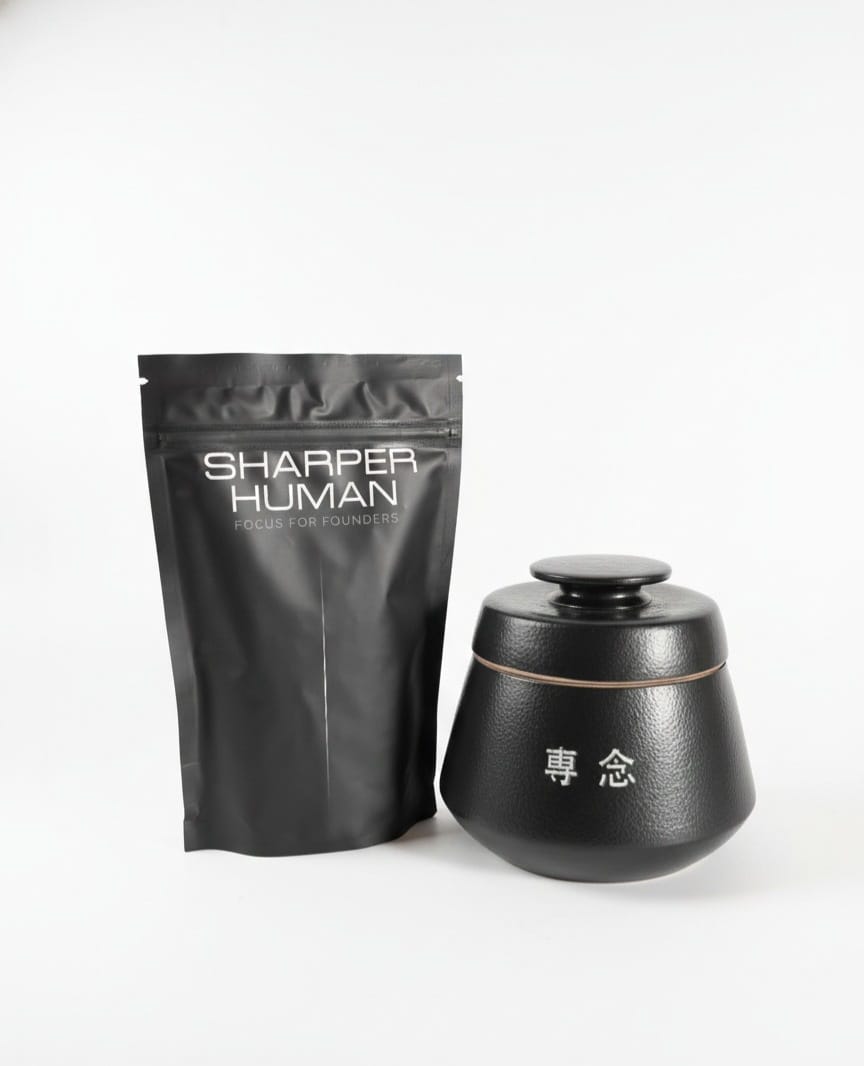
Focus for Founders.
An all-natural brain performance supplement. 20 research-backed ingredients. No caffeine. No stimulants.
Buy on Amazon UKSharper Human does not include maca, and the reasoning is one of fit rather than any dismissal of the ingredient. As a focus-and-brain-health formula, Sharper Human prioritises ingredients whose evidence is in focus, attention, memory and cognition — Citicoline, Bacopa, L-Tyrosine, Lion's Mane, Rhodiola and the rest — rather than a general energy-and-vitality root whose evidence sits largely outside the cognitive domain. For the energy and drive relevant to focus, it uses targeted ingredients like L-Tyrosine (supporting dopamine) and Acetyl-L-Carnitine (supporting cellular brain energy) rather than a non-specific vitality supplement. This is the fit-for-purpose logic behind all 20 ingredients, detailed in the ingredients and dosages guide. Maca is a legitimate food-like supplement — just one whose strengths lie outside a focus stack's purpose.
The honest bottom line: maca is a food-like Peruvian root with genuine but modest evidence oriented toward energy, stamina and hormonal areas rather than focus and cognition — so a focus formula like Sharper Human sensibly prioritises targeted cognitive ingredients instead. Maca remains a reasonable energy-and-vitality option for those interested. Sharper Human is available on Amazon in the UK, with US availability planned.
References & further reading
- Nakazaki E, Mah E, Sanoshy K, et al. Citicoline and Memory Function in Healthy Older Adults: A Randomized, Double-Blind, Placebo-Controlled Clinical Trial. The Journal of Nutrition. 2021. doi:10.1093/jn/nxab119. View source ↗
- Kongkeaw C, Dilokthornsakul P, Thanarangsarit P, et al. Meta-analysis of randomized controlled trials on cognitive effects of Bacopa monnieri extract. Journal of Ethnopharmacology. 2014;151(1):528–535. View source ↗
- Punja S, Shamseer L, Olson K, Vohra S. Rhodiola rosea for Mental and Physical Fatigue in Nursing Students: A Randomized Controlled Trial. PLoS One. 2014;9(9):e108416. View source ↗
- Peer-reviewed research on maca energy focus — PubMed, U.S. National Library of Medicine. View source ↗