The nootropics world splits into two broad camps: natural compounds — herbs, amino acids, vitamins and mushroom extracts with long histories of human use — and synthetic ones, laboratory-made molecules such as the racetams. Both have advocates, and the choice between them involves real trade-offs around evidence, safety, legality and how a substance fits into everyday life. This is an honest comparison of the two approaches, and an explanation of why Sharper Human is built entirely from natural ingredients rather than synthetic ones.
Key Takeaways
What Counts as a Natural Nootropic
Natural nootropics are cognitive-supporting compounds that occur in nature and have, in most cases, been consumed by humans for a very long time. The category spans several types: amino acids such as L-Tyrosine and Taurine, which the body already uses; herbs and adaptogens like Rhodiola, Bacopa and Lion's Mane, many with centuries of traditional use; vitamins and minerals such as the B-complex and zinc that are essential to brain function; and structural nutrients like the omega-3 DHA. Their shared advantage is familiarity — the human body has long experience of them, they are generally regulated and sold as food supplements, and the best of them have accumulated meaningful human research. Sharper Human draws from across these groups.
What Counts as a Synthetic Nootropic
Synthetic nootropics are molecules created in the laboratory, designed to act on cognitive systems. The best-known are the racetams — piracetam, aniracetam and others — alongside compounds such as noopept and various choline derivatives. Some have genuine research behind them, and a few are used as medicines in certain countries. Their defining characteristics, though, are that they are newer than the natural compounds, often lack the decades of broad human safety data that established supplements have, and frequently occupy uncertain legal territory. In the UK, for instance, piracetam is regulated as a prescription-only medicine rather than a food supplement, which means it is not something that can legally be sold as an over-the-counter nootropic at all.
The Real Trade-Offs
The honest comparison resists easy slogans. "Natural is always safer" is not strictly true — plenty of natural substances can be potent or interact with medication, and dose and quality always matter. But several practical advantages do tend to favour well-chosen natural ingredients for everyday use. They usually have longer human track records, clearer regulatory status, and a better fit with daily, long-term consumption by a wide range of people. Synthetics, by contrast, can offer interesting mechanisms but often come with thinner long-term safety data, inconsistent legal status, and a degree of experimentation that does not suit a product meant to be taken daily by a broad audience. There is also a transparency dimension: established natural ingredients have well-characterised effective doses that can be checked against research, whereas the evidence base for some synthetics is more limited.
The Regulatory Picture Matters
Legality is not a footnote here; it is central. In the UK and EU, the natural ingredients in a well-formulated nootropic are sold legally as food supplements, manufactured to food-safety standards. Several popular synthetics, on the other hand, are either prescription-only medicines, unlicensed, or sold in a grey market with little oversight of quality or purity. For a brand selling a product openly and legally to the public, that distinction effectively settles the question — a compliant, transparent supplement cannot be built on ingredients that are not legal to sell as supplements in the first place.
How to Evaluate Any Nootropic
Rather than treating "natural" and "synthetic" as tribal labels, the more useful habit is to evaluate any nootropic against a few consistent criteria — which, in practice, tends to favour well-chosen natural ingredients. The first question is the strength of human evidence: are there real human studies, at defined doses, in people resembling you, or only anecdotes and animal data? The second is dose transparency: does the product disclose exactly how much of each ingredient it contains, so you can check it against the research, or hide quantities behind a proprietary blend? The third is safety and track record: how long have humans consumed this compound, and is its long-term safety profile well characterised? The fourth is legal and quality status: is it legally sold as a supplement, manufactured to proper standards, and ideally third-party tested? And the fifth is fit for purpose: does it actually target the outcome you want, rather than being included because it sounds impressive?
Run most popular synthetics through that checklist and they tend to stumble on evidence, safety data or legality; run well-chosen natural ingredients through it and the best of them pass comfortably. This is not a romantic preference for "natural" — it is what the criteria themselves point to, and it is the framework behind how Sharper Human was assembled.
Why Sharper Human Is All-Natural
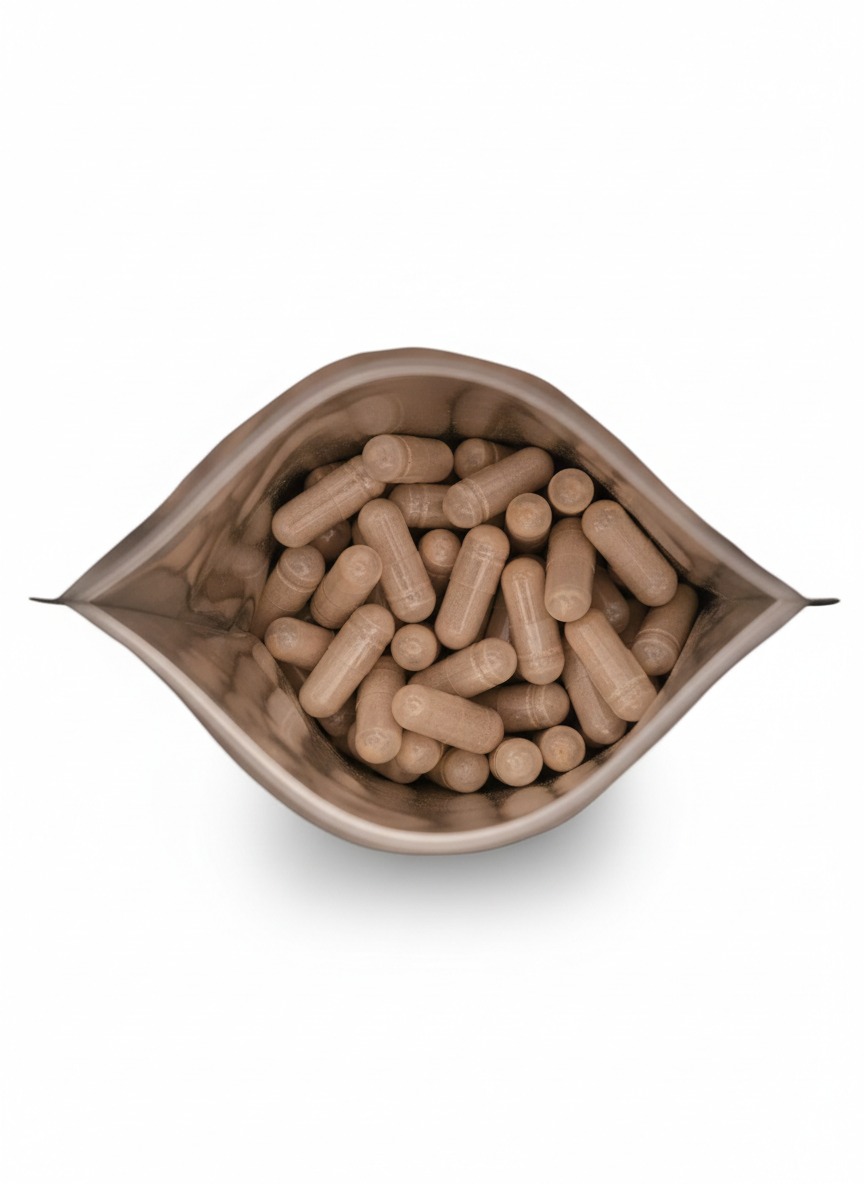
Focus for Founders.
An all-natural brain performance supplement. 20 research-backed ingredients. No caffeine. No stimulants.
Buy on Amazon UKSharper Human is built entirely from natural ingredients, and the reasoning runs through everything above. Its 20 components — including 1000mg Lion's Mane, 350mg L-Tyrosine, 300mg Citicoline, 150mg Bacopa, 150mg Rhodiola and a full B-complex — were chosen because they combine meaningful human research, established safety profiles, clear legal status as food supplements, and suitability for daily long-term use. The product is made in the EU to UK BRC AA standards, and every dose is disclosed rather than hidden, so the formula can be checked ingredient by ingredient against the evidence. None of that would be possible with a stack built on grey-market synthetics. For founder Tom Buckland, building something a broad audience could take confidently every day meant starting from natural, well-evidenced, legal ingredients.
The honest bottom line is that natural and synthetic nootropics are different tools with different trade-offs, and curious experimenters will always explore synthetics. But for a product designed to be taken daily, safely and legally by a wide range of people, well-chosen natural ingredients are the sounder foundation — which is exactly why Sharper Human is built the way it is. It is available on Amazon in the UK for around £79 per month, with US availability planned.
References & further reading
- Nakazaki E, Mah E, Sanoshy K, et al. Citicoline and Memory Function in Healthy Older Adults: A Randomized, Double-Blind, Placebo-Controlled Clinical Trial. The Journal of Nutrition. 2021. doi:10.1093/jn/nxab119. View source ↗
- Kongkeaw C, Dilokthornsakul P, Thanarangsarit P, et al. Meta-analysis of randomized controlled trials on cognitive effects of Bacopa monnieri extract. Journal of Ethnopharmacology. 2014;151(1):528–535. View source ↗
- Punja S, Shamseer L, Olson K, Vohra S. Rhodiola rosea for Mental and Physical Fatigue in Nursing Students: A Randomized Controlled Trial. PLoS One. 2014;9(9):e108416. View source ↗
- Peer-reviewed research on natural synthetic — PubMed, U.S. National Library of Medicine. View source ↗