There is a self-defeating irony at the heart of a lot of nootropic and focus supplementation: people take stimulant-heavy products to sharpen their minds, then wreck the sleep that their cognition depends on most. Sleep is the foundation of focus, memory and mental energy, so using nootropics intelligently means supporting your sleep, not sabotaging it. This is a practical guide to nootropics and sleep — why sleep matters so much, which ingredients to be careful with, what genuinely supports sleep, and why a caffeine-free focus approach fits. This article is informational and not medical advice.
Key Takeaways
Why Sleep Is the Foundation of Cognition
No discussion of nootropics is complete without putting sleep at the centre, because sleep is the single most important determinant of cognitive performance. During sleep the brain consolidates memory, clears metabolic waste and restores the systems behind attention and mental energy, and even modest sleep loss measurably impairs focus, working memory, reaction time and mood. This makes sleep the foundation on which every other cognitive intervention rests — the best-formulated nootropic stack cannot compensate for chronic under-sleeping, and a well-rested brain often needs far less "help" than a tired one. The deeper guide to functioning on little sleep covers the cognitive toll of sleep loss. The practical implication is clear: protecting sleep is the highest-leverage cognitive move there is, and nothing in a supplement bottle changes that.
The Self-Defeating Stimulant Trap
The most common mistake in focus supplementation is the stimulant trap, and it is worth spelling out. People reach for high-caffeine focus and energy products to power through, but caffeine has a long half-life — meaning a coffee or stimulant taken in the afternoon can still be active at bedtime, delaying and fragmenting sleep. Poorer sleep then worsens next-day focus, prompting more stimulants, in a downward spiral that leaves a person increasingly tired and dependent on caffeine just to feel normal. The cruel irony is that the very products marketed to boost focus end up undermining it, via sleep. Breaking this cycle is one of the most valuable things a person can do for their cognition, and it is a core reason a caffeine-free approach to focus support makes so much sense.
Which Nootropics to Be Careful With at Night
Not all nootropics affect sleep, so the key is knowing which to be careful with. The main culprits are stimulants — caffeine above all, but also other stimulating compounds — which should be kept to the morning or early afternoon and avoided later in the day. Some people also find certain activating ingredients better taken earlier. The good news is that many well-evidenced natural nootropic ingredients are not stimulants and do not disrupt sleep: Citicoline, Bacopa, Lion's Mane, L-Tyrosine and the adaptogen Rhodiola support cognition through non-stimulant mechanisms, so a caffeine-free formula built from them can be taken in the morning without any sleep-disruption worry. The guide to the best caffeine-free focus supplement covers this distinction, which is central to using nootropics without harming sleep.
What Actually Supports Sleep
On the other side, some supplements and habits genuinely support sleep. Magnesium — particularly the well-absorbed glycinate form — supports relaxation and sleep quality and is best taken in the evening, as the magnesium guide explains; many people are mildly low in it. Beyond supplements, though, sleep hygiene does the heavy lifting: a consistent sleep and wake time, a dark and cool bedroom, limiting screens and bright light before bed, getting daylight in the morning to anchor the body clock, and avoiding late caffeine and heavy alcohol all matter more than any capsule. The honest hierarchy is sleep hygiene first, a supportive supplement like evening magnesium second, and — importantly — a doctor's input for persistent insomnia, which deserves proper assessment rather than being managed indefinitely with supplements.
The Sleep-Cognition Payoff
It is worth dwelling on just how much return protecting sleep gives, because it reframes the whole question of cognitive supplementation. A person who is chronically under-slept and reaching for stimulants to compensate is, in effect, trying to top up a leaking bucket — no amount of focus support fully offsets the deficit, and the stimulants worsen the leak. The same person, once they fix their sleep, often finds their baseline focus, memory and mood improve so much that they need far less "help" to feel sharp, and whatever supplementation they do use works on a brain that is actually rested and able to respond. In other words, sleep is not just one input among many; it is the multiplier that determines how well everything else works, supplements included. This is why the intelligent order of priorities puts sleep first and supplements second, and why a focus approach that protects sleep rather than sabotaging it compounds in value over time. The person who sorts their sleep and adds sensible, non-stimulant support is in a completely different position from the one trying to out-caffeine their exhaustion.
The Caffeine-Free Approach in Practice
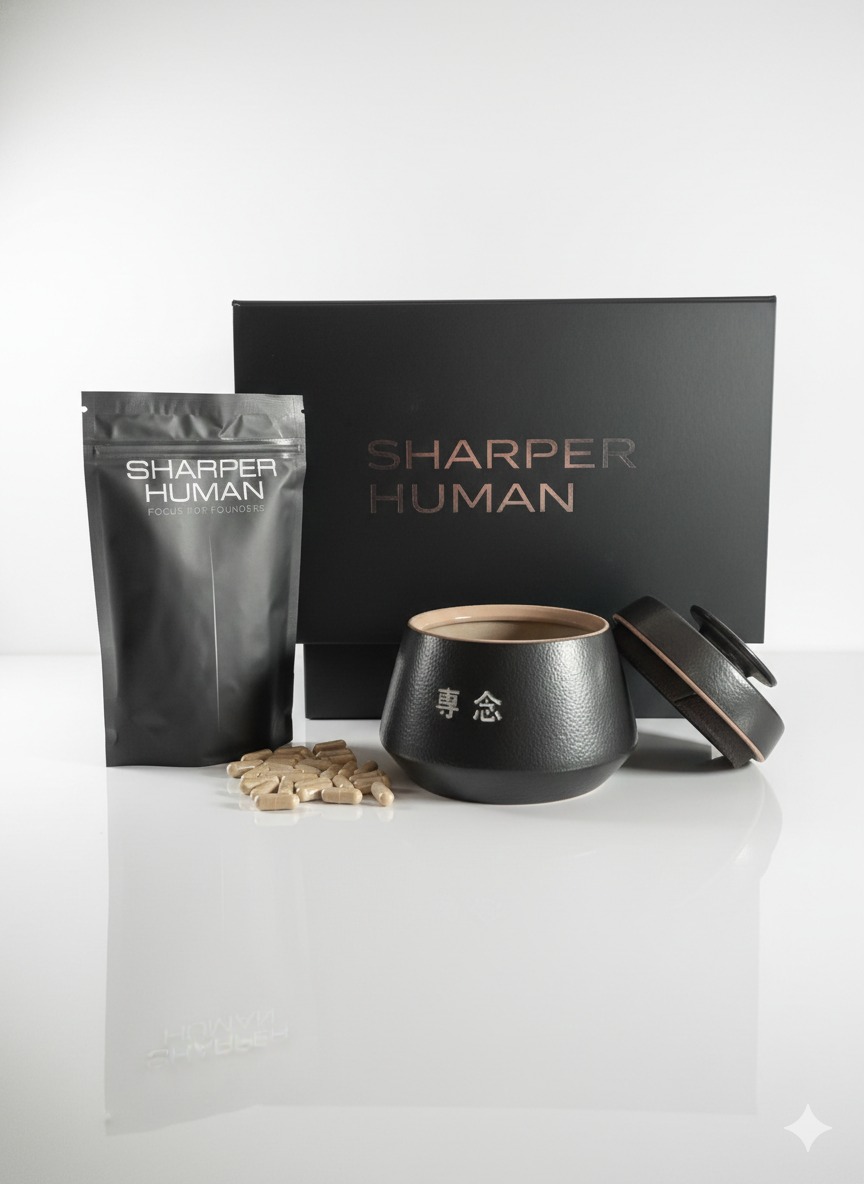
Focus for Founders.
An all-natural brain performance supplement. 20 research-backed ingredients. No caffeine. No stimulants.
Buy on Amazon UKPutting it together, the intelligent approach is to support focus during the day in a way that protects sleep at night — and a caffeine-free stack is built for exactly that. Sharper Human supports focus, drive and mental energy through non-stimulant ingredients (Citicoline, L-Tyrosine, Rhodiola, Lion's Mane and more), so it can be taken in the morning, or even early afternoon, without delaying or fragmenting sleep the way caffeine does. A person who still enjoys a morning coffee can have it and rely on the stimulant-free base for the rest of the day, dropping the late cups that wreck sleep. Paired with good sleep hygiene and, if helpful, evening magnesium, this supports cognition around the clock — sharp by day, resting well by night — rather than borrowing from one to fund the other.
The honest bottom line: sleep is the foundation of cognition, so use nootropics in a way that protects it — favour caffeine-free focus support, keep any stimulants to the morning, prioritise sleep hygiene, and see a doctor for persistent insomnia. Sharper Human's caffeine-free design supports focus without sabotaging sleep. It is available on Amazon in the UK, with US availability planned.
References & further reading
- Nakazaki E, Mah E, Sanoshy K, et al. Citicoline and Memory Function in Healthy Older Adults: A Randomized, Double-Blind, Placebo-Controlled Clinical Trial. The Journal of Nutrition. 2021. doi:10.1093/jn/nxab119. View source ↗
- Kongkeaw C, Dilokthornsakul P, Thanarangsarit P, et al. Meta-analysis of randomized controlled trials on cognitive effects of Bacopa monnieri extract. Journal of Ethnopharmacology. 2014;151(1):528–535. View source ↗
- Punja S, Shamseer L, Olson K, Vohra S. Rhodiola rosea for Mental and Physical Fatigue in Nursing Students: A Randomized Controlled Trial. PLoS One. 2014;9(9):e108416. View source ↗
- Peer-reviewed research on sleep — PubMed, U.S. National Library of Medicine. View source ↗