Magnesium is one of the most genuinely useful and underrated supplements for the brain — involved in hundreds of bodily processes, commonly under-consumed, and relevant to stress, sleep and cognition. It is so worthwhile that the question is not whether it helps, but how best to take it — and the answer, much like creatine, is usually as a dedicated supplement rather than squeezed into a capsule-based focus stack. This is an honest look at magnesium for the brain, the confusing array of forms, and how it fits alongside something like Sharper Human. This article is informational and not medical advice.
Key Takeaways
What Magnesium Does
Magnesium is an essential mineral and a cofactor in over 300 enzymatic reactions in the body, including many central to the nervous system. It plays a role in nerve transmission, in regulating the NMDA receptors involved in learning and memory, in the stress response, and in the pathways governing sleep. Because of this broad involvement, magnesium status genuinely matters for how the brain functions — and that is not a marketing claim but basic physiology. The catch is that magnesium is widely under-consumed: modern diets, soil depletion and high intakes of processed food mean a substantial proportion of people fall short of recommended intakes, often without realising it.
Why Deficiency Is So Common
The prevalence of low magnesium intake is part of what makes supplementation worthwhile for many people. Recommended intakes sit in the region of 300–400mg of elemental magnesium per day for adults, and surveys repeatedly find large fractions of populations not meeting them. Stress, heavy exercise, alcohol and certain medications can further deplete magnesium. The symptoms of a shortfall are non-specific — poor sleep, muscle cramps, low mood, fatigue and difficulty relaxing — which means many people who would benefit from improving their magnesium status never connect the dots. This is why magnesium is one of the few supplements with a genuinely broad case for use, particularly for sleep and stress.
The Confusing World of Magnesium Forms
One reason magnesium confuses people is the sheer number of forms, which differ in absorption and best use. Magnesium glycinate (bound to the amino acid glycine) is well absorbed, gentle on the stomach and popular for sleep and stress. Magnesium citrate is reasonably absorbed but can have a laxative effect. Magnesium oxide is cheap and common but poorly absorbed, making it a weak choice despite its high elemental content. Magnesium L-threonate is the form specifically researched for the brain, studied for its ability to raise magnesium levels within the brain itself, and is the form most associated with cognitive aims — though it is more expensive. For sleep and general use, glycinate is a sensible default; for a specific brain focus, L-threonate is the researched option.
Why It's Dosed Separately, Not in a Stack
Here is the practical reason magnesium sits outside a focus stack, and it mirrors the logic for creatine. Effective doses of elemental magnesium are large — often 200–400mg — and because magnesium compounds are heavy, delivering that amount requires a substantial quantity of powder or several large capsules on its own. Fitting a meaningful magnesium dose into a multi-ingredient capsule stack is simply not practical; it would dominate the formula and crowd out everything else. The alternative some products use — adding a small, sub-effective sprinkle of magnesium for the label — is the kind of "fairy dusting" that transparent formulators avoid. The sensible answer, as with creatine, is to take magnesium as a dedicated supplement, ideally in the evening for its relaxing and sleep-supporting effect.
Getting Magnesium From Food Too
As with any mineral, the first port of call is diet, and magnesium is found in plenty of everyday foods worth prioritising. Dark leafy greens like spinach, nuts and seeds (pumpkin seeds and almonds are particularly rich), legumes, whole grains, and even dark chocolate all supply meaningful magnesium. Building these into the diet raises baseline intake and is the sensible foundation before or alongside any supplement. The reality, though, is that even reasonable diets often fall short of the 300–400mg daily target, especially given soil depletion and heavy processed-food intake, which is why supplementation is so commonly worthwhile. The pragmatic approach is both: eat magnesium-rich foods regularly, and top up with a well-absorbed supplement such as glycinate if needed, particularly for sleep and stress. This food-first-then-supplement logic mirrors how Sharper Human treats nutrition generally — whole foods as the base, targeted supplementation to fill the gaps that remain.
Why Sharper Human Leaves It Out

Focus for Founders.
An all-natural brain performance supplement. 20 research-backed ingredients. No caffeine. No stimulants.
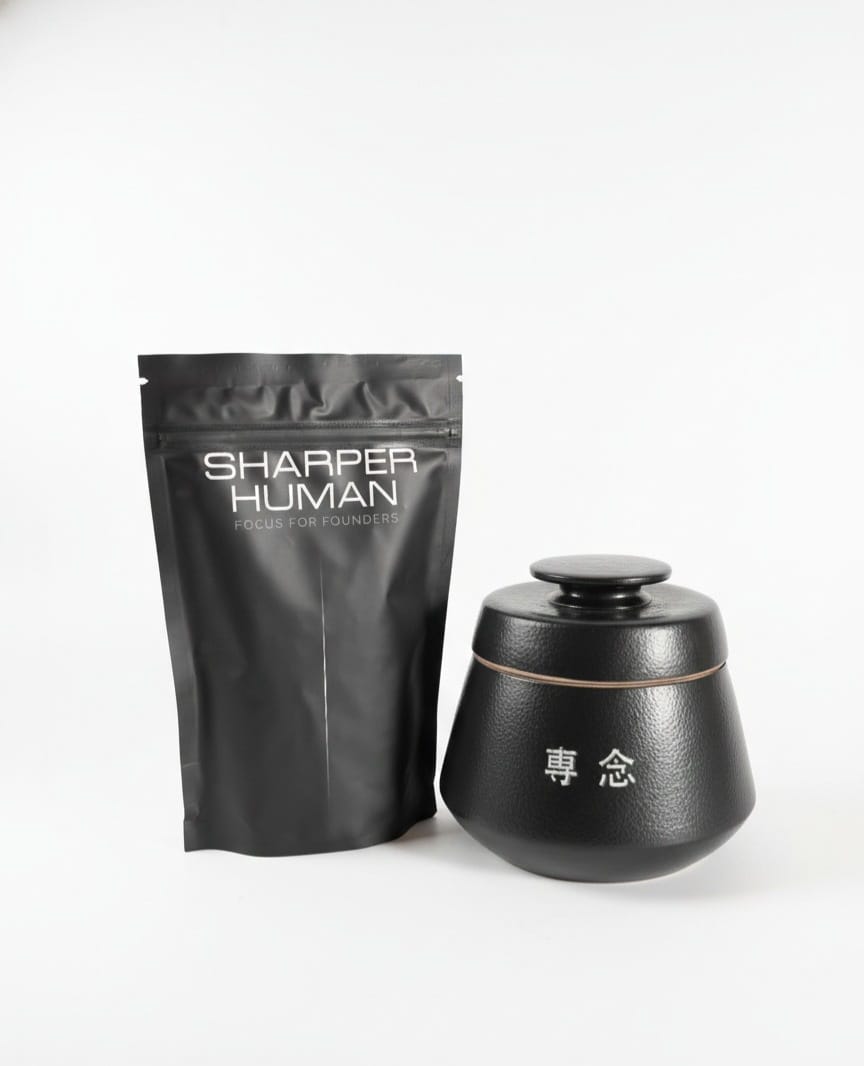
Buy on Amazon UKSharper Human deliberately does not include magnesium, and the reasoning is one of honesty and practicality rather than a gap. Including an effective magnesium dose is incompatible with a 7-capsule cognitive stack, and including a token amount purely to list it would mislead. So Sharper Human concentrates its capsules on ingredients that work at capsule-appropriate doses — Lion's Mane (1000mg), Citicoline (300mg), L-Tyrosine (350mg), Bacopa (150mg) and the rest — and leaves magnesium to be taken separately by anyone who wants it. This pairs naturally: a daytime caffeine-free focus stack like Sharper Human in the morning, and a dedicated magnesium supplement (glycinate for most, L-threonate for a brain focus) in the evening for sleep and stress, with no overlap or conflict between them.
The honest bottom line: magnesium is one of the most worthwhile supplements for the brain, particularly for sleep and stress, and many people are likely falling short — but it is best taken as a dedicated evening supplement rather than baked into a focus capsule, which is exactly why Sharper Human leaves it out. Anyone with kidney problems or on medication should check with a doctor before supplementing. Sharper Human is available on Amazon in the UK for around £79 per month, with US availability planned.
References & further reading
- Nakazaki E, Mah E, Sanoshy K, et al. Citicoline and Memory Function in Healthy Older Adults: A Randomized, Double-Blind, Placebo-Controlled Clinical Trial. The Journal of Nutrition. 2021. doi:10.1093/jn/nxab119. View source ↗
- Kongkeaw C, Dilokthornsakul P, Thanarangsarit P, et al. Meta-analysis of randomized controlled trials on cognitive effects of Bacopa monnieri extract. Journal of Ethnopharmacology. 2014;151(1):528–535. View source ↗
- Docherty S, Doughty FL, Smith EF. The Acute and Chronic Effects of Lion’s Mane Mushroom Supplementation on Cognitive Function, Stress and Mood in Young Adults. Nutrients. 2023;15. View source ↗
- National Institutes of Health, Office of Dietary Supplements. Magnesium — Fact Sheet for Health Professionals. View source ↗
- Peer-reviewed research on magnesium brain sleep — PubMed, U.S. National Library of Medicine. View source ↗