Creatine is best known as a sports supplement, but it has quietly become one of the more interesting compounds in cognitive research too. It is genuinely useful, well-evidenced and very safe — and yet Sharper Human does not include it. That is not an oversight: creatine works best at a dose far larger than fits sensibly inside a capsule-based nootropic stack, which makes it a perfect example of an ingredient best taken alongside a focus formula rather than within it. This is an honest look at creatine for the brain, and how it fits with a stack like Sharper Human.
Key Takeaways
What Creatine Is
Creatine is a compound the body uses to rapidly recycle ATP, the cell's primary energy currency. It is stored mainly in muscle, which is why it is famous for supporting strength and power output — but the brain is also a heavy energy consumer and contains creatine too. The body makes some creatine itself and obtains the rest from the diet, primarily from meat and fish, which is why vegetarians and vegans typically have lower baseline stores. Supplemental creatine, almost always as creatine monohydrate, tops up those stores, and the research on its safety and effectiveness is among the most extensive of any supplement.
The Cognitive Evidence
The brain angle on creatine has strengthened in recent years. Because creatine supports rapid energy regeneration, the hypothesis is that it helps most when the brain is energetically stressed — and that is roughly what the evidence suggests. Cognitive benefits show up most clearly under demanding conditions such as sleep deprivation and mental fatigue, and in populations with lower baseline creatine, where vegetarians have shown some of the more notable improvements in memory and processing tasks. In well-rested omnivores who already eat meat, the cognitive effects are more modest, since their stores are closer to full. This is an honest, nuanced picture rather than the "creatine makes everyone smarter" framing sometimes seen online — but the brain-energy rationale is real, and the safety profile makes it low-risk to try.
Why It's Dosed Separately, Not in a Stack
Here is the practical crux. Creatine's effective dose is around 3–5g per day. That is an enormous amount in supplement terms — a teaspoon of powder — and it simply does not fit inside a capsule-based formula without dominating it. A nootropic stack that tried to include a meaningful creatine dose would need to be almost entirely creatine, crowding out the focus and memory ingredients that are the point. The alternative some products choose — adding a small, sub-effective sprinkle of creatine so they can list it on the label — is exactly the "fairy dusting" that transparent formulators avoid. The sensible answer is the one the evidence points to anyway: take creatine as a cheap standalone monohydrate powder, and use a focus stack for the focus ingredients.
How to Take Creatine for Cognitive Benefit
One reason creatine pairs so well with a focus stack is that it is genuinely simple and cheap to use correctly. The form to choose is creatine monohydrate — it is the most researched, the most effective and the least expensive, and the fancier, pricier forms offer no proven advantage. The maintenance dose is around 3–5g per day, taken at any time; the old loading phase of large doses for the first week speeds saturation slightly but is entirely optional, and skipping it simply means stores fill over a few weeks instead. Consistency matters more than timing, because the benefit comes from keeping the body's creatine stores topped up rather than from an acute hit.
For the cognitive angle specifically, the people most likely to notice a difference are vegetarians and vegans, whose meat-free diets leave them with lower baseline stores, and anyone facing sleep deprivation or heavy mental demand, where the brain's energy systems are under strain. Well-rested omnivores may notice less, since their stores are already fairly full from diet. Creatine is also remarkably safe — decades of research support its use in healthy adults, with adequate hydration the main practical note. All of which makes the recommendation straightforward: take a daily 3–5g of creatine monohydrate as a standalone powder for its strength, recovery and brain-energy benefits, and let a focus stack handle the focus ingredients. The two are complementary, not competing, which is exactly why a well-designed nootropic formula leaves creatine out rather than pretending to include a useful dose.
Why Sharper Human Leaves It Out
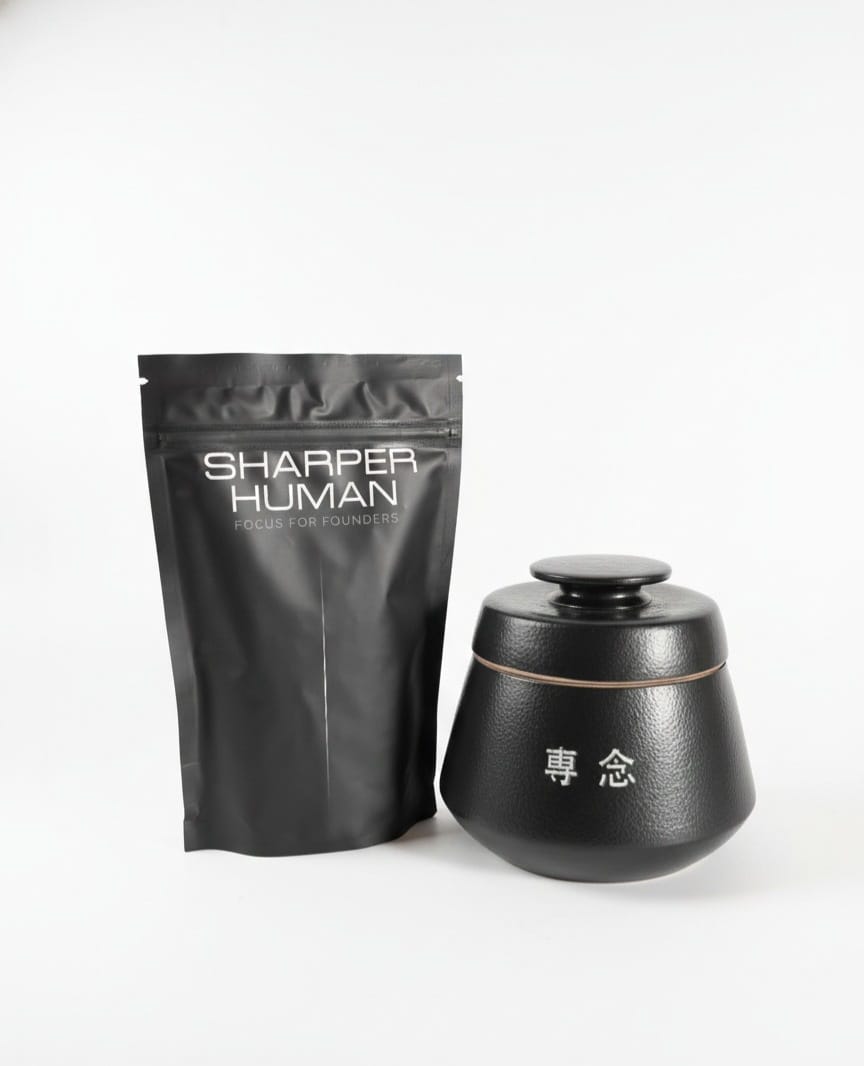
Focus for Founders.
An all-natural brain performance supplement. 20 research-backed ingredients. No caffeine. No stimulants.
Buy on Amazon UKSharper Human deliberately excludes creatine, and the reasoning is a point of integrity rather than a gap. Including a token, ineffective amount purely to put "creatine" on the label would mislead, and including an effective 3–5g dose is physically incompatible with a 7-capsule cognitive stack. So Sharper Human focuses its capsules on ingredients that work at capsule-appropriate doses — 1000mg Lion's Mane, 300mg Citicoline, 350mg L-Tyrosine, 150mg Bacopa and the rest — and leaves creatine to be taken separately by anyone who wants it. For the brain-energy angle within the capsules, it uses Acetyl-L-Carnitine (500mg), which supports mitochondrial energy at a capsule-appropriate dose. This is the same fit-for-purpose, no-fairy-dusting principle behind all 20 ingredients.
The practical recommendation is genuinely to use both: a daily 3–5g of creatine monohydrate (especially valuable for vegetarians and on low-sleep days) is one of the best-value supplements in existence, and it pairs naturally with a focus stack like Sharper Human rather than competing with it. Sharper Human is available on Amazon in the UK for around £79 per month, with US availability planned.
References & further reading
- Nakazaki E, Mah E, Sanoshy K, et al. Citicoline and Memory Function in Healthy Older Adults: A Randomized, Double-Blind, Placebo-Controlled Clinical Trial. The Journal of Nutrition. 2021. doi:10.1093/jn/nxab119. View source ↗
- Kongkeaw C, Dilokthornsakul P, Thanarangsarit P, et al. Meta-analysis of randomized controlled trials on cognitive effects of Bacopa monnieri extract. Journal of Ethnopharmacology. 2014;151(1):528–535. View source ↗
- Docherty S, Doughty FL, Smith EF. The Acute and Chronic Effects of Lion’s Mane Mushroom Supplementation on Cognitive Function, Stress and Mood in Young Adults. Nutrients. 2023;15. View source ↗
- Peer-reviewed research on creatine brain health — PubMed, U.S. National Library of Medicine. View source ↗