Oat straw — from the common oat plant, Avena sativa — is a gentle herb that appears in a surprising number of nootropic blends, including well-known products. It has a plausible, mild rationale for supporting calm and focus, but its evidence is modest, and it is often more of a supporting-cast ingredient than a headline active. This is an honest look at what oat straw does, where the evidence stands, why it features in so many blends, and why Sharper Human prioritises stronger-evidenced ingredients instead. This article is informational and not medical advice.
Key Takeaways
What Oat Straw Is
Oat straw refers to the green, aerial parts of the common oat plant (Avena sativa) — the same plant that gives us oats as food — harvested and used as a herbal supplement, distinct from the oat grain itself. It has a traditional reputation as a gentle tonic for the nervous system, used for calm, mild mood support and general wellbeing, and it has found its way into many modern nootropic formulas (it appears in well-known products like Alpha Brain and NooCube, as covered in the Alpha Brain review and NooCube review). Oat straw is generally regarded as gentle and well tolerated. Its presence in so many blends, despite a relatively modest evidence base, makes it an interesting case — a mild, agreeable herb that serves as a common supporting ingredient, raising the question of how much it genuinely contributes versus simply rounding out a label.
The Proposed Mechanisms
Oat straw's proposed benefits rest on a few mild mechanisms. One line of interest is blood flow: some research suggests oat straw extract may support cerebral blood flow, which could in principle support cognitive function by improving delivery of oxygen and nutrients to the brain. Another proposed mechanism involves mild effects on certain enzymes (such as some relevant to neurotransmitter breakdown), and oat straw also has antioxidant compounds. These mechanisms give oat straw a plausible, if gentle, rationale for supporting a calm alertness and aspects of cognition. The honest framing is that these are mild, supportive mechanisms rather than potent, targeted actions — consistent with oat straw's character as a gentle nervous-system tonic. So oat straw's rationale is real but modest, suggesting subtle support rather than a strong cognitive effect, which shapes both its evidence and its role in formulas.
Where the Evidence Stands
Oat straw's evidence should be described honestly as modest and early. There is some research, including a few studies suggesting oat straw extract may support aspects of cognitive performance and a calm alertness, particularly some work using specific standardised extracts, with the blood-flow and enzyme mechanisms providing plausibility. However, the evidence base is limited in scale, the effects where found are mild, and much depends on the specific extract and dose used. So oat straw sits in the "gentle, modestly-evidenced supporting herb" category — there is enough to make it a reasonable, plausible ingredient, but not enough to place it among the well-evidenced cognitive actives, and its effects are subtle rather than pronounced. This modest evidence, combined with its mild effects, is the key context for understanding why oat straw, despite its popularity in blends, is more of a supporting-cast ingredient than a headline one.
Why It Appears in So Many Blends
Oat straw's frequent appearance in nootropic blends is worth understanding. Part of the appeal is that it is gentle, well tolerated, natural, and has a plausible (if mild) cognitive rationale and a pleasant traditional reputation — making it an agreeable, low-risk addition that rounds out a formula and adds to the ingredient count. However, this also touches on a less flattering possibility: in some products, particularly those using proprietary blends, gentle and inexpensive ingredients can help populate a long, impressive-looking ingredient list without necessarily contributing strong effects, especially if underdosed. This is not to dismiss oat straw, which is a reasonable ingredient, but to note that its ubiquity reflects its agreeable, list-rounding qualities as much as a powerful cognitive contribution. A discerning approach, as the guides to choosing a nootropic stress, focuses on the well-evidenced actives at proper doses rather than being impressed by long lists padded with gentle supporting herbs.
Where Oat Straw Fits
For someone interested in oat straw, it is a gentle, well-tolerated herb that may offer subtle support for calm and cognition, reasonable to try (ideally as a quality standardised extract) with realistic expectations of mild effects. It sits among the gentle supporting herbs rather than the potent, well-evidenced actives, as the guide to the best herbs and adaptogens covers. As a mild nervous-system tonic, it has a pleasant traditional niche. But for someone seeking meaningful cognitive support, the sensible priority is the well-evidenced, properly-dosed actives, with gentle herbs like oat straw as minor additions rather than cornerstones. This prioritisation — strong actives first, gentle supporting herbs a distant second — is the key to building or choosing an effective formula, rather than relying on a long list of mild ingredients.
Why Sharper Human Prioritises Stronger-Evidenced Ingredients
Focus for Founders.
An all-natural brain performance supplement. 20 research-backed ingredients. No caffeine. No stimulants.
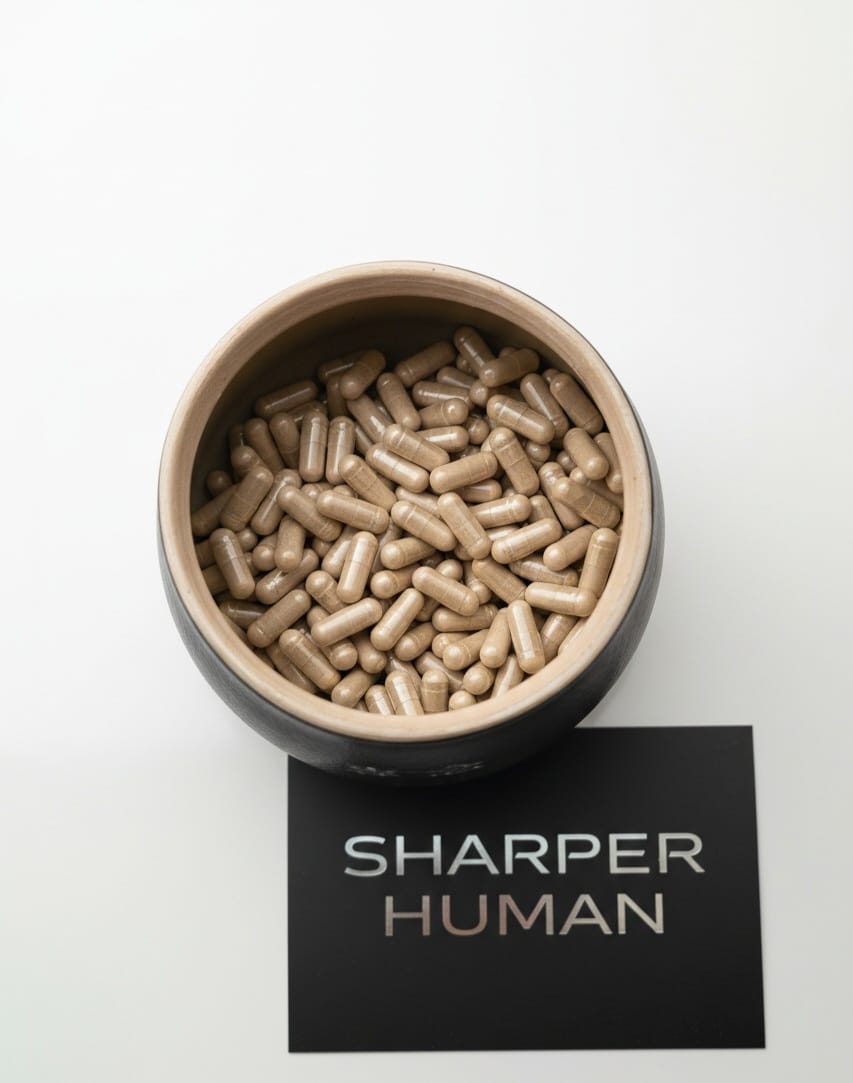
Buy on Amazon UKSharper Human does not include oat straw, and the reasoning is prioritisation rather than dismissal. Oat straw's evidence is modest and its effects mild, and the gentle calm-and-cognition support it offers overlaps what the formula provides through stronger-evidenced ingredients — so the capsule space is better spent on potent, well-evidenced actives. The formula prioritises ingredients with robust evidence and meaningful doses — Citicoline (300mg) for attention, Bacopa (150mg) for memory, L-Tyrosine (350mg) for drive, Lion's Mane (1000mg) for neuronal health, Rhodiola for stress resilience — rather than padding the list with gentle supporting herbs. This focus on well-evidenced actives at proper doses, rather than a long list including mild herbs, is the fit-for-purpose logic behind all 20 ingredients, detailed in the ingredients and dosages guide. Oat straw is a reasonable gentle herb — just not a stronger choice than the formula's well-evidenced actives.
The honest bottom line: oat straw (Avena sativa) is a gentle, modestly-evidenced herb that appears in many blends partly for its agreeable, list-rounding qualities — but since its effects are mild and overlap support the formula provides through stronger ingredients, Sharper Human prioritises well-evidenced actives at proper doses instead. Sharper Human is available on Amazon in the UK, with US availability planned.
References & further reading
- Nakazaki E, Mah E, Sanoshy K, et al. Citicoline and Memory Function in Healthy Older Adults: A Randomized, Double-Blind, Placebo-Controlled Clinical Trial. The Journal of Nutrition. 2021. doi:10.1093/jn/nxab119. View source ↗
- Kongkeaw C, Dilokthornsakul P, Thanarangsarit P, et al. Meta-analysis of randomized controlled trials on cognitive effects of Bacopa monnieri extract. Journal of Ethnopharmacology. 2014;151(1):528–535. View source ↗
- Punja S, Shamseer L, Olson K, Vohra S. Rhodiola rosea for Mental and Physical Fatigue in Nursing Students: A Randomized Controlled Trial. PLoS One. 2014;9(9):e108416. View source ↗
- Peer-reviewed research on oat straw focus — PubMed, U.S. National Library of Medicine. View source ↗