Phenylalanine is an amino acid sometimes marketed for focus and mood because it sits at the start of the pathway that produces dopamine — but it works one step further back than tyrosine, the amino acid a well-designed formula actually uses. Understanding this relationship explains why tyrosine is generally the more direct and sensible choice, and there is an important safety note for some people too. This is an honest look at what phenylalanine does, its forms, the PKU warning, and why Sharper Human uses tyrosine directly. This article is informational and not medical advice.
Key Takeaways
What Phenylalanine Is
Phenylalanine is an essential amino acid — one the body cannot make and must obtain from diet — found in protein-rich foods. Its relevance to focus and mood comes from its position in an important biochemical pathway: phenylalanine is converted by the body into tyrosine, and tyrosine is then converted (via an intermediate) into dopamine, and onward into noradrenaline. So phenylalanine sits at the very start of the pathway that produces these catecholamine neurotransmitters behind motivation, drive and alertness. It comes in different forms (discussed below) and is available as a supplement, sometimes marketed for mood, focus and appetite. The key to understanding phenylalanine's place is this pathway relationship — it is a precursor to tyrosine, which is itself a precursor to dopamine — which raises the obvious question of whether to supplement phenylalanine or simply use tyrosine directly, a question with a fairly clear answer.
The Phenylalanine-Tyrosine-Dopamine Pathway
The central fact about phenylalanine is its place in the pathway: phenylalanine → tyrosine → (via L-DOPA) dopamine → noradrenaline. Each arrow is a conversion step in the body. This means phenylalanine is two steps removed from dopamine, while tyrosine is one step removed (closer to the end product). For supporting the dopamine-and-noradrenaline system — the rationale behind using these amino acids for focus and drive — supplementing tyrosine provides the building block one step closer to the neurotransmitters, skipping the phenylalanine-to-tyrosine conversion. This is the key reason tyrosine is generally preferred: it is more direct. The companion guides to L-Tyrosine and dopamine cover this pathway. While supplementing phenylalanine could in principle support the same pathway (the body would convert it to tyrosine), there is little advantage to starting one step further back when tyrosine is readily available and one step closer to the goal.
The Different Forms
Phenylalanine adds a layer of complexity through its different forms, which is worth understanding. There is L-phenylalanine (the natural form found in protein, which follows the pathway to tyrosine and dopamine), D-phenylalanine (a mirror-image synthetic form with different, more speculative proposed effects), and DL-phenylalanine (a mix of both, sometimes marketed for mood and pain). These forms have different properties and evidence, and the marketing around them (particularly DL-phenylalanine for mood) involves some speculative claims. This complexity is another mark against phenylalanine relative to tyrosine: tyrosine (as L-tyrosine) is straightforward and well-characterised for cognitive support, whereas phenylalanine's multiple forms and the varied claims around them add confusion. For the clear, evidence-based goal of supporting the dopamine pathway for focus and drive, the simplicity and directness of L-tyrosine is preferable to navigating phenylalanine's forms and their more speculative claims.
The Important PKU Warning
There is a genuinely important safety note regarding phenylalanine: people with the genetic condition phenylketonuria (PKU) must strictly avoid phenylalanine. PKU is an inherited disorder in which the body cannot properly metabolise phenylalanine, causing it to build up to harmful levels that can damage the brain — which is why people with PKU follow a strict low-phenylalanine diet for life, and why products containing phenylalanine (including the sweetener aspartame) carry warnings for people with PKU. This is a serious, absolute caution for those affected. While PKU is relatively uncommon and usually identified at birth through screening, the existence of this condition is a notable point about phenylalanine specifically, and a reminder that even common amino acids can be genuinely dangerous for particular individuals. Anyone with PKU must avoid phenylalanine supplements entirely, and this warning is part of why phenylalanine is a more complicated ingredient than tyrosine.
Where Phenylalanine Fits
For most people seeking to support the dopamine-and-noradrenaline system for focus and drive, tyrosine is the more sensible, direct choice, so there is limited reason to choose phenylalanine for that purpose. Phenylalanine's various forms have some specific marketed uses (DL-phenylalanine for mood and pain, for instance), which are more speculative and outside the focus context. Dietary phenylalanine, obtained from protein-rich foods, is how everyone normally gets it, with no concern at food levels (except for those with PKU). It sits among the amino acids with a more speculative or indirect cognitive case compared with the well-characterised tyrosine. As the guide to the evidence-based nootropics stresses, choosing the more direct, better-evidenced option (tyrosine) over a one-step-removed precursor with multiple forms and more speculative claims (phenylalanine) is the sensible approach for supporting focus and drive.
Why Sharper Human Uses Tyrosine Directly
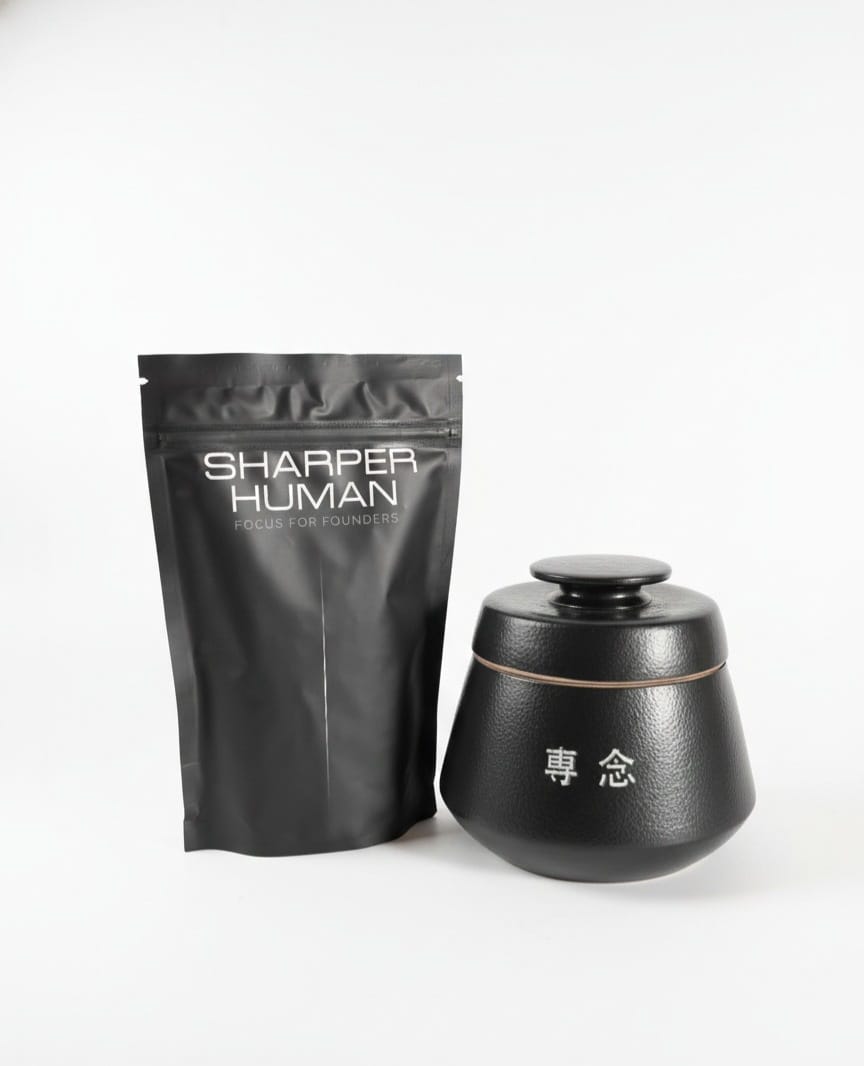
Focus for Founders.
An all-natural brain performance supplement. 20 research-backed ingredients. No caffeine. No stimulants.
Buy on Amazon UKSharper Human uses L-Tyrosine (350mg) rather than phenylalanine, and the reasoning is directness and clarity. Tyrosine is one step closer to dopamine in the pathway — supplementing it provides the building block nearer the end product, skipping the phenylalanine-to-tyrosine conversion — and tyrosine has the more direct, well-characterised research for supporting cognitive performance under stress and demand. Using the more direct, better-evidenced, straightforward amino acid (tyrosine), rather than a one-step-removed precursor with multiple confusing forms and a PKU caution (phenylalanine), is exactly the fit-for-purpose logic behind all 20 ingredients, detailed in the ingredients and dosages guide. Tyrosine sits alongside the formula's other well-evidenced actives to support the drive and alertness behind focus. Phenylalanine is a genuine amino acid in the same pathway — just a less direct, more complicated choice than tyrosine.
The honest bottom line: phenylalanine is an amino acid that converts to tyrosine and then dopamine, so it sits one step further back in the pathway — making tyrosine the more direct, better-evidenced, simpler choice for supporting focus and drive, which is why Sharper Human uses L-Tyrosine directly. (People with PKU must avoid phenylalanine entirely.) Sharper Human is available on Amazon in the UK, with US availability planned.
References & further reading
- Peer-reviewed research on phenylalanine focus mood — PubMed, U.S. National Library of Medicine. View source ↗
- Suliman NA, Mat Taib CN, Mohd Moklas MA, et al. Establishing Natural Nootropics: Recent Molecular Enhancement Influenced by Natural Nootropic. Evidence-Based Complementary and Alternative Medicine. 2016. View source ↗