Pycnogenol — a trademarked extract of French maritime pine bark — is a premium antioxidant ingredient that appears in some focus and attention supplements, promoted on the strength of its antioxidant action and effects on blood flow. It has some genuinely interesting research, including in the context of attention, but questions of cost, evidence strength and fit mean it sits outside a focus formula's core. This is an honest look at what Pycnogenol does, where its evidence stands, and why Sharper Human supports antioxidant and circulatory health through other ingredients. This article is informational and not medical advice.
Key Takeaways
What Pycnogenol Is
Pycnogenol is the registered trademark for a specific, standardised extract of the bark of the French maritime pine (Pinus pinaster). It is rich in a class of antioxidant compounds called proanthocyanidins — the same broad family of plant antioxidants found in grape seed and other sources — and the trademarked product is standardised to a defined content of these actives, which is part of why it commands a premium. Pycnogenol is marketed for a range of uses centred on its antioxidant action and its effects on circulation and blood vessels, including cardiovascular, skin and cognitive applications. The "pine bark extract" sold generically is similar in type, though Pycnogenol specifically refers to the patented, standardised version that most of the research has used.
The Antioxidant and Circulation Story
Pycnogenol's core proposed mechanisms are antioxidant activity and support for healthy blood flow. Its proanthocyanidins act as antioxidants, combating oxidative stress, and Pycnogenol has been studied for supporting the function of blood vessels and circulation, including effects related to nitric oxide and vascular health. Since healthy blood flow is foundational to brain function — the brain depends on good circulation to deliver oxygen and nutrients — this circulatory angle is the basis for its cognitive marketing, much like other circulation-oriented ingredients. The antioxidant-plus-circulation profile is genuinely plausible as supportive infrastructure for the brain, in the same broad category as ingredients like bilberry, rather than as a direct "focus" active. Whether this translates into meaningful cognitive benefit is the key question.
The Cognition and Attention Research
Pycnogenol has some genuinely interesting cognitive research, which is more than can be said for many antioxidant ingredients. Studies have explored Pycnogenol in relation to attention, mental performance and aspects of cognition in various groups, including some research touching on attention in younger people, with some promising findings plausibly linked to its antioxidant and blood-flow effects. Honesty requires noting the limits, though: this evidence base, while encouraging, is not extensive or definitive, the studies vary, and firm conclusions about meaningful cognitive enhancement in healthy people would be premature. So Pycnogenol sits in the "promising but not established" category for cognition — interesting enough to take seriously, but not yet proven enough to be a must-have, particularly given its cost.
The Cost and Fit Questions
Two practical considerations explain why a focus formula might leave Pycnogenol out despite its merits. First, cost: as a patented, standardised, premium ingredient, Pycnogenol is expensive, and including a meaningful researched dose would consume a notable share of a formula's budget — budget that may deliver more cognitive value spent on better-established focus actives or on more cost-effective antioxidant sources. Second, fit and overlap: a formula already providing antioxidant and circulatory support through other ingredients gains less from adding another antioxidant, especially a costly one with promising-but-limited cognitive evidence. These are formulation trade-offs about value and priority rather than a verdict that Pycnogenol does not work — it may well offer benefit, just not necessarily the best return on a focus formula's limited capsule space and budget.
The Antioxidant Approach in a Formula
The broader point is how a sensible formula approaches antioxidants generally. There are many antioxidant ingredients — Pycnogenol, grape seed, CoQ10, astaxanthin, various berry extracts — and a formula cannot and should not include every one; doing so would be costly and redundant. The sensible approach is to provide rounded antioxidant and brain-and-eye support through a sensible selection rather than chasing every premium antioxidant on the market. The deep-dives on Ginkgo (another circulation-oriented ingredient) and the antioxidant bilberry illustrate this selectivity. The discipline is to choose antioxidant support thoughtfully and cost-effectively, in service of the formula's focus-and-brain-health purpose, rather than adding ingredients simply because they have an appealing mechanism.
Why Sharper Human Uses Other Antioxidants
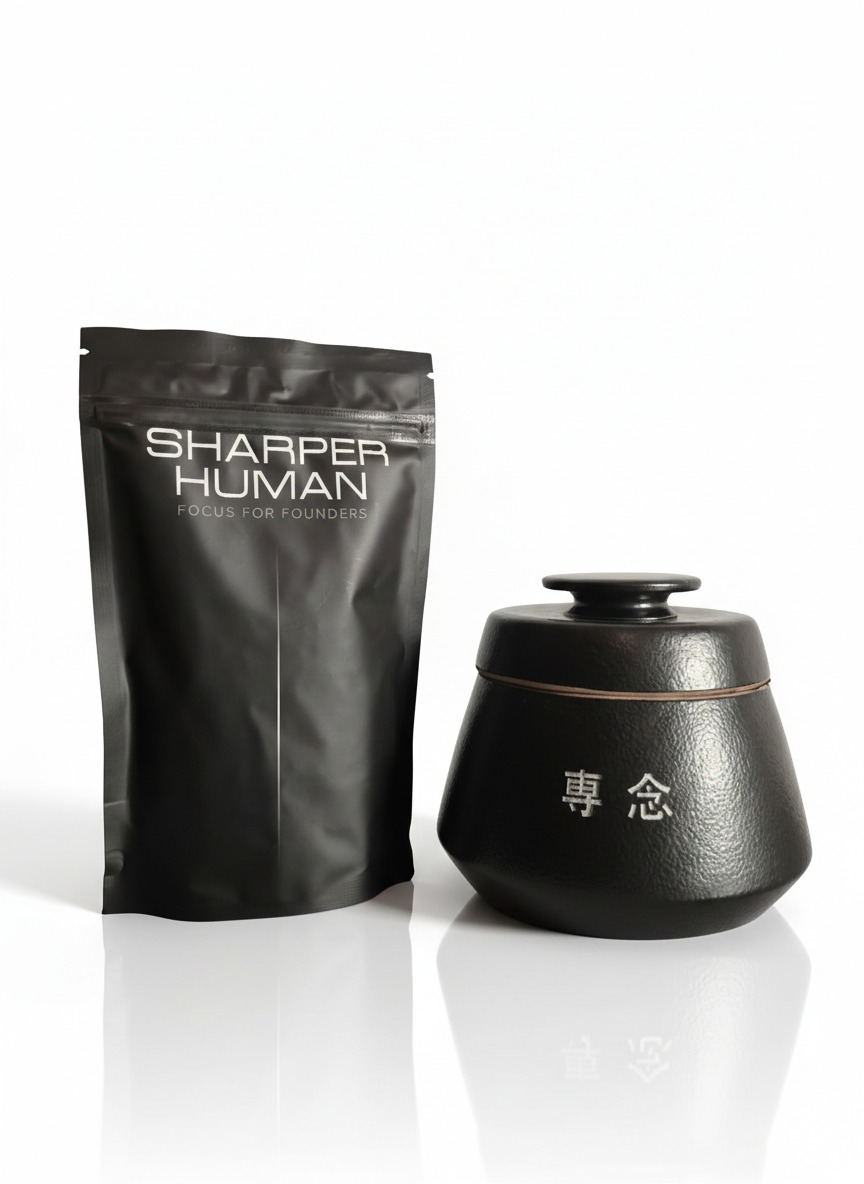
Focus for Founders.
An all-natural brain performance supplement. 20 research-backed ingredients. No caffeine. No stimulants.
Buy on Amazon UKSharper Human does not include Pycnogenol, and the reasoning is one of value and fit. For antioxidant and brain-and-eye support, the formula draws on ingredients like Bilberry (120mg of a 15:1 extract) and Lutein (21mg) — providing antioxidant and eye support relevant to its screen-using audience — alongside the antioxidant properties of other components, rather than adding an expensive, trademarked antioxidant with promising-but-limited cognitive evidence. This spends the formula's capsule space and budget on the most relevant, well-evidenced actives, which is the fit-for-purpose, value-conscious logic behind all 20 ingredients, detailed in the ingredients and dosages guide. Pycnogenol is a legitimate ingredient — just one whose cost and evidence profile place it outside a focus stack's priorities.
The honest bottom line: Pycnogenol is a premium pine-bark antioxidant with promising but limited cognitive evidence and a high price, so a focus formula sensibly supports antioxidant health through more cost-effective, well-chosen ingredients instead — which is what Sharper Human does. Sharper Human is available on Amazon in the UK, with US availability planned.
References & further reading
- Peer-reviewed research on pycnogenol pine bark — PubMed, U.S. National Library of Medicine. View source ↗
- Suliman NA, Mat Taib CN, Mohd Moklas MA, et al. Establishing Natural Nootropics: Recent Molecular Enhancement Influenced by Natural Nootropic. Evidence-Based Complementary and Alternative Medicine. 2016. View source ↗