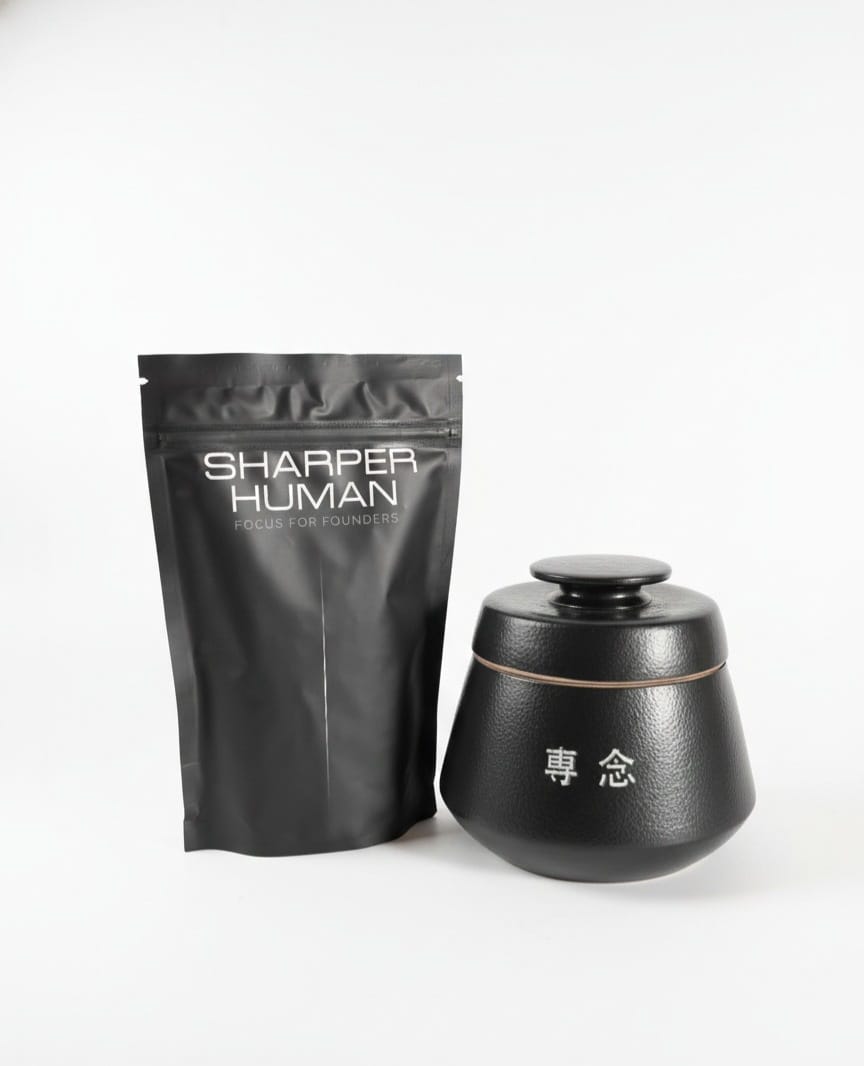
Caffeine is, by a wide margin, the world's most popular cognitive enhancer — and, unlike many trendy nootropics, it genuinely works, with excellent evidence behind it. So a fair guide has to start by giving caffeine its due. But caffeine also comes with real downsides — tolerance, crashes, sleep disruption and jitteriness — and understanding both sides explains exactly why Sharper Human is deliberately caffeine-free. This is an honest look at caffeine as a nootropic: what it does well, where it falls short, and the case for a stimulant-free approach to sustained focus. This article is informational and not medical advice.
Key Takeaways
Caffeine Genuinely Works
It would be dishonest to discuss caffeine without acknowledging that it is a genuinely effective cognitive enhancer with excellent evidence — far better evidence, in fact, than most exotic nootropics. Caffeine works by blocking adenosine, the molecule that builds up through the day to make us feel sleepy, thereby promoting alertness and wakefulness. The research is robust: caffeine reliably improves alertness, vigilance, reaction time and aspects of focus, and reduces the perception of fatigue, particularly when you are tired. It is fast-acting, cheap and widely available. So caffeine is not a nootropic to sneer at — it is arguably the most proven one there is, and for many people a sensible cup of coffee is a perfectly good cognitive tool. The honest picture, though, requires looking at the other side of the ledger too.
The Tolerance Problem
The first major downside of caffeine is tolerance. With regular use, the brain adapts — partly by increasing adenosine receptors — so the same dose delivers progressively less effect, and many habitual coffee drinkers are, in effect, using caffeine mostly to feel normal rather than enhanced, having adapted to their baseline intake. This adaptation also means that missing the usual caffeine produces withdrawal: headaches, fatigue and poor concentration, the familiar "I haven't had my coffee" state. So a great deal of caffeine consumption is spent climbing back to baseline rather than rising above it. This tolerance-and-dependence cycle is a genuine limitation of caffeine as a long-term cognitive strategy, and it is one of the things a non-stimulant approach avoids entirely, since the supporting ingredients do not build tolerance in the same way.
The Crash and the Jitters
Two more downsides are felt acutely. First, the crash: as caffeine wears off and the accumulated adenosine it was blocking floods through, alertness can drop sharply, often leaving a person more tired than before — which prompts another dose and feeds the cycle. This crash frequently lands in the early afternoon, undermining focus when it is still needed. Second, the jitters: caffeine is a stimulant that raises heart rate and can produce jitteriness, a racing feeling and heightened anxiety, especially at higher doses or in sensitive people — counterproductive for tasks needing calm composure, like public speaking or careful work. Neither the crash nor the jitter is a trivial issue, and together they explain why "more coffee" is often a poor solution to flagging focus, and why some people seek a steadier alternative.
The Sleep Disruption Issue
Perhaps the most consequential downside is caffeine's effect on sleep. Caffeine has a long half-life — commonly around five to six hours, meaning a substantial fraction is still active many hours after consumption — so caffeine taken in the afternoon or evening can delay sleep onset and reduce sleep quality, often without the person connecting their poor sleep to that mid-afternoon coffee. Because sleep is the foundation of cognitive performance, this creates a vicious cycle: caffeine disrupts sleep, poor sleep worsens next-day focus and energy, prompting more caffeine. The guide to nootropics and sleep covers this in depth. This sleep issue is arguably the strongest single argument for a caffeine-free approach to daily focus support — because protecting sleep does more for cognition than any stimulant.
The Case for Caffeine-Free Focus
Putting the ledger together, caffeine is effective but comes with tolerance, crashes, jitter and sleep disruption — which is the precise rationale for a caffeine-free focus formula. The aim is to support drive, focus and alertness through ingredients that do not carry those downsides: L-Tyrosine supports the dopamine and noradrenaline behind drive without stimulation, Rhodiola supports resistance to fatigue, Citicoline supports attention, and Taurine supports calm. The result is steadier, more stable support with no crash, no tolerance build-up, no jitter and no sleep disruption. Importantly, this is not anti-caffeine: a caffeine-free base works perfectly well alongside a sensible morning coffee for those who enjoy one. The guides to natural alternatives to caffeine and combining nootropics with coffee cover both approaches.
Why Sharper Human Is Caffeine-Free
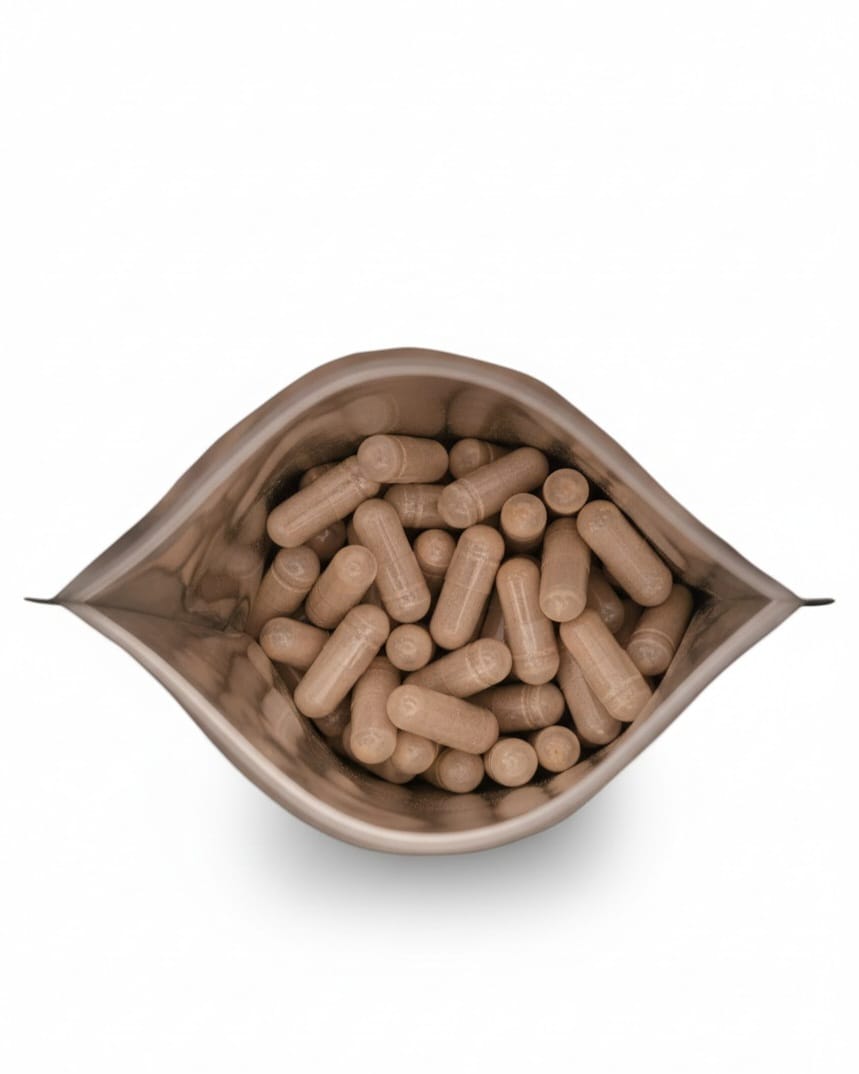
Focus for Founders.
An all-natural brain performance supplement. 20 research-backed ingredients. No caffeine. No stimulants.
Buy on Amazon UKSharper Human is deliberately caffeine-free, and the reasoning follows directly from the trade-offs above. The goal is sustained, stable cognitive support throughout the day, without the crash that lands mid-afternoon, the tolerance that erodes caffeine's benefit over time, the jitter that undermines composure, or the sleep disruption that quietly sabotages next-day focus. By supporting drive and alertness through non-stimulant ingredients, Sharper Human gives people the choice: use it instead of caffeine for a steadier experience, or alongside their morning coffee for the best of both, dropping the later cups that cause the most trouble. This flexibility, and the avoidance of caffeine's genuine downsides, is the core of the caffeine-free design — covered further in the guide to the best caffeine-free focus supplement.
The honest bottom line: caffeine is a genuinely effective nootropic, but its tolerance, crash, jitter and sleep disruption are real downsides — which is exactly why Sharper Human is caffeine-free, supporting steady focus without them while still pairing fine with a morning coffee. Sharper Human is available on Amazon in the UK for around £79 per month, with US availability planned.
References & further reading
- Nakazaki E, Mah E, Sanoshy K, et al. Citicoline and Memory Function in Healthy Older Adults: A Randomized, Double-Blind, Placebo-Controlled Clinical Trial. The Journal of Nutrition. 2021. doi:10.1093/jn/nxab119. View source ↗
- Punja S, Shamseer L, Olson K, Vohra S. Rhodiola rosea for Mental and Physical Fatigue in Nursing Students: A Randomized Controlled Trial. PLoS One. 2014;9(9):e108416. View source ↗
- Peer-reviewed research on caffeine — PubMed, U.S. National Library of Medicine. View source ↗