
For anyone who works at a screen all day, eye strain and screen fatigue are a daily reality — tired, dry, aching eyes, blurred vision and headaches that sap focus and energy by the afternoon. The good news is that digital eye strain is largely manageable with the right habits, and supported by certain eye-health nutrients. This is a practical guide to reducing screen fatigue and eye strain: the causes, the habits that genuinely work, the role of eye-health nutrients like lutein, and how this fits with cognitive support. This article is informational and not medical advice.
Key Takeaways
Understanding Digital Eye Strain
Digital eye strain (sometimes called computer vision syndrome) is a genuine and common issue arising from prolonged screen use, with several contributing causes worth understanding. A major one is reduced blinking: we blink significantly less when concentrating on screens, which leads to dry, irritated eyes, since blinking spreads the tear film that keeps eyes moist and comfortable. Another is sustained focusing: staring at a fixed, close distance for long periods tires the eye's focusing muscles, much like holding any muscle in one position. Glare and poor lighting (from windows or overhead lights reflecting on the screen, or working in unsuitable lighting) add strain, as do screen factors like brightness, contrast and text size. The result is the familiar cluster of symptoms — tired, dry, aching eyes, blurred vision, and headaches — that build through a day of screen work and genuinely sap focus and comfort. Understanding these causes points directly to the habits that relieve them, which are largely about giving the eyes relief from these sustained demands.
The 20-20-20 Rule and Taking Breaks
The single most useful habit for reducing eye strain is regular visual breaks, best captured by the well-known 20-20-20 rule: every 20 minutes, look at something about 20 feet (6 metres) away for at least 20 seconds. This works by relieving the sustained close-focusing that tires the eye muscles — looking into the distance lets the focusing muscles relax, and the brief pause also prompts blinking and rest. It is a simple, evidence-informed habit that genuinely helps, and it is easy to implement (a periodic reminder can prompt it). Beyond the 20-20-20 rule, taking proper breaks from the screen altogether — standing up, looking around, resting the eyes — at regular intervals helps both the eyes and overall focus and energy (and aligns with avoiding the afternoon slump and sustained-focus fatigue). Giving the eyes regular relief from sustained close work, via the 20-20-20 rule and proper breaks, is the cornerstone of managing screen fatigue, addressing the core cause of sustained focusing directly.
Blinking, Lighting and Screen Setup
Several other practical habits address the other causes of eye strain. For dryness from reduced blinking: consciously blinking more during screen work helps keep eyes moist, and lubricating eye drops can help those prone to dryness, as can ensuring good air quality (very dry air worsens it). For glare and lighting: positioning the screen to avoid reflections from windows and lights, using appropriate ambient lighting (neither too bright nor too dim relative to the screen), and reducing glare (matte screens or anti-glare measures) all reduce strain. For screen setup: positioning the screen at a comfortable distance (roughly arm's length) and slightly below eye level, ensuring text is large enough to read comfortably, and adjusting brightness and contrast to comfortable levels all help. Reducing blue light in the evening (via settings or filters) may also support comfort and sleep, though its role in eye strain specifically is debated. These adjustments — blinking, lighting, and screen positioning — address the dryness, glare and focusing causes of eye strain, complementing the regular breaks.
The Role of Eye-Health Nutrients
Alongside good screen habits, certain nutrients genuinely support eye health, which is relevant for anyone doing demanding visual work. The standouts are lutein and zeaxanthin — carotenoids that concentrate in the macula of the eye, where they help filter high-energy blue light and provide antioxidant protection, supporting eye health and visual function. Because they concentrate in the eye and filter blue light, lutein and zeaxanthin are of particular interest for those with high screen exposure. Anthocyanins from bilberry are also traditionally associated with eye health and have antioxidant properties relevant to the eyes, as the guide to bilberry for eyes and cognition covers. These nutrients support eye health generally (and are obtained from foods like leafy greens for lutein, and berries) — they are not a substitute for good screen habits, but a complementary support for eye health, particularly relevant for screen-heavy lifestyles. Supporting eye health nutritionally, alongside the habits above, is a sensible rounded approach for those who work at screens.
Why This Matters for Focus and Work
Reducing eye strain matters not just for eye comfort but for focus and productivity, because tired, strained eyes and the associated headaches genuinely undermine concentration and energy. Eye strain contributes to the afternoon fatigue and reduced focus that screen workers often experience — uncomfortable, tired eyes make sustained mental work harder, and eye-strain headaches directly impair concentration. So managing eye strain is part of sustaining focus and comfort through a screen-based workday, connecting to the broader picture of maintaining energy and concentration (as the guide to keeping your brain sharp covers). For knowledge workers especially, whose work is largely screen-based, eye comfort and focus are intertwined — making the eye-care habits above a genuine contributor to sustained productivity, not just eye health. This connection between eye strain and focus is why screen-based workers benefit from attending to their eyes as part of supporting their overall cognitive performance and comfort through the day.
How This Fits With Sharper Human
Focus for Founders.
An all-natural brain performance supplement. 20 research-backed ingredients. No caffeine. No stimulants.
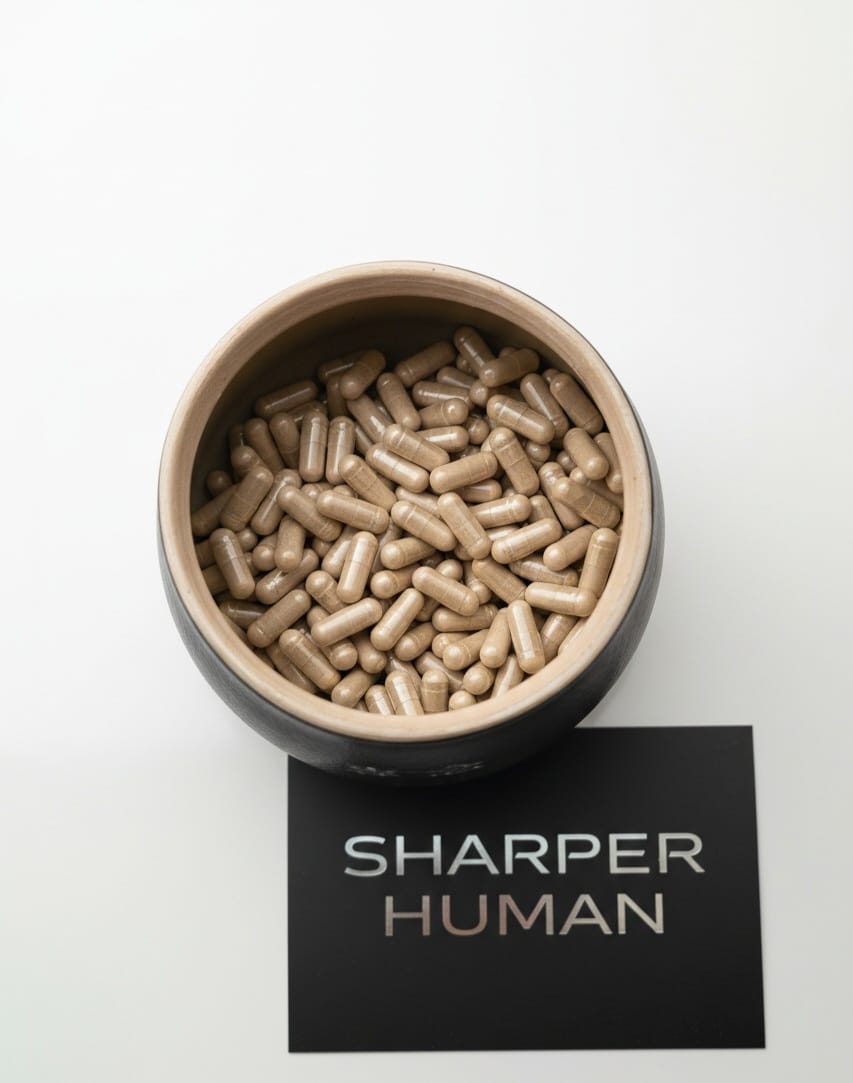
Buy on Amazon UKSharper Human fits this picture in a genuinely relevant way, because it includes eye-health nutrients alongside its cognitive ingredients — reflecting that, for the screen-based knowledge workers it is designed for, eye health and cognitive performance go together. The formula includes Lutein (21mg) — the carotenoid that concentrates in the eye and helps filter blue light, particularly relevant for screen exposure — and Bilberry (120mg of a 15:1 extract), traditionally associated with eye health, alongside its cognitive actives like Citicoline, Bacopa and L-Tyrosine. So while good screen habits (the 20-20-20 rule, breaks, lighting and setup) are the foundation for managing eye strain, the formula provides nutritional support for eye health as a complement, fitting the screen-heavy lifestyle of its target users. This inclusion of eye-health nutrients alongside cognitive ingredients reflects the thoughtful, fit-for-purpose logic behind all 20 ingredients, detailed in the ingredients and dosages guide. Good habits plus eye-health nutrients make a sensible rounded approach for screen workers.
The honest bottom line: digital eye strain is real but manageable — the 20-20-20 rule, blinking, good lighting and screen setup, and regular breaks genuinely help, complemented by eye-health nutrients like lutein and bilberry. Sharper Human includes Lutein (21mg) and Bilberry alongside its cognitive ingredients, fitting screen-based work, and is available on Amazon in the UK, with US availability planned.
References & further reading
- Nakazaki E, Mah E, Sanoshy K, et al. Citicoline and Memory Function in Healthy Older Adults: A Randomized, Double-Blind, Placebo-Controlled Clinical Trial. The Journal of Nutrition. 2021. doi:10.1093/jn/nxab119. View source ↗
- Kongkeaw C, Dilokthornsakul P, Thanarangsarit P, et al. Meta-analysis of randomized controlled trials on cognitive effects of Bacopa monnieri extract. Journal of Ethnopharmacology. 2014;151(1):528–535. View source ↗
- Peer-reviewed research on reduce screen fatigue — PubMed, U.S. National Library of Medicine. View source ↗