N-Acetyl-L-Tyrosine, usually abbreviated to NALT, is often sold as a "superior", better-absorbed form of the amino acid L-Tyrosine, and it appears in many premium-positioned nootropic products on that basis. But the claim deserves scrutiny, because the evidence does not clearly support it — and it is a good example of how a more expensive, science-sounding ingredient is not always the better choice. This is an honest comparison of NALT and plain L-Tyrosine, and why Sharper Human uses standard L-Tyrosine.
Key Takeaways
The Two Forms Explained
L-Tyrosine is the standard amino acid, a precursor the brain uses to build dopamine and noradrenaline, and the form used in most of the research on tyrosine's cognitive and stress-performance effects. N-Acetyl-L-Tyrosine is the same molecule with an acetyl group attached, a modification that increases its water-solubility. That improved solubility is the basis of NALT's marketing: because it dissolves more readily, it is pitched as more bioavailable and better able to deliver tyrosine to the brain, often justifying a premium price and a place in "advanced" formulas. The logic sounds plausible — but plausibility, as with several ingredients, is not the same as proof.
What the Evidence Actually Shows
Here the story turns against NALT. The key question is not whether NALT dissolves well, but whether the body efficiently converts it back to free L-Tyrosine that the brain can use — and research suggests it does not do this particularly well. Studies have indicated that a significant portion of administered NALT is excreted unchanged in the urine rather than being converted to usable tyrosine, meaning its improved solubility does not translate into more tyrosine reaching the brain. Plain L-Tyrosine, by contrast, has the stronger evidence base for actually raising plasma tyrosine and for the performance-under-stress effects the amino acid is valued for. In other words, the cheaper, simpler form appears to be the more effective one — the opposite of what the marketing implies.
Why the "Premium Form" Assumption Misleads
NALT is a useful case study in a broader supplement-industry pattern: the assumption that a modified, more expensive, more science-sounding version of an ingredient must be better. Sometimes modifications genuinely improve an ingredient, but often they add cost and marketing appeal without a real-world benefit — or, as with NALT, the modification may even work against effective delivery. The lesson for anyone evaluating supplements is to look for evidence that a fancier form actually outperforms the standard one in humans, rather than assuming it does because it costs more or has a more complex name. A transparent formulator follows the evidence, not the marketing fashion.
When NALT Might Still Appear
In fairness, NALT is not useless, and there are contexts where its water-solubility is convenient — for instance in liquid or powder products where plain tyrosine's lower solubility is awkward. Some users also report subjective preferences. But for the core purpose of delivering tyrosine to support dopamine, drive and performance under stress, the convenience of solubility does not outweigh the weaker conversion evidence. The honest position is that NALT's advantages are largely formulation-convenience rather than superior effectiveness, which is not a strong reason to choose it — let alone pay more for it — when the goal is the tyrosine effect itself.
How to Read "Upgraded" Ingredient Claims
The NALT story is worth generalising, because the supplement market is full of "upgraded", "enhanced" or "advanced" forms of familiar ingredients sold at a premium. Sometimes a modified form genuinely is better — more bioavailable, better tolerated, or more effective in humans — but often the upgrade is mostly marketing, adding cost and a science-flavoured name without a demonstrated real-world advantage, and occasionally, as with NALT's conversion problem, the modification can even work against the goal. The defence against paying for hype is a simple habit: when a product touts a special form of an ingredient, ask whether there is human evidence that this form actually outperforms the standard one for the outcome you care about — not just a plausible mechanism or a solubility claim, but real-world results. If that evidence is absent, the standard, well-studied form is usually the smarter and cheaper choice. Applying that test consistently is part of how Sharper Human selects ingredients, and it is why it favours proven standard forms over fashionable upgrades.
Why Sharper Human Uses L-Tyrosine
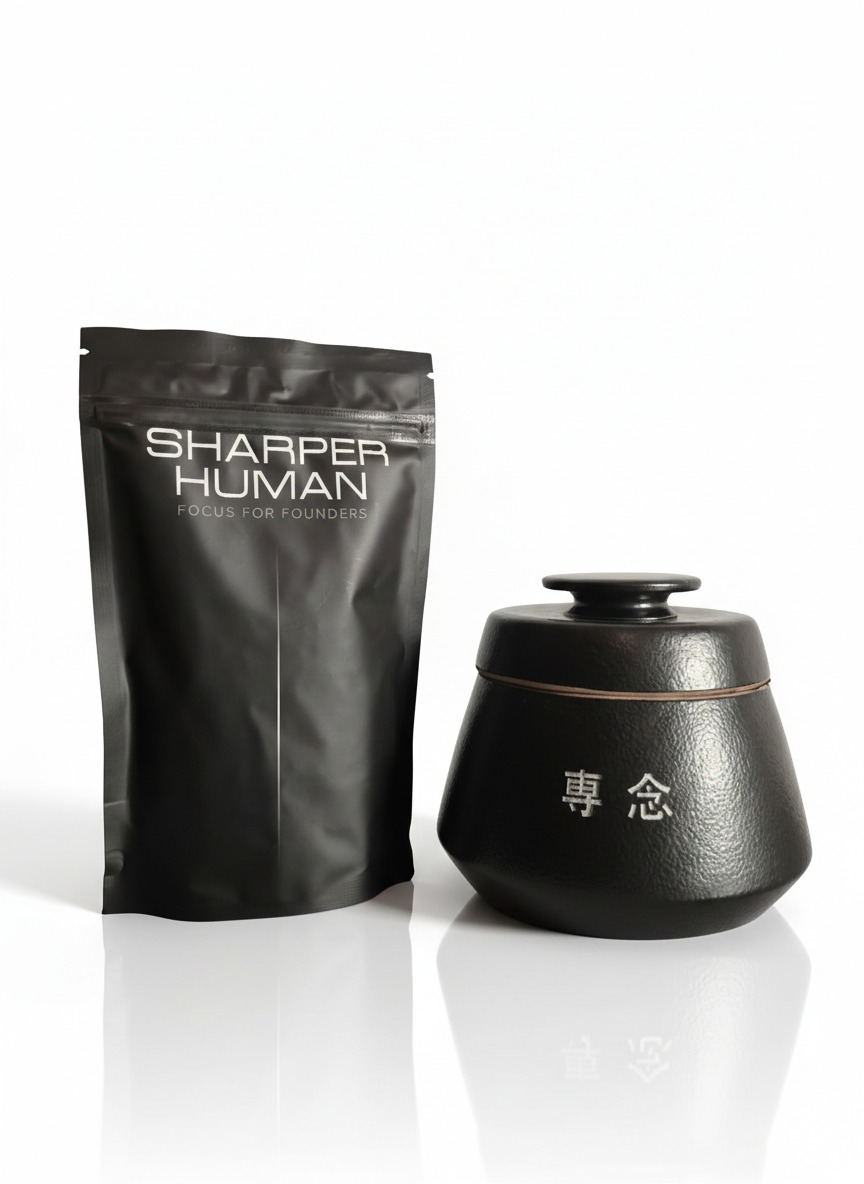
Focus for Founders.
An all-natural brain performance supplement. 20 research-backed ingredients. No caffeine. No stimulants.
Buy on Amazon UKSharper Human uses standard L-Tyrosine at 350mg rather than NALT, and the choice is a deliberate, evidence-led one. Plain L-Tyrosine is the form with the stronger research for raising tyrosine levels and supporting cognitive performance under stress and fatigue, while the claimed absorption advantage of the pricier NALT is not well supported by the evidence on actual conversion. Choosing the better-evidenced form over the more expensive, better-marketed one is exactly the principle behind the whole formula — Sharper Human is built on what the research supports, with every dose disclosed, rather than on ingredients chosen to sound impressive on a label. It pairs its L-Tyrosine with the B-vitamins required to convert it into dopamine, so the amino acid has the cofactors it needs to work.
The honest bottom line: despite its premium positioning, N-Acetyl-L-Tyrosine has not been shown to deliver tyrosine to the brain better than plain L-Tyrosine, and the simpler form has the stronger evidence — so for the tyrosine effect, standard L-Tyrosine is the smarter choice, which is why Sharper Human uses it. Sharper Human is available on Amazon in the UK for around £79 per month, with US availability planned.
References & further reading
- Owen GN, Parnell H, De Bruin EA, Rycroft JA. The combined effects of L-theanine and caffeine on cognitive performance and mood. Nutritional Neuroscience. 2008;11(4):193–198. View source ↗
- Peer-reviewed research on acetyl tyrosine tyrosine — PubMed, U.S. National Library of Medicine. View source ↗