Anyone investing in their cognitive performance — taking nootropics, optimising focus — eventually has to consider alcohol, since drinking has real and often-underestimated effects on the brain, cognition and sleep. The honest picture is that alcohol largely works against cognitive goals, which is worth understanding clearly. This is an honest look at how alcohol affects the brain and focus, why it undermines cognitive goals, sensible considerations, and how this fits with a focus-supporting routine. This article is informational and not medical advice.
Key Takeaways
How Alcohol Affects the Brain
Alcohol has significant effects on the brain, both acutely and over time, that are relevant to anyone focused on cognitive performance. Acutely, alcohol is a depressant that impairs cognition — affecting focus, memory (it interferes with memory formation, which is why heavy drinking can cause memory gaps), judgement, reaction time and coordination. These acute effects are the familiar impairments of being under the influence. Over time, regular heavy drinking has broader negative effects on brain health and cognition, and alcohol is a factor in various health conditions. While the picture for light-to-moderate drinking is less stark than for heavy drinking, the honest summary is that alcohol's effects on the brain are largely negative for cognition — it impairs cognitive function acutely and, in excess, affects brain health more broadly. This makes alcohol something anyone investing in their cognitive performance should consider thoughtfully, since its effects run counter to the goal of supporting and protecting cognition.
The Sleep Disruption Factor
Perhaps the most underestimated way alcohol undermines cognition is through sleep disruption, which is worth emphasising because it is so commonly overlooked. Even moderate amounts of alcohol disrupt sleep quality — while alcohol may help some people fall asleep initially (it is sedating), it impairs the quality and architecture of sleep through the night, particularly reducing restorative REM sleep and causing more fragmented sleep in the second half of the night. The result is that even if you sleep your usual hours after drinking, the sleep is less restorative, leading to impaired next-day focus, memory, mood and energy. This is a major, frequently-underestimated effect: the poor sleep from even moderate evening drinking translates directly into worse cognitive performance the next day, as the guide to nootropics and sleep covers. Since sleep is foundational to cognition, alcohol's disruption of it is one of the most significant ways drinking works against cognitive goals — often more impactful than people realise, and affecting even those who do not drink heavily.
Why Alcohol Works Against Cognitive Goals
Pulling this together, alcohol largely works against the very cognitive goals that nootropics and focus-optimisation aim at, which is the honest framing for anyone investing in their cognition. Consider the contradiction: someone takes nootropics to support memory and focus, optimises their sleep, and protects their brain health — and then alcohol impairs memory and focus acutely, disrupts the sleep they have optimised, and (in excess) works against brain health. So alcohol and cognitive-performance goals pull in opposite directions. This does not mean anyone must be teetotal, but it does mean recognising that alcohol is a genuine counterweight to cognitive goals — and that moderating it is one of the more impactful things one can do for cognition, arguably more so than many supplements. For someone serious about their cognitive performance, honestly weighing alcohol's effects (especially the sleep disruption) against their goals is worthwhile, since reducing alcohol often yields noticeable cognitive benefits, particularly in sleep quality and next-day sharpness.
Sensible Considerations
On the practical question of alcohol while taking nootropics, a few honest points help. First, there is no specific dangerous interaction between alcohol and well-chosen natural nootropic ingredients (the kind in a sensible focus formula) — the issue is not a dangerous combination but that alcohol works against the cognitive goals the nootropics support. (This differs from certain medications or potent compounds, some of which do have serious alcohol interactions — another reason to favour gentle, well-evidenced ingredients.) Second, the sensible approach is moderation and awareness: being mindful of alcohol's effects (particularly on sleep), avoiding heavy drinking, and recognising that a supplement cannot counteract the cognitive impairment and sleep disruption of significant drinking. Third, timing matters for sleep — alcohol closer to bedtime more directly disrupts sleep. The overall sensible message is that moderating alcohol supports cognitive goals, no supplement offsets heavy drinking's effects, and awareness of alcohol's impact (especially on sleep) helps align drinking habits with cognitive priorities, as the guide to keeping your brain sharp reflects.
The Bigger Picture
Alcohol fits the recurring theme that the fundamentals and lifestyle factors do the heavy lifting for cognition, with supplements as a supporting layer. Just as sleep, exercise and diet are powerful levers, alcohol is a significant lifestyle factor that influences cognition — and moderating it is one of the impactful lifestyle adjustments for supporting brain function and protecting brain health, particularly via better sleep. This means that for someone investing in cognitive performance, attending to alcohol (alongside sleep, exercise and diet) is part of the foundational picture, with a focus supplement supporting cognition on top of these fundamentals. Someone who moderates alcohol, sleeps well, exercises and eats sensibly — and adds a sensible supplement — is far better positioned than someone neglecting these fundamentals (drinking heavily, sleeping poorly) and relying on supplements. Alcohol is simply one of the genuine lifestyle factors that, when addressed, supports the cognitive goals that nootropics complement, reinforcing that supplements work best alongside good fundamentals, not instead of them.
How This Fits With Sharper Human
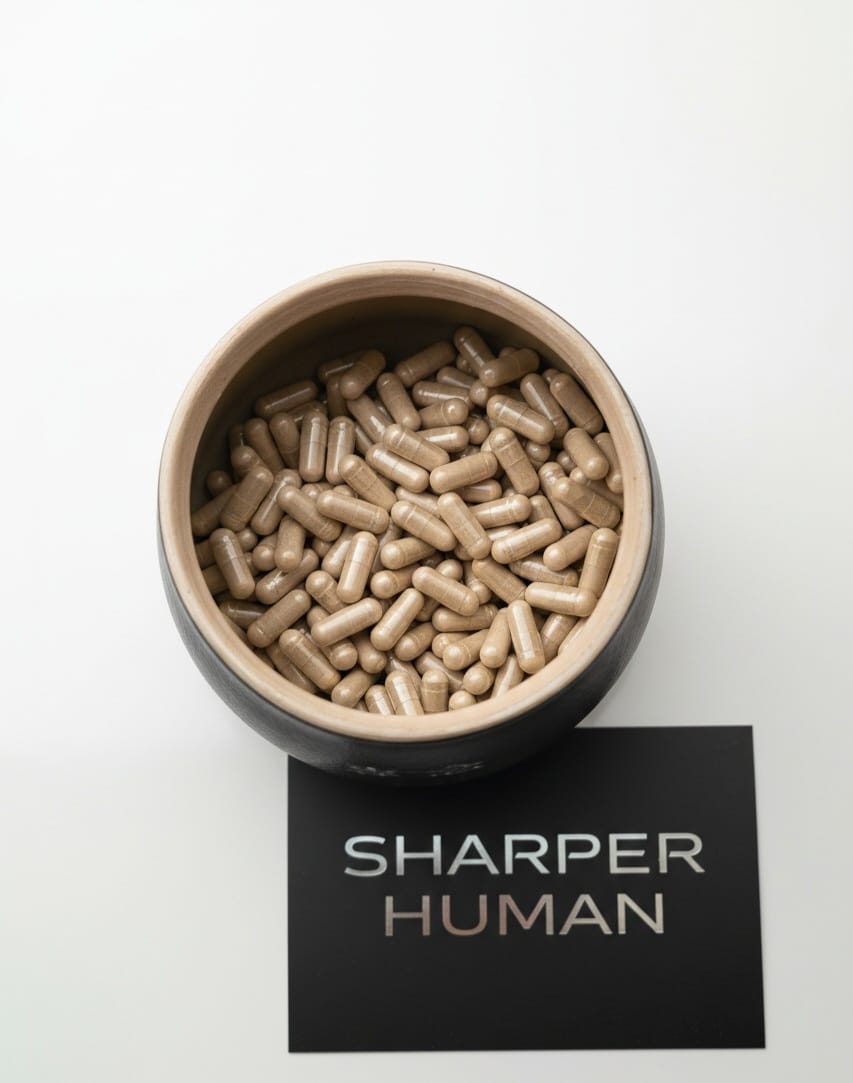
Focus for Founders.
An all-natural brain performance supplement. 20 research-backed ingredients. No caffeine. No stimulants.
Buy on Amazon UKSharper Human fits this picture as a supplement that supports cognition best alongside sensible lifestyle habits — including moderate alcohol consumption. There is no specific dangerous interaction between Sharper Human's well-chosen natural ingredients and alcohol, but the formula's purpose (supporting focus, memory and brain health) is best served when alcohol is moderated, since heavy drinking impairs the very cognition the formula supports and disrupts the sleep that underpins it. The honest framing, consistent with the formula's whole approach, is that Sharper Human supports cognition as a complement to good fundamentals — sleep, exercise, diet, and sensible alcohol moderation — rather than offsetting the effects of heavy drinking or poor sleep. Someone taking Sharper Human will get the most from it by also moderating alcohol and protecting their sleep, aligning their habits with their cognitive goals. This fundamentals-first philosophy is reflected across the guides, including the best nootropics for brain health, and in the formula's design, detailed in the ingredients and dosages guide.
The honest bottom line: alcohol impairs cognition acutely and disrupts sleep (even in moderate amounts), working against cognitive goals — so while there is no specific dangerous interaction with well-chosen natural nootropics, moderating alcohol does far more for cognition than any supplement. Sharper Human supports cognition best alongside sensible alcohol moderation and good sleep, and is available on Amazon in the UK, with US availability planned.
References & further reading
- Peer-reviewed research on alcohol — PubMed, U.S. National Library of Medicine. View source ↗
- Suliman NA, Mat Taib CN, Mohd Moklas MA, et al. Establishing Natural Nootropics: Recent Molecular Enhancement Influenced by Natural Nootropic. Evidence-Based Complementary and Alternative Medicine. 2016. View source ↗