Remote work removes the environmental cues, social accountability, and structured routines that help maintain cognitive performance in an office. Without colleagues providing implicit focus pressure, without commutes creating transition rituals between work and home modes, and without the social energy that sustains motivation through collaborative environments, maintaining sustained cognitive performance at home depends more heavily on internal neurochemical resources — and that's where targeted supplementation becomes particularly relevant.
Key Takeaways
The Remote Work Focus Challenge — Beyond Discipline
The standard advice for remote workers ("just be more disciplined") fundamentally misunderstands the neuroscience of focus. Discipline is a prefrontal cortex function that consumes finite neurochemical resources — primarily dopamine and glucose. The more you rely on discipline to maintain focus, the faster you deplete the very neurotransmitters that discipline depends on. This is why willpower-based approaches to remote work focus tend to work for a few hours in the morning and then collapse in the afternoon.
Office environments provide external scaffolding that reduces the discipline burden: colleagues visible at adjacent desks create implicit focus pressure (you don't scroll Instagram when someone might see your screen), structured meeting schedules impose time blocks, social interaction provides dopamine renewal throughout the day, and physical movement between locations offers neurochemical micro-recovery periods. Remote work strips all of this away, placing the entire focus maintenance burden on internal resources.
The practical solution operates on two levels: environmental design (creating external structure that approximates office scaffolding) and neurochemical support (ensuring the brain has adequate resources for the increased internal-focus demands that remote work imposes).
Best Nootropics for Remote Workers
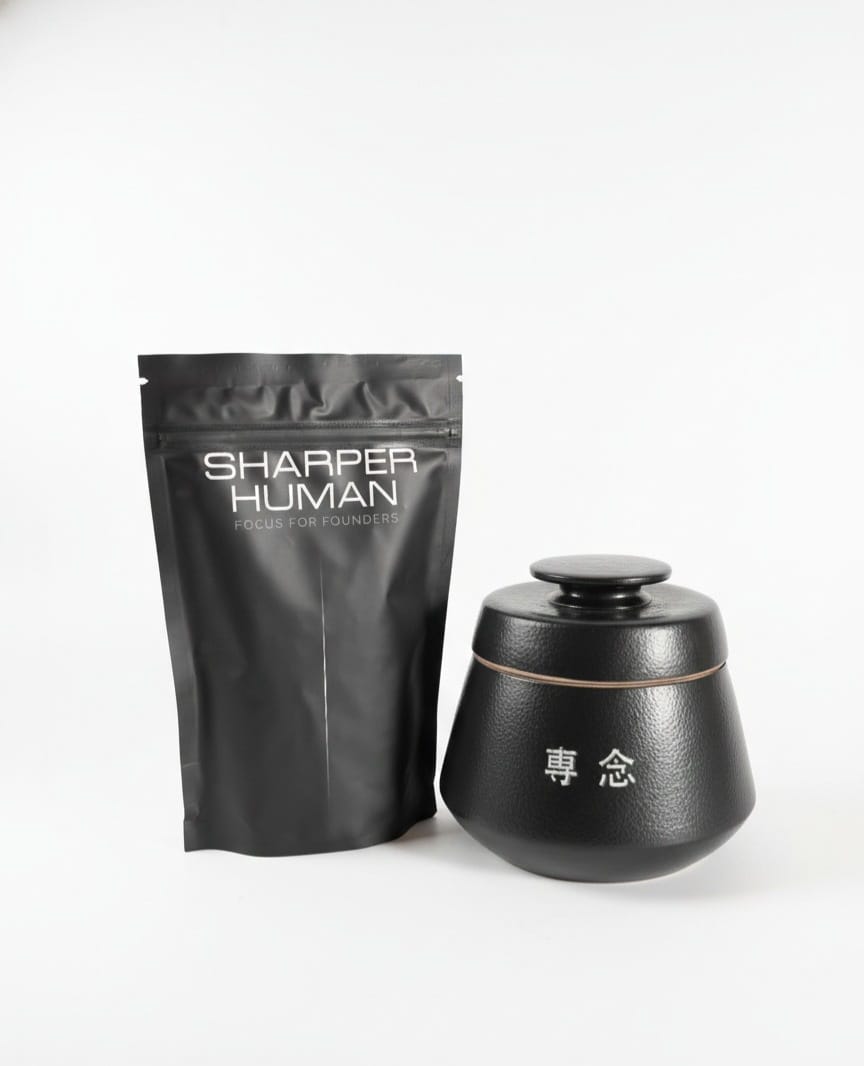
Focus for Founders.
An all-natural brain performance supplement. 20 research-backed ingredients. No caffeine. No stimulants.
Buy on Amazon UKSharper Human addresses the specific neurochemical challenges remote work creates. L-Tyrosine (350mg) is particularly valuable in the remote context: dopamine drives the motivation to self-initiate challenging cognitive tasks — exactly the executive function that remote work demands more of and offices provide external support for. When dopamine levels decline (which happens faster without the social stimulation and novelty that offices provide), the brain defaults to easy, low-demand activities — checking email, scrolling news, rearranging the workspace. L-Tyrosine helps maintain the dopamine supply that proactive work initiation requires.
Citicoline (300mg) supports the acetylcholine system that sustained attention depends on — critical in home environments where distractions (household tasks, family members, deliveries, the refrigerator) are structurally present rather than architecturally excluded as in offices. Rhodiola Rosea (150mg 5:1) prevents the progressive mental fatigue that builds during isolated work — fatigue that office workers partially offset through social micro-interactions and physical movement between meetings.
The zero-caffeine formulation has specific value for remote workers. Without commute-imposed morning schedules, many remote workers shift their caffeine timing and consumption patterns in ways that disrupt sleep quality — creating a cycle of poor sleep, increased caffeine dependence, and further sleep disruption. A caffeine-free nootropic provides cognitive support without introducing another variable into an already-disrupted caffeine-sleep cycle.
Building a Remote Work Protocol
Take Sharper Human with breakfast (including healthy fat for fat-soluble ingredient absorption). Begin your first focused work block approximately 60-90 minutes later as ingredients reach peak bioavailability. Structure your day around 90-120 minute deep work blocks — the same ultradian rhythm that office workers benefit from, but which remote workers must consciously implement rather than having meetings and transitions impose.
The NHS wellbeing guidance emphasises that cognitive performance depends on physical activity, social connection, and adequate rest — factors that remote workers must actively maintain rather than passively receiving from workplace structure. Walk during breaks (even 10-15 minutes improves cerebral blood flow and BDNF production). Schedule social interactions rather than hoping they occur spontaneously. Maintain a consistent sleep-wake schedule that your caffeine management supports rather than undermines.
The Isolation Factor: Social Cognition and Remote Work
One underappreciated cognitive challenge of remote work is the absence of social interaction as a cognitive maintenance mechanism. Office environments provide hundreds of micro-social interactions daily — brief conversations, nonverbal exchanges, collaborative problem-solving, even the ambient awareness of other people working. Each interaction activates social cognition networks (language processing, theory of mind, emotional regulation, working memory) that provide a form of continuous cognitive exercise.
Remote workers lose this passive cognitive maintenance entirely. The result, documented in research on social isolation published in The Lancet and Trends in Cognitive Sciences, is that sustained isolation can lead to measurable cognitive changes — reduced processing speed, impaired executive function, and diminished working memory capacity. These aren't dramatic effects in the short term, but over months and years of predominantly isolated work, they accumulate.
Supplementation addresses some of the neurochemical consequences (maintaining neurotransmitter levels, supporting neural connectivity), but it cannot replace social interaction's cognitive maintenance function. The NHS wellbeing guidance specifically identifies social connection as essential for mental health. Remote workers should treat social interaction as a cognitive maintenance requirement — scheduling video calls, co-working sessions, in-person meetings, and social activities with the same intentionality they apply to deep work blocks. Nootropics support the neurochemistry; social interaction maintains the networks those neurotransmitters serve.
Designing a Remote Workspace for Focus
For remote workers, the physical and structural design of the working environment has an outsized effect on focus — often more than any supplement — because the home is full of distractions and lacks the built-in cues and boundaries of an office. Creating a dedicated workspace, even a small one used only for work, helps the brain associate that space with focus and separates work from rest, which is genuinely important for both concentration and switching off afterwards. Minimising distractions in that space — silencing phone notifications, closing irrelevant tabs, and signalling to others that you are working — protects the sustained attention that deep work requires.
Equally important are the temporal and social boundaries that an office provides automatically and remote work does not. Establishing clear start and end times, protecting blocks of uninterrupted deep work, and taking genuine breaks (including getting outside, which lifts focus and energy more durably than another coffee) all help structure a remote day. Because remote work removes the natural rhythms and accountability of an office, these self-imposed structures do much of the work that environment used to. A caffeine-free cognitive approach fits this context by supporting focus steadily across a self-directed day without the crash or sleep disruption that stacking coffee at home can bring. Sharper Human supports the focus, drive and mental energy remote work demands as a complement to a well-designed workspace and clear boundaries — the structural foundations that matter most for working effectively from home.
References & further reading
- Nakazaki E, Mah E, Sanoshy K, et al. Citicoline and Memory Function in Healthy Older Adults: A Randomized, Double-Blind, Placebo-Controlled Clinical Trial. The Journal of Nutrition. 2021. doi:10.1093/jn/nxab119. View source ↗
- Punja S, Shamseer L, Olson K, Vohra S. Rhodiola rosea for Mental and Physical Fatigue in Nursing Students: A Randomized Controlled Trial. PLoS One. 2014;9(9):e108416. View source ↗
- Peer-reviewed research on remote workers — PubMed, U.S. National Library of Medicine. View source ↗