Noradrenaline (also called norepinephrine) is the neurotransmitter behind alertness, vigilance and focus under pressure — the chemistry of being switched on, attentive and ready to respond. Closely related to both dopamine and the stress response, it is central to how we focus when it matters, yet less discussed than its famous cousins. Understanding it completes the picture of the focus-relevant neurotransmitters. This is an honest, accessible explainer on noradrenaline: what it does, how it relates to dopamine and stress, what supports it, and how Sharper Human supports the system. This article is informational and not medical advice.
Key Takeaways
What Noradrenaline Is
Noradrenaline (norepinephrine) is both a neurotransmitter in the brain and a hormone in the body, central to alertness and the response to challenge. In the brain, it promotes wakefulness, vigilance, attention and arousal — helping you feel alert, focused and ready to engage, particularly when something demands your attention. In the body, it is a key player in the "fight or flight" stress response, preparing you to respond to challenges. Noradrenaline is one of the catecholamine neurotransmitters, closely related to dopamine — in fact, the body makes noradrenaline from dopamine, so the two share a production pathway and a raw material. This makes noradrenaline a crucial part of the focus-and-alertness picture, working alongside dopamine and acetylcholine. Understanding noradrenaline completes the set of focus-relevant neurotransmitters (alongside the dopamine and acetylcholine explainers), illuminating the chemistry of alert, focused attention, especially under pressure.
The Alertness and Focus Connection
Noradrenaline's most relevant role for our purposes is in alertness and focus. It is central to the brain's arousal and attention systems — appropriate noradrenaline activity helps maintain wakeful alertness, sustain vigilance, and focus attention on relevant stimuli, particularly when engagement or quick response is needed. This makes noradrenaline especially important for focus under demand or pressure: when you need to be sharp, attentive and responsive — meeting a challenge, performing under stress, staying vigilant on a task — noradrenaline is heavily involved. There is an optimal level, though: too little leaves you under-aroused and inattentive, while too much (as in high stress or anxiety) can impair focus and tip into a scattered, anxious state. Healthy, well-regulated noradrenaline function supports the alert, focused state that productive work requires — which is why it is so relevant to cognitive performance, particularly the kind that happens under real-world pressure and demand.
How It Relates to Dopamine
A key fact about noradrenaline is its close relationship with dopamine: noradrenaline is synthesised from dopamine in the body (dopamine is converted into noradrenaline via an enzyme). This means the two share a production pathway and, crucially, the same upstream raw material — the amino acid tyrosine, which becomes dopamine and then noradrenaline. So the dopamine-noradrenaline system, which together underpins drive, motivation, alertness and focus, depends on adequate tyrosine as its building block. This connection explains why supporting tyrosine supports both neurotransmitters at once, and why this system is so central to the cognitive qualities people seek — drive (more dopamine-associated) and alertness/focus under pressure (more noradrenaline-associated) are two faces of the same catecholamine system. The companion explainer on dopamine covers the motivation side; noradrenaline is its alertness-and-focus counterpart, made from it and sharing its raw material.
Noradrenaline and Stress
Noradrenaline's role in the stress response is important for understanding both its benefits and its limits. As a key player in "fight or flight", noradrenaline rises under stress and challenge, sharpening alertness and focus to help meet the demand — which is adaptive and useful for acute focus under pressure. However, this also means that excessive or chronic stress, with sustained high noradrenaline-related arousal, can tip from helpful alertness into unhelpful anxiety, racing thoughts and impaired focus. This is the basis of the well-known relationship between arousal and performance: a moderate level sharpens focus, but too much degrades it. For supporting focus under pressure, then, the goal is to support healthy noradrenaline function and the precursor supply (so the system can meet demand) while also managing stress so arousal stays in the productive range — which is why ingredients supporting both the precursor (tyrosine) and stress resilience (adaptogens) are relevant, as covered in the guide to L-Tyrosine, which is particularly studied for cognitive performance under stress.
What Supports Healthy Noradrenaline Function
Supporting healthy noradrenaline function involves the precursor supply and lifestyle, much like dopamine. On precursors: because noradrenaline is made from dopamine, which is made from tyrosine, ensuring adequate tyrosine provides the building block for the whole dopamine-noradrenaline system — particularly relevant under stress and demand, when production of these catecholamines is taxed and tyrosine can become depleted, which is exactly when L-Tyrosine supplementation is most studied for supporting cognitive performance. On lifestyle: good sleep is essential for healthy arousal and attention systems, exercise supports the catecholamine systems, and managing stress keeps noradrenaline-related arousal in the productive range rather than tipping into anxiety. So supporting noradrenaline is about supplying the raw material (tyrosine) so the system can meet demand, plus the lifestyle foundations that keep it well-regulated — not about artificially spiking arousal, which would tip toward the anxious, scattered end of the spectrum.
How Sharper Human Supports the System
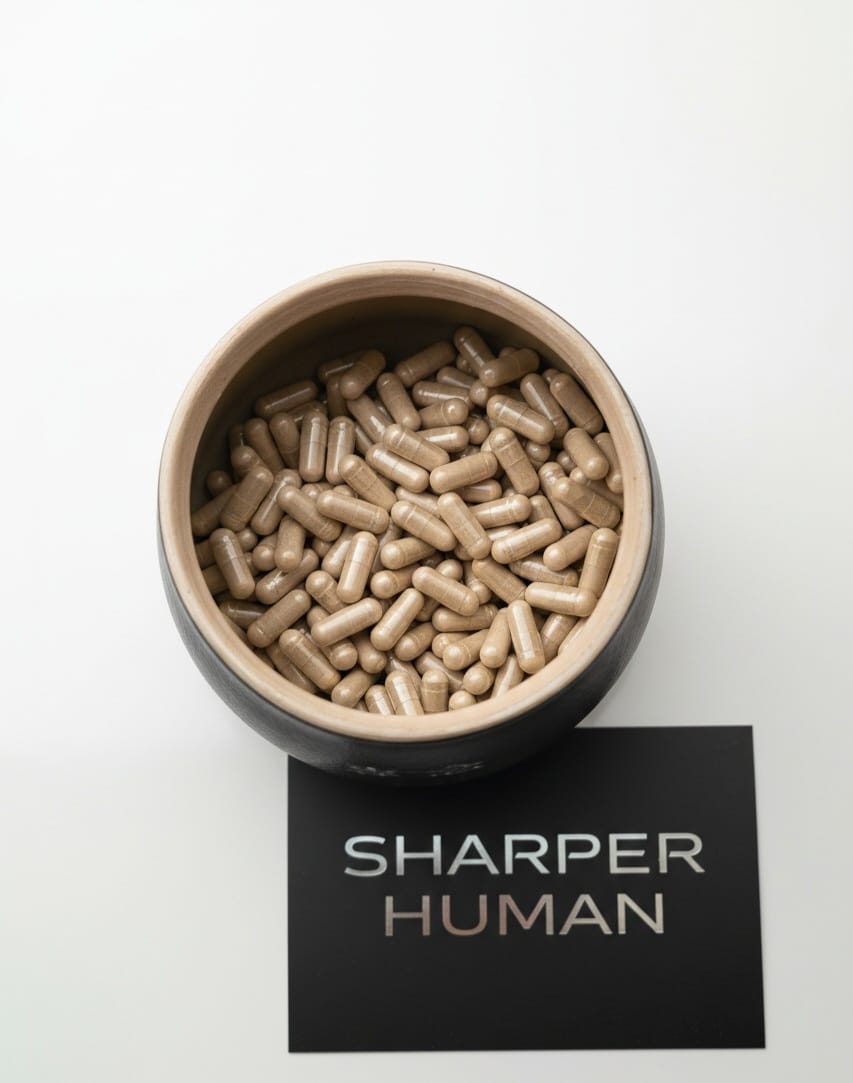
Focus for Founders.
An all-natural brain performance supplement. 20 research-backed ingredients. No caffeine. No stimulants.
Buy on Amazon UKSharper Human supports the dopamine-noradrenaline system primarily through L-Tyrosine (350mg) — the amino acid that supplies the raw material for both dopamine and, downstream, noradrenaline — supporting the precursor pool for these alertness-and-focus neurotransmitters, especially under the stress and demand when they are most taxed and tyrosine most depleted. This is complemented by Rhodiola (150mg), an adaptogen supporting resistance to stress and fatigue, which helps keep noradrenaline-related arousal in the productive range rather than tipping into unhelpful anxiety — a thoughtful pairing for focus under pressure. The formula also supports the acetylcholine (attention) system via Citicoline and provides the B-complex cofactors involved in neurotransmitter production. By supporting both the precursor supply and stress resilience, the formula supports the alert, focused state that demanding work requires. This multi-system support reflects the evidence-led logic behind all 20 ingredients, detailed in the ingredients and dosages guide.
The honest bottom line: noradrenaline is the neurotransmitter of alertness and focus under pressure — made from dopamine and sharing its raw material (tyrosine) — central to being switched on and attentive, especially under demand. Sharper Human supports the system through L-Tyrosine (350mg) for the precursor supply and Rhodiola for keeping arousal productive. Sharper Human is available on Amazon in the UK, with US availability planned.
References & further reading
- Nakazaki E, Mah E, Sanoshy K, et al. Citicoline and Memory Function in Healthy Older Adults: A Randomized, Double-Blind, Placebo-Controlled Clinical Trial. The Journal of Nutrition. 2021. doi:10.1093/jn/nxab119. View source ↗
- Punja S, Shamseer L, Olson K, Vohra S. Rhodiola rosea for Mental and Physical Fatigue in Nursing Students: A Randomized Controlled Trial. PLoS One. 2014;9(9):e108416. View source ↗
- Peer-reviewed research on noradrenaline alertness explained — PubMed, U.S. National Library of Medicine. View source ↗