
Panax ginseng — true or "Asian" ginseng — is one of the most revered herbs in traditional medicine, used for centuries for energy, vitality and mental performance. It is a legitimate adaptogen with real research, and unlike some popular ingredients it does have a reasonable cognitive case. So why isn't it in Sharper Human? The answer is not that it is a bad ingredient, but that Sharper Human's adaptogen slot is filled by Rhodiola Rosea, which is a better fit for a daytime focus formula. This is an honest look at Panax ginseng and that choice.
Key Takeaways
What Panax Ginseng Is
Panax ginseng is the root of the Panax plant, distinct from American ginseng (Panax quinquefolius) and from the unrelated Siberian "ginseng" (Eleutherococcus). Its active compounds are ginsenosides, a family of saponins thought to underlie its adaptogenic and stimulating effects. The name Panax shares a root with "panacea", reflecting its traditional reputation as a near-universal tonic for energy and vitality. In adaptogen terms it sits on the stimulating, energising end of the spectrum — closer in character to Rhodiola than to the calming Ashwagandha — which is why it has long been used to combat fatigue and support performance.
Where the Evidence Stands
Panax ginseng has a more credible cognitive and energy research base than some popular herbs. Studies have explored its effects on mental fatigue, aspects of cognitive performance, and general vitality, with some positive findings, particularly around supporting energy and reducing the sense of fatigue. It is also studied in immune and metabolic contexts. As with most herbs, the quality and consistency of the research vary, and effects are generally supportive rather than dramatic, but ginseng is fair to describe as one of the better-evidenced energising adaptogens — which is exactly why it is worth comparing seriously against the adaptogen Sharper Human actually uses.
Panax Ginseng vs Rhodiola Rosea
Since both are stimulating adaptogens aimed at energy and fatigue, the comparison with Rhodiola is the relevant one. Both have research for supporting mental energy and resistance to fatigue. Rhodiola's evidence centres particularly tightly on stress-related fatigue and mental performance under pressure, and it is generally regarded as having a gentle, clean stimulating profile that suits sustained daytime focus. Panax ginseng is similarly energising but carries a few more practical wrinkles: it has more notable potential interactions (including with certain medications and, in some discussions, blood sugar and blood-thinning drugs), some people find it overstimulating, and traditional use often involves cycling rather than continuous daily intake. For a formula meant to be taken every day by a broad audience, those differences tip the balance toward Rhodiola.
Safety and Considerations
Panax ginseng is generally well tolerated for short-term use, but it is not free of considerations. Some people experience overstimulation, restlessness or sleep disturbance, especially at higher doses or later in the day. It may interact with anticoagulant medication, diabetes medication and others, and it is often not recommended in pregnancy. Because of these, and because traditional use frequently involves cycling on and off, it is a herb to use thoughtfully. None of this makes ginseng unsafe for most healthy adults using it sensibly — but, as with several potent herbs, it argues for individual, considered use rather than inclusion in a one-size daily formula.
How Panax Ginseng Is Traditionally Used
For those who do choose ginseng, a few practical points reflect how it is traditionally and sensibly used. Panax ginseng comes in different preparations — notably "white" (dried) and "red" (steamed) ginseng, the latter often considered more stimulating — and quality products are typically standardised to a percentage of ginsenosides, the active compounds, so a label stating ginsenoside content is more informative than one quoting raw root. Dosing varies with the preparation and standardisation, and it is generally taken earlier in the day given its energising character. Crucially, traditional and knowledgeable use often involves cycling — periods on followed by breaks — rather than continuous indefinite intake, partly to manage tolerance and overstimulation. Taking it with food and starting at a modest dose helps gauge tolerance. This cycling-and-individualisation pattern is precisely why ginseng suits considered standalone use rather than a fixed daily formula, and it is the practical counterpart to the evidence-based reasons Sharper Human reaches for Rhodiola instead.
Why Sharper Human Uses Rhodiola
Focus for Founders.
An all-natural brain performance supplement. 20 research-backed ingredients. No caffeine. No stimulants.
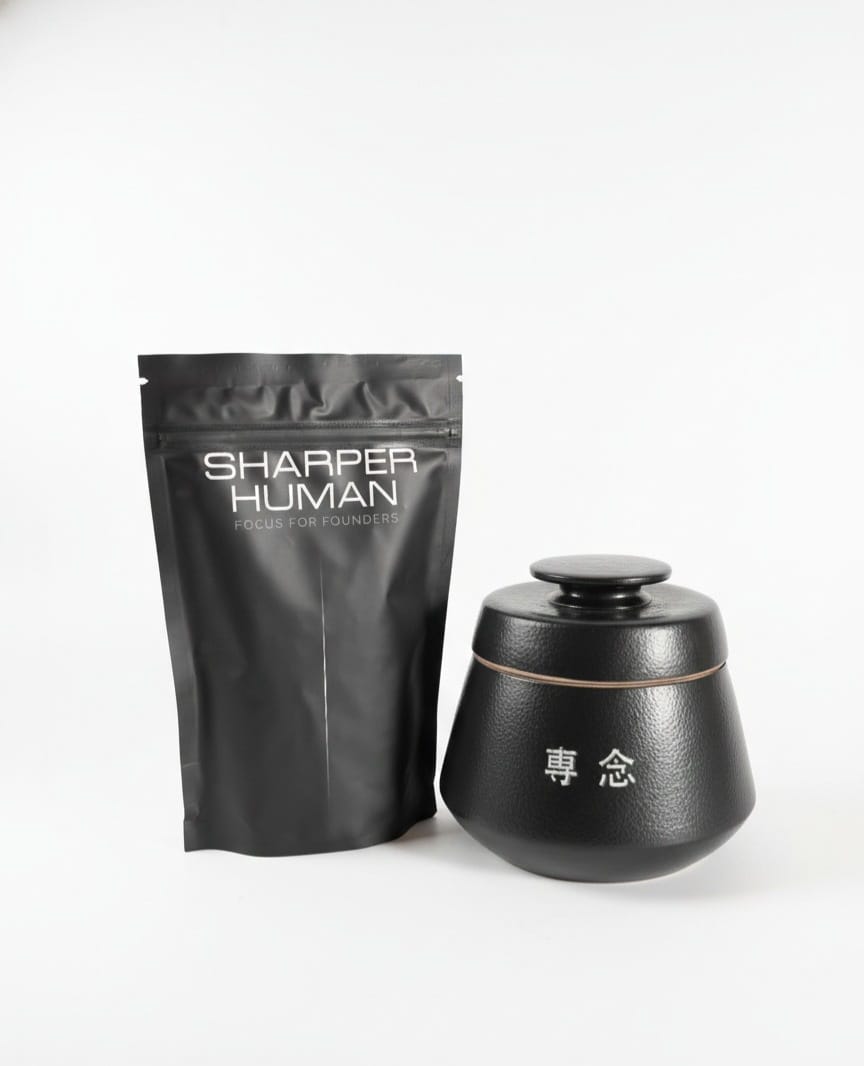
Buy on Amazon UKSharper Human uses Rhodiola Rosea (150mg of a 5:1 extract) as its adaptogen rather than Panax ginseng, and the choice reflects the comparison above. Both are energising adaptogens, but Rhodiola offers strong research specifically for stress-related fatigue and mental performance, a gentle stimulating profile well suited to sustained daytime focus, fewer interaction concerns, and suitability for continuous daily use without the cycling ginseng often involves. That makes it a cleaner fit for a product designed to be taken every morning by a broad audience. Sharper Human pairs its Rhodiola with Taurine (500mg) and L-Tyrosine (350mg) to round out calm, stable energy and drive. This is the same fit-for-purpose reasoning behind all 20 ingredients — choosing the adaptogen best matched to the job rather than the most famous name.
The honest bottom line: Panax ginseng is a genuinely respectable energising adaptogen with real evidence, and people who tolerate it well may benefit from it as a considered, ideally cycled standalone — with medical input if they are on medication. But for a daily daytime focus stack, Rhodiola is the better-fitting choice, which is why Sharper Human uses it. Sharper Human is available on Amazon in the UK for around £79 per month, with US availability planned.
References & further reading
- Punja S, Shamseer L, Olson K, Vohra S. Rhodiola rosea for Mental and Physical Fatigue in Nursing Students: A Randomized Controlled Trial. PLoS One. 2014;9(9):e108416. View source ↗
- Docherty S, Doughty FL, Smith EF. The Acute and Chronic Effects of Lion’s Mane Mushroom Supplementation on Cognitive Function, Stress and Mood in Young Adults. Nutrients. 2023;15. View source ↗
- Peer-reviewed research on panax ginseng focus — PubMed, U.S. National Library of Medicine. View source ↗