Tryptophan is the amino acid the body uses to make serotonin and, downstream, melatonin — the chemistry behind mood and sleep. That makes it genuinely interesting for wellbeing, but it also places it firmly in the mood-and-sleep domain rather than daytime focus, and it carries an important safety caveat around interactions. This is an honest look at what tryptophan does, where its evidence stands, the interaction warnings that matter, and why Sharper Human, a daytime focus formula, leaves it out. This article is informational and not medical advice; anyone on antidepressants or other medication should be especially cautious.
Key Takeaways
What Tryptophan Is
Tryptophan is an essential amino acid — one the body cannot make and must obtain from diet — found in protein-rich foods like turkey, eggs, dairy, nuts and seeds. Its significance for the brain comes from being the starting material for an important pathway: tryptophan is converted into 5-HTP, then into serotonin (a neurotransmitter central to mood, calm and wellbeing), and serotonin is in turn converted into melatonin (the hormone that regulates sleep). So tryptophan sits at the head of the serotonin-and-melatonin pathway, which is the basis of its interest for mood and sleep. It is available as a supplement (L-tryptophan), and is closely related to 5-HTP, which is the next step in the same pathway — the two sharing both their mood-and-sleep orientation and, importantly, their safety considerations.
The Mood and Sleep Evidence
Tryptophan's research centres on mood and sleep, reflecting its position in the serotonin-melatonin pathway. By supplying the precursor for serotonin, tryptophan has a plausible role in supporting mood, and there is some evidence around tryptophan and mood states, including studies on the effects of tryptophan depletion (which tends to lower mood, underscoring serotonin's role). For sleep, the onward conversion to melatonin gives tryptophan a rationale for supporting sleep, and it is sometimes used with that aim. The honest framing is that tryptophan's evidence is oriented toward mood and sleep — calm, evening, wellbeing territory — rather than alert daytime cognition. This makes it a wellbeing-and-sleep ingredient more than a focus one, which is central to why it sits outside a daytime focus formula, quite apart from the safety point below.
The Important Interaction Warning
A genuinely important safety point applies to tryptophan, as it does to 5-HTP: because it increases serotonin, it should not be combined with medications that also raise serotonin — most notably antidepressants such as SSRIs and SNRIs, but also certain other drugs — because doing so risks a dangerous condition called serotonin syndrome, caused by excessive serotonin. This is a serious interaction, not a minor caution, and it means anyone taking antidepressants or other serotonergic medication should not take tryptophan (or 5-HTP) without medical guidance. This interaction concern is one of the reasons serotonin-precursor ingredients require careful handling and are not casual additions to a general supplement. For anyone considering tryptophan for mood, this medication interaction is the most important thing to understand, and it underscores that mood is often best addressed with professional input rather than self-supplementation.
Mood and Sleep Are Different Goals From Focus
Stepping back, tryptophan illustrates an important distinction: supporting mood and sleep is a different goal from supporting daytime focus, and the ingredients suited to each differ. Serotonin-and-melatonin-oriented ingredients like tryptophan aim at calm, mood and sleep — often best in the evening — whereas a focus formula aims at alert, driven, focused cognition during the day, supported by quite different ingredients (those acting on attention, dopamine, and cellular energy). Conflating the two leads to mismatched expectations. For mood specifically, moreover, the powerful levers are exercise, sleep, social connection and, where mood is significantly low, professional support — with significant or persistent low mood being a medical matter rather than something to self-treat with a precursor supplement. This goal distinction, plus the interaction concern, is why tryptophan belongs to a different category and time of day than a daytime focus stack.
Where Tryptophan Might Fit
For someone whose interest is mood or sleep — and who is not taking any serotonergic medication, and ideally with medical input — tryptophan (or its derivative 5-HTP) is a serotonin-pathway option to be aware of, oriented toward the evening and toward calm rather than daytime alertness. It sits alongside other mood-and-sleep approaches, and the guides to 5-HTP and nootropics and sleep cover this territory and its cautions. Dietary tryptophan, obtained simply from protein-rich foods, is the everyday, safe way most people get it, with no interaction concerns at food levels. As always, sleep hygiene and lifestyle do the heavy lifting for both mood and sleep, with any supplement as a minor, carefully-considered addition — and with serotonergic interactions making medical guidance especially important here.
Why Sharper Human Is a Daytime Focus Formula
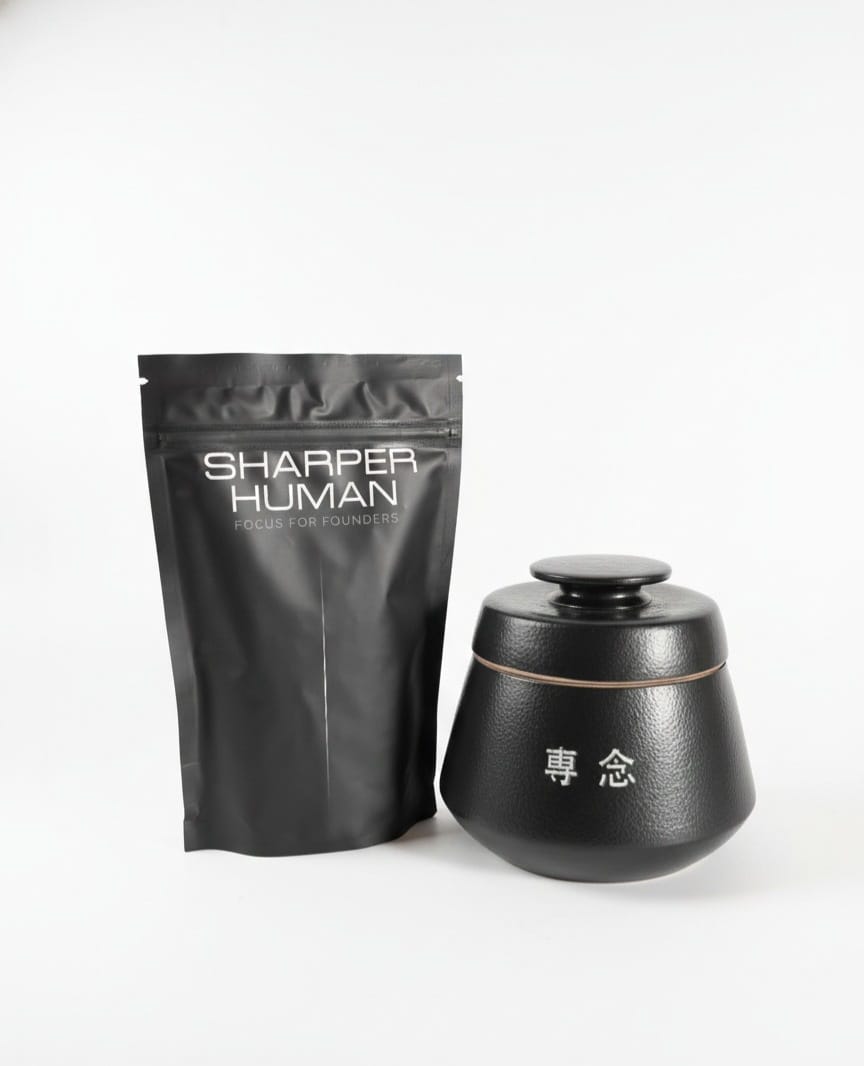
Focus for Founders.
An all-natural brain performance supplement. 20 research-backed ingredients. No caffeine. No stimulants.
Buy on Amazon UKSharper Human does not include tryptophan, and the reasoning is both purpose and safety. Tryptophan is mood- and sleep-oriented, best suited to the evening, whereas Sharper Human is a daytime focus formula designed to support alert, focused cognition during the day — a different goal calling for different ingredients. Tryptophan's interaction concern with serotonergic medications further makes it unsuitable for a broadly-used daily focus product. The formula instead focuses its capsule space on daytime cognitive ingredients — Citicoline, L-Tyrosine, Bacopa, Lion's Mane, Rhodiola and the rest — supporting focus and drive, while leaving mood and sleep support to be addressed separately and appropriately. This is the fit-for-purpose logic behind all 20 ingredients, detailed in the ingredients and dosages guide. Tryptophan is a genuinely important amino acid — just one whose mood-and-sleep orientation and interaction profile place it outside a daytime focus stack.
The honest bottom line: tryptophan is the precursor to serotonin and melatonin, oriented toward mood and sleep rather than daytime focus, and it carries a serious interaction warning with serotonergic medications — so a daytime focus formula like Sharper Human sensibly leaves it out. Mood concerns are best addressed with professional input. Sharper Human is available on Amazon in the UK, with US availability planned.
References & further reading
- Nakazaki E, Mah E, Sanoshy K, et al. Citicoline and Memory Function in Healthy Older Adults: A Randomized, Double-Blind, Placebo-Controlled Clinical Trial. The Journal of Nutrition. 2021. doi:10.1093/jn/nxab119. View source ↗
- Kongkeaw C, Dilokthornsakul P, Thanarangsarit P, et al. Meta-analysis of randomized controlled trials on cognitive effects of Bacopa monnieri extract. Journal of Ethnopharmacology. 2014;151(1):528–535. View source ↗
- Punja S, Shamseer L, Olson K, Vohra S. Rhodiola rosea for Mental and Physical Fatigue in Nursing Students: A Randomized Controlled Trial. PLoS One. 2014;9(9):e108416. View source ↗
- Peer-reviewed research on tryptophan mood sleep — PubMed, U.S. National Library of Medicine. View source ↗