Glycine is one of the simplest amino acids, but it has a genuinely interesting role in the brain — particularly around sleep quality and a calm, inhibitory kind of signalling. It is a safe, cheap, well-tolerated ingredient with some real evidence, especially for sleep. The reasons it sits outside a daytime focus formula are about timing and purpose rather than any lack of merit. This is an honest look at what glycine does, where its evidence stands, and why Sharper Human supports calm through other means while leaving the sleep-oriented glycine for the evening. This article is informational and not medical advice.
Key Takeaways
What Glycine Is
Glycine is the smallest and simplest of the amino acids, and despite that simplicity it plays several roles in the body and brain. It is a building block of protein (notably abundant in collagen), is involved in producing important compounds, and — most relevant here — acts as a neurotransmitter in the central nervous system, where it has an inhibitory, calming function (alongside a more complex role in certain excitatory signalling). It is found in foods like meat, fish and gelatin, and is available cheaply as a supplement, with a sweet taste. Glycine is very well tolerated and has a strong safety profile. Its nootropic and wellbeing interest centres mainly on its calming neurotransmitter role and, in particular, on sleep — which is the key to understanding both its value and why it sits outside a daytime focus formula.
The Sleep Evidence
Glycine's most interesting and best-supported use is for sleep. Some human research suggests that taking glycine (typically around 3 grams) before bed can support sleep quality and how rested and clear-headed people feel the next day, with proposed mechanisms including a mild lowering of core body temperature (which is associated with sleep onset) and its calming neurotransmitter effects. It is a popular, gentle, non-habit-forming sleep-support option, often favoured precisely because it is mild and well tolerated rather than sedating in a heavy way. This sleep evidence is genuine and is glycine's main claim to relevance in the wellbeing space. Crucially, though, it positions glycine as an evening, sleep-oriented ingredient — which is the opposite of a daytime focus formula's purpose, and the central reason it is not included in one.
The Calm and Cognitive Angle
Beyond sleep, glycine's inhibitory, calming neurotransmitter role gives it a general association with calm, and there is some broader interest in glycine in relation to cognitive and mental wellbeing (it also participates in some brain processes relevant to cognition). However, the evidence for glycine as a daytime cognitive or focus enhancer specifically is limited — its standout, best-supported benefit is sleep, with calm as a related theme. So while glycine touches the calming and cognitive space, it is not a targeted daytime focus ingredient, and its cognitive relevance is more indirect (via calm and, importantly, via better sleep, which itself supports next-day cognition). This makes glycine a sleep-and-calm ingredient rather than a focus one — useful, but for a different purpose and a different time of day than a focus formula serves.
The Timing and Purpose Question
The key reason glycine sits outside a focus formula is timing and purpose. Glycine's main benefits — sleep support and calm — are oriented toward the evening and toward winding down, whereas a daytime focus formula is designed to support alertness, focus and drive during the day. Including a sleep-oriented ingredient in a daytime focus product would be a mismatch of purpose. The sensible place for glycine, for those who want it, is in the evening as a sleep aid, separate from a daytime focus regimen — much as magnesium is best taken in the evening for sleep, as the magnesium guide and the guide to nootropics and sleep cover. This timing logic is why glycine, despite being a safe and useful ingredient, belongs to a different part of the day than a focus stack.
Where Glycine Might Fit
For someone interested in glycine, its natural home is as an evening, sleep-support supplement — cheap, safe and gentle — taken before bed, quite separately from any daytime focus regimen. Since good sleep is the foundation of next-day cognition, supporting sleep with something like glycine (or magnesium) can indirectly benefit daytime focus, which is a sensible, complementary approach: support focus by day with a focus formula, and support sleep by night with sleep-oriented options. The guide to nootropics and sleep covers this division. As always, sleep hygiene does the heavy lifting for sleep, with a gentle supplement like glycine as a possible supporting addition, and persistent sleep problems warrant a doctor's input rather than indefinite self-supplementation.
Why Sharper Human Uses Taurine and Rhodiola for Daytime Calm
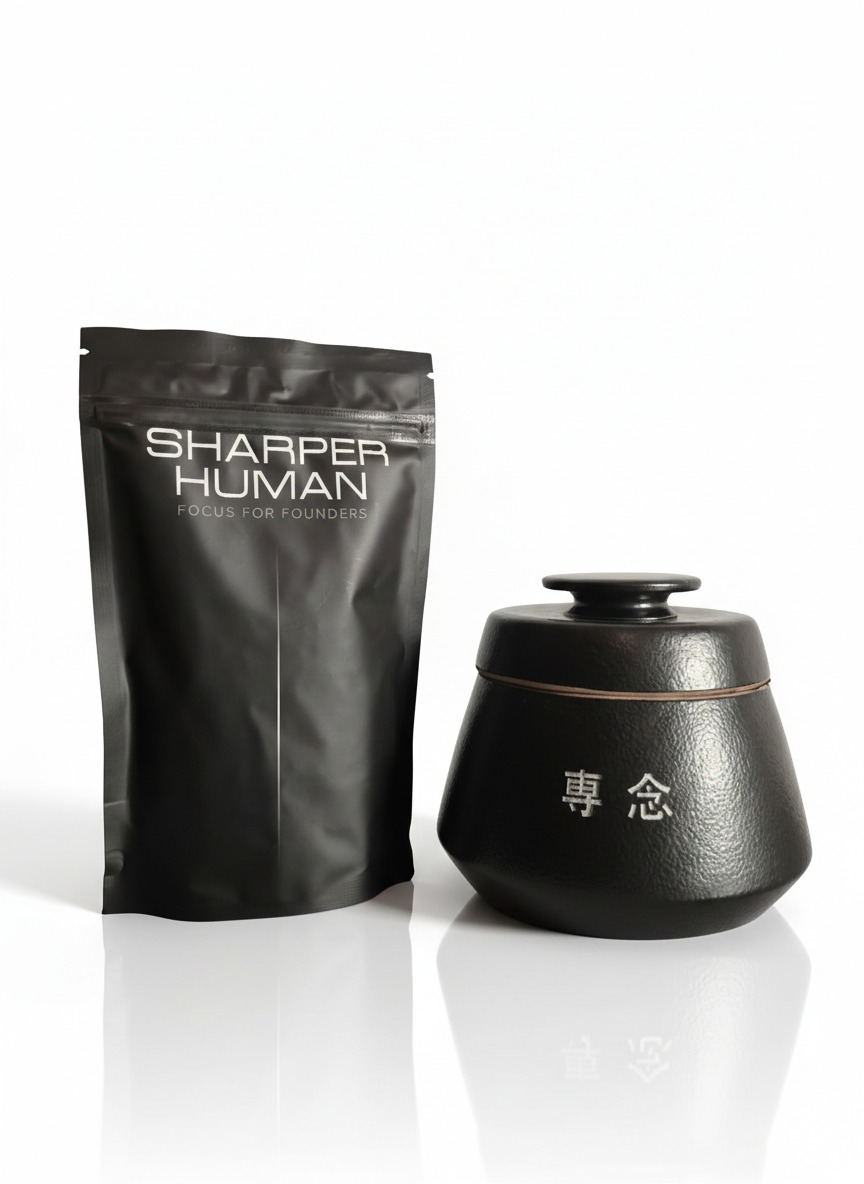
Focus for Founders.
An all-natural brain performance supplement. 20 research-backed ingredients. No caffeine. No stimulants.
Buy on Amazon UKSharper Human does not include glycine, and the reasoning is timing and purpose rather than any dismissal. Glycine is a sleep-and-calm ingredient best taken in the evening, whereas Sharper Human is a daytime focus formula — and for the daytime calm and composure that genuinely aid focus, it uses Taurine (500mg) for calm neural signalling and Rhodiola (150mg) for stress resilience, supporting a composed kind of focus without being sleep-oriented. This keeps the formula aligned to its daytime focus purpose, which is the fit-for-purpose logic behind all 20 ingredients, detailed in the ingredients and dosages guide. Glycine is a genuinely useful, safe ingredient — just one whose sleep-and-evening orientation places it outside a daytime focus stack. For those who want it, it pairs well as a separate evening sleep aid alongside a daytime focus formula.
The honest bottom line: glycine is a safe, cheap amino acid with genuine evidence for sleep quality and a calming role — but its sleep-and-evening orientation means a daytime focus formula like Sharper Human sensibly leaves it out, supporting daytime calm through Taurine and Rhodiola instead. Glycine pairs well as a separate evening option. Sharper Human is available on Amazon in the UK, with US availability planned.
References & further reading
- Punja S, Shamseer L, Olson K, Vohra S. Rhodiola rosea for Mental and Physical Fatigue in Nursing Students: A Randomized Controlled Trial. PLoS One. 2014;9(9):e108416. View source ↗
- Owen GN, Parnell H, De Bruin EA, Rycroft JA. The combined effects of L-theanine and caffeine on cognitive performance and mood. Nutritional Neuroscience. 2008;11(4):193–198. View source ↗
- Peer-reviewed research on glycine sleep calm — PubMed, U.S. National Library of Medicine. View source ↗