Serotonin is one of the most famous brain chemicals, popularly known as the "happiness" or "wellbeing" neurotransmitter and central to discussions of mood. But the real story is more nuanced than the popular framing suggests, and serotonin's relevance is to mood rather than focus. Understanding it clarifies the difference between supporting mood and supporting cognition. This is an honest, accessible explainer on serotonin: what it does, how it works, the myths and nuances, what supports it, and why mood is distinct from the focus a cognitive formula supports. This article is informational and not medical advice.
Key Takeaways
What Serotonin Is
Serotonin is a neurotransmitter — a chemical messenger in the brain and body — with wide-ranging roles. In the brain, it is associated with mood, emotional balance, and a sense of calm wellbeing, and it is involved in regulating sleep, appetite and other functions. Interestingly, much of the body's serotonin is actually found in the gut, where it plays roles in digestion (a connection relevant to the gut-brain axis). Serotonin is produced from the amino acid tryptophan (via 5-HTP), which is why its precursors are of interest. It is perhaps best known as the primary target of common antidepressant medications (SSRIs, which increase serotonin availability), cementing its association with mood. Understanding serotonin illuminates the chemistry of mood and wellbeing — but, as with dopamine, the popular framing of serotonin oversimplifies a genuinely complex picture, and its relevance is to mood rather than to the focus a cognitive formula addresses.
The "Happiness Chemical" Nuance
Serotonin is popularly called the "happiness chemical", with the implication that low serotonin causes unhappiness or depression and that boosting it produces happiness. This is an oversimplification that the science does not fully support. While serotonin is genuinely involved in mood and is the target of antidepressants, the idea that depression is simply "low serotonin" — the so-called chemical-imbalance theory — has been increasingly questioned and is recognised as too simplistic; mood and depression are complex, involving many factors (neural circuits, life circumstances, other neurotransmitters, inflammation, and more) rather than the level of a single chemical. So serotonin's association with mood is real but nuanced: it is one important part of a complex picture, not a simple "happiness dial". This nuance matters because it tempers both the popular framing and any expectation that simply manipulating serotonin (via supplements, say) straightforwardly controls mood — the reality is far more complex, as the guide to 5-HTP reflects.
Serotonin and Mood, Not Focus
An important point for understanding cognitive support is that serotonin's domain is mood and wellbeing, not focus and attention. Unlike dopamine (motivation and drive) and acetylcholine (attention and memory) — the neurotransmitters most central to focus — serotonin is primarily associated with mood, emotional balance, calm and related functions. This means serotonin, while crucial to wellbeing, is not the neurotransmitter a focus formula primarily targets; supporting focus draws more on the dopamine and acetylcholine systems. This distinction clarifies why mood support and focus support are different goals: they involve different neurotransmitter systems. Conflating them — expecting a focus formula to lift mood, or a mood approach to sharpen focus — misunderstands the underlying chemistry. Serotonin's role locates it in the mood-and-wellbeing space, distinct from the focus-and-cognition space, which is why mood-affecting serotonin compounds (like tryptophan, 5-HTP and St John's Wort) are mood interventions rather than focus ones.
What Supports Healthy Serotonin Function
Healthy serotonin function is supported largely by lifestyle factors that promote overall wellbeing, rather than by a single supplement. Sunlight and bright-light exposure support serotonin (part of why light and time outdoors lift mood, and why darker months can affect some people). Exercise supports serotonin and mood robustly. Good sleep matters, as does diet — including adequate tryptophan, the precursor, obtained from protein-rich foods (though the relationship between dietary tryptophan and brain serotonin is complex). Social connection, meaningful activity and managing stress all support mood and, by extension, healthy serotonin-related function. In clinical contexts, medications targeting serotonin are used for depression and anxiety under medical care. The honest framing is that supporting serotonin and mood is largely about overall wellbeing and lifestyle — and, where mood is significantly affected, professional care — rather than about a specific "serotonin supplement", since mood is complex and not reducible to one chemical lever.
When Mood Needs Professional Support
Because serotonin is so tied to mood, it is important to be clear: significant or persistent low mood, depression or anxiety is a medical matter that deserves professional assessment and care, not self-treatment with supplements. While lifestyle factors support healthy mood, genuine depression or anxiety disorders are complex conditions for which professional help — therapy, medication where appropriate, and proper support — is the right route. Serotonin-affecting supplements (like 5-HTP, tryptophan or St John's Wort) carry interaction risks (particularly with antidepressants) and are not substitutes for proper care, as the guides to those compounds emphasise. So while understanding serotonin is illuminating, the practical message for anyone struggling with mood is to seek professional support rather than attempting to self-manage brain chemistry. This is both the safest and the most effective approach, given the genuine complexity of mood and the limitations and risks of self-supplementation in this area.
How Serotonin Relates to Sharper Human
Focus for Founders.
An all-natural brain performance supplement. 20 research-backed ingredients. No caffeine. No stimulants.
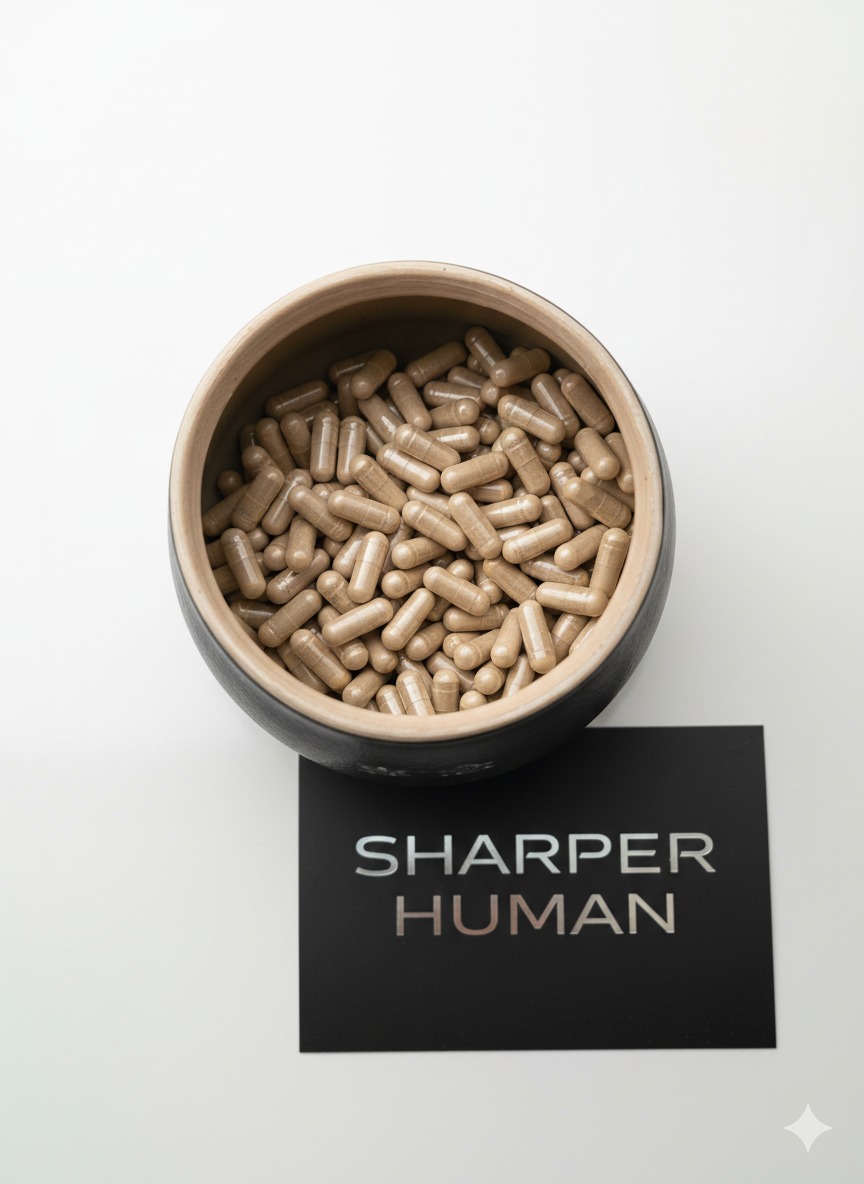
Buy on Amazon UKSerotonin's relationship to Sharper Human is best understood through the mood-versus-focus distinction. Sharper Human is a focus-and-cognition formula, which means it primarily supports the systems behind focus — the acetylcholine (attention) and dopamine (drive) systems, via ingredients like Citicoline and L-Tyrosine — rather than directly targeting serotonin and mood, which are a different domain. The formula is honest about this scope: it is designed to support focus and cognition, not to function as a mood treatment, and it does not directly manipulate serotonin. This honest scoping matters, because mood is complex and, where significantly affected, a matter for professional care rather than a focus supplement. For the companion picture of the focus-relevant neurotransmitters, the explainers on dopamine and acetylcholine are useful, and the full formula is detailed in the ingredients and dosages guide.
The honest bottom line: serotonin is the mood-and-wellbeing neurotransmitter — its popular "happiness chemical" framing oversimplifies a complex picture, and its domain is mood rather than the focus that dopamine and acetylcholine drive. Supporting serotonin is largely about lifestyle and, where mood is significantly affected, professional care. Sharper Human supports focus, not mood, and is available on Amazon in the UK, with US availability planned.
References & further reading
- Nakazaki E, Mah E, Sanoshy K, et al. Citicoline and Memory Function in Healthy Older Adults: A Randomized, Double-Blind, Placebo-Controlled Clinical Trial. The Journal of Nutrition. 2021. doi:10.1093/jn/nxab119. View source ↗
- Peer-reviewed research on serotonin mood explained — PubMed, U.S. National Library of Medicine. View source ↗