Not all nootropics are created equal, and the gap between the best-evidenced and the most over-hyped is enormous. This is an honest, evidence-based ranking of popular nootropics — sorted into tiers from strong human research down to "approach with caution" — so you can see at a glance which ingredients deserve your attention and money and which do not. It also covers how UK and US regulation shapes what you can buy. The aim is a clear, defensible hierarchy based on evidence rather than marketing, with Sharper Human as an example of a formula built from the upper tiers.
Key Takeaways
The video below offers a quick primer on evaluating nootropic claims before getting into the rankings.
Tier 1: Strong Evidence — Worth Your Money
The top tier is reserved for ingredients with genuine human research and clean profiles for everyday use. Citicoline leads for attention and acetylcholine support; Bacopa Monnieri has strong memory research over 8–12 weeks; L-Tyrosine is well-supported for focus under stress and fatigue; Lion's Mane has growing evidence for neuronal health; and Rhodiola Rosea is a well-studied adaptogen for fatigue resistance. The B-vitamins belong here too as essential cofactors. Just as important are two cheap staples often overlooked in nootropic discussions: creatine, with solid and growing evidence for brain energy (especially in vegetarians and on low-sleep days), and omega-3 DHA, a structural brain nutrient. These are the ingredients that reward inclusion. The complete evidence-based guide covers each in depth, and the dedicated pieces on creatine for the brain and DHA sources are worth a read.
Tier 2: Moderate or Promising Evidence
The second tier holds ingredients with reasonable but less conclusive evidence, or strong evidence outside cognition specifically. Phosphatidylserine has decent memory research and sits close to the top tier. Panax ginseng is a credible energising adaptogen, though it suits cycled standalone use. L-Theanine is well-evidenced but mainly in combination with caffeine, so its value depends on context. Magnesium and Vitamin D are genuinely important and well-evidenced for health, but their cognitive benefit is mainly about correcting deficiency, and both are best dosed individually rather than in a stack. These are worthwhile in the right circumstances rather than universal must-haves. For the details, see Panax ginseng, L-Theanine, magnesium for the brain and vitamin D and cognition.
Tier 3: Weak or Overrated Evidence
The third tier is for famous ingredients whose evidence does not match their reputation. Ginkgo Biloba is the classic example — extensively studied, heavily marketed, yet largely unimpressive for cognition in healthy people, with the added complication of a bleeding-interaction risk. Several popular antioxidant compounds, such as CoQ10 for general cognition, alpha-lipoic acid and astaxanthin, have appealing mechanisms but limited direct cognitive evidence in healthy people, with their real strengths lying elsewhere (metabolic, nerve or eye health). Gotu Kola is promising traditionally but thin on robust cognitive data. None of these are scams, but their cognitive case is weak enough that they are hard to prioritise. The deep-dives on Ginkgo, CoQ10, alpha-lipoic acid and astaxanthin explain why.
Tier 4: Approach With Caution
The bottom tier is not about weak evidence but about risk and suitability for everyday use. Potent compounds like Huperzine A, a strong acetylcholinesterase inhibitor, can have real effects but require cycling rather than continuous daily use. Grey-market synthetics — the racetams (piracetam, aniracetam), noopept and similar — raise the biggest flags: mixed evidence for cognitive enhancement in healthy people, limited long-term safety data, and uncertain or outright restrictive legal status (piracetam is prescription-only in the UK). And anything sold with miracle claims, hidden in proprietary blends, or promising dramatic transformation belongs here on principle. These are for cautious, informed, often supervised use at most — not casual daily supplementation. See Huperzine A, racetams and noopept for the full picture.
UK vs US: How Regulation Shapes the Rankings
Regulation directly affects which tiers are even available to you. In the UK and EU, nootropics are sold as food supplements with restricted health claims and food-safety manufacturing standards, and several Tier-4 synthetics are prescription-only medicines that cannot be sold as supplements — so the UK market is effectively skewed toward the better-evidenced, safer ingredients by law. In the US, the DSHEA framework treats them as dietary supplements with post-market FDA oversight and permitted structure/function claims, and a wider range of compounds, including some grey-market synthetics, circulates more freely. This means a US buyer encounters more of the Tier-4 options than a UK buyer does, which makes an evidence-based ranking all the more useful there. Wherever you are, the guidance is the same: favour Tier 1 and 2, demand transparency and testing, and treat legal availability as a floor, not an endorsement. Sharper Human is built to UK BRC AA standards from upper-tier ingredients and is available on Amazon in the UK, with US availability planned.
What This Means in Practice
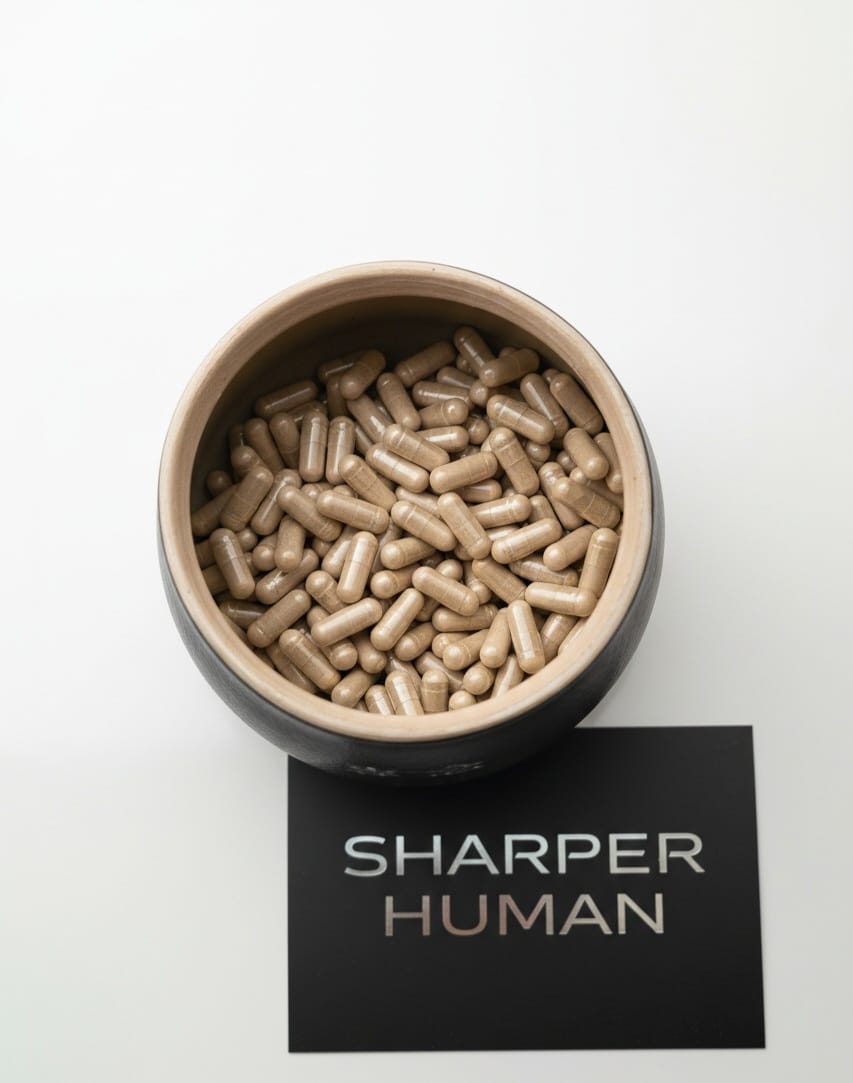
Focus for Founders.
An all-natural brain performance supplement. 20 research-backed ingredients. No caffeine. No stimulants.
Buy on Amazon UKTranslated into action, the ranking is simple: build from Tier 1, add Tier 2 where it fits your situation, treat Tier 3 with scepticism, and approach Tier 4 with caution or not at all. In product terms, that means favouring transparent formulas built from the top tiers — which is exactly how Sharper Human is constructed, combining Citicoline (300mg), Bacopa (150mg), L-Tyrosine (350mg), Lion's Mane (1000mg), Rhodiola (150mg), Phosphatidylserine (301mg) and a full B-complex at disclosed doses, with no Tier-3 filler or Tier-4 risk. For the cheap Tier-1 staples it sensibly leaves out — creatine and magnesium, which are better dosed separately — the dedicated guides explain why. Readers comparing finished products may also find the best value nootropics guide and the best all-in-one nootropic overview useful.
The honest bottom line: rank nootropics by evidence first, then safety, legality and value — and you end up with a short, sensible list rather than a long, hyped one. Build from the top, and use a transparent stack layered on good habits. Sharper Human is available on Amazon in the UK, with US availability planned.
References & further reading
- Nakazaki E, Mah E, Sanoshy K, et al. Citicoline and Memory Function in Healthy Older Adults: A Randomized, Double-Blind, Placebo-Controlled Clinical Trial. The Journal of Nutrition. 2021. doi:10.1093/jn/nxab119. View source ↗
- Kongkeaw C, Dilokthornsakul P, Thanarangsarit P, et al. Meta-analysis of randomized controlled trials on cognitive effects of Bacopa monnieri extract. Journal of Ethnopharmacology. 2014;151(1):528–535. View source ↗
- Punja S, Shamseer L, Olson K, Vohra S. Rhodiola rosea for Mental and Physical Fatigue in Nursing Students: A Randomized Controlled Trial. PLoS One. 2014;9(9):e108416. View source ↗
- Peer-reviewed research on ranking worst — PubMed, U.S. National Library of Medicine. View source ↗